Owner-operated · Homeowner guide · Acworth
Deck Wobble in Acworth: Causes, Checks and When to ActAcworth · Cobb County
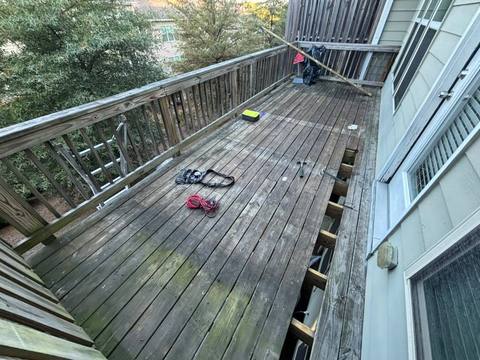
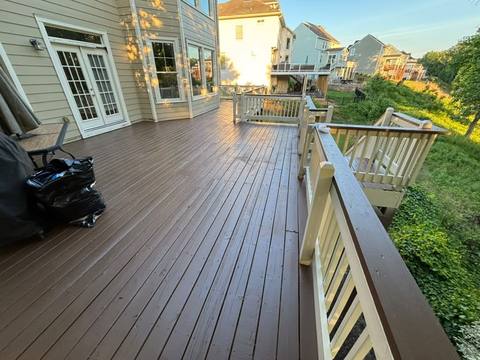
Acworth: A wobbly deck can feel unsettling underfoot, and it often points to something needing attention. Breno walks through what to look for and when it’s time to stop using the deck. Owner-operated, with a free written estimate.
Free estimate · opens your texting app · no forms needed
Get a fast estimate
★★★★★ 31 Google reviews as of Nov 2026 — “Great workmanship, fair pricing, and excellent customer service.” Read reviews
- Free written estimate within one day
- General liability coverage
- Crews with 10+ years of combined experience
- Owner on every job
- Text us (470) 863-3707
Homeowner guide · Acworth
Why does my deck wobble, sway or feel bouncy?
A deck that shifts or bounces underfoot in Acworth usually has a loose connection, a weakened post or a failing support somewhere beneath the boards, and each cause leaves its own telltale signs.
- Owner-operated: Breno visits and writes your estimate himself
- A team with 10+ years of combined experience
- Insured with general liability coverage
- 31 Google reviews as of Nov 2026, rated 5.0
- Before-and-after photos from our own completed jobs
Acworth
Common Causes of Deck Movement
Loose or rotted posts are a frequent reason a deck sways or feels bouncy, especially if the wood has been exposed to moisture for years. In Acworth’s wooded setting, shade and damp soil can speed up decay at the base of support posts. Missing or inadequate bracing between posts and beams lets the frame shift under weight, creating that side-to-side sway you notice when walking across. A weak ledger connection—where the deck attaches to the house—is another serious concern; if the bolts or screws have pulled loose or the rim joist is rotted, the whole deck can pull away from the structure.
Decayed joists, often hidden under decking boards, lose their stiffness and can bounce underfoot, particularly near the middle of a span. Loose fasteners like nails or screws that have worked loose over time allow framing members to shift slightly, adding to the bouncy feel. In older decks around downtown Acworth or near Lake Acworth, these issues can appear together, especially if the deck wasn’t built with proper corrosion-resistant hardware or if water has been trapped against the wood for long periods.
Acworth
What You Can Safely Check Yourself
Start by walking the deck slowly and listening for creaks or feeling for soft spots underfoot. Look at each post where it meets the ground or concrete pier—if the wood looks soft, cracked, or you can push a screwdriver easily into it, rot may be present. Check the underside of the deck: look for missing metal brackets or wooden braces between posts and beams, and see if any lag screws or bolts holding the ledger to the house are visible and tight. If you can move a post side to side with your hands, it’s not properly secured.
Pay attention to the ledger board—the long board attached to your house. If you see gaps between it and the rim joist, or if the flashing above it is missing or damaged, water may be getting in and causing rot. Rust stains on the siding below the ledger can also signal a leak. While you can look, avoid crawling under the deck if it feels unstable, and never go under a deck that sways noticeably when you jump lightly on it—stop using it and call for a professional look.
How it works
Five steps. No surprises.
Call, text, or send the form
Tell us what is going on: a new deck, a repair, or “not sure yet.” We reply the same day.
Free on-site visit
Breno looks at the deck or the yard himself, measures, and goes over your options with you.
Written estimate
Scope, materials and price come in writing, so you know the plan before anything starts.
Schedule and permits
We agree on a start date and confirm any city, county or HOA requirement for your address first.
Build and final walk-through
Breno is on the job, and we go over the finished work with you before we call it done.
Real B&T work
Photos from real jobs


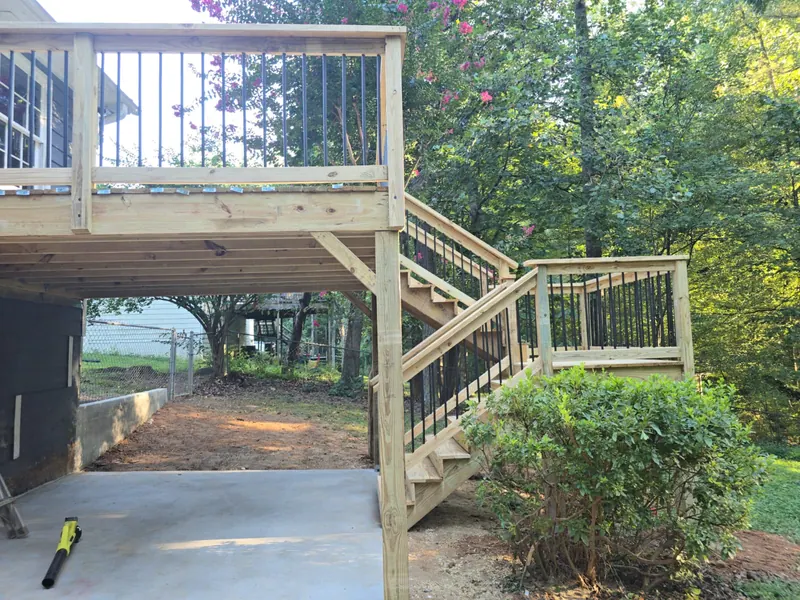
Real photos from B&T projects in North Georgia, not necessarily from Acworth.
Acworth
When to Stop Using the Deck
If the deck moves noticeably when you walk across it—especially if it sways side to side or dips in the middle—stop using it immediately. A bouncy feel that gets worse over time, or any visible sagging in the joists or beams, means the structure is compromised. If you can push or pull the railing and it moves more than an inch, or if posts wobble at the base, those are signs the frame isn’t rigid. In Acworth’s suburban lots, where decks often back up to tree lines or stream buffers near Lake Acworth, extra moisture can accelerate these issues.
Never ignore a ledger that’s pulling away from the house—even a small gap can grow quickly under load. If you notice any cracking in the concrete piers or posts sinking into the soil, that’s a foundation issue needing prompt attention. When in doubt, keep off the deck and arrange for a professional inspection. Safety comes first, and it’s better to miss a few days of use than risk a collapse.
Acworth
Repair Options We Handle
For rotted posts, we remove the damaged section and install a new pressure-treated post, set on a proper footing or pier that meets Acworth’s building requirements. We use corrosion-resistant fasteners and seal the base to help resist moisture. If bracing is missing, we add diagonal or horizontal braces between posts and beams to stiffen the frame—this is often a quick fix that stops sway effectively. Ledger repairs involve removing the decking and rim joist access, then installing new lag screws or bolts with proper washers and flashing to prevent future water damage.
Decayed joists are sistered with new pressure-treated lumber alongside the old, or replaced entirely if the damage is extensive. We check all fasteners and tighten or replace any that are loose or corroded. Every repair starts with a free written estimate, and Breno visits in person to assess the deck, porch, or stairs. We stand behind our work for a full year on all repairs, so you know the fix is meant to last.
Acworth
Deck Health Check: What We Look For
Our Free Deck Health Check is a walk-around of your existing deck with written notes—we look at posts, beams, joists, ledger, fasteners, railings and stairs for signs of wear, rot, looseness or improper connections. We check the grade around posts for proper drainage and look at the ledger flashing and house attachment for water intrusion risks. This isn’t a structural engineering report, but it gives you a clear picture of what’s solid and what may need attention soon.
We bring our findings to you in plain language, with photos if helpful, and explain what you can monitor and what should be repaired sooner rather than later. This check is ideal for decks that feel a little off but aren’t obviously failing—catching issues early often means simpler, less costly repairs. We do this for decks, porches and stairs, and it’s a no-pressure way to get a professional set of eyes on your outdoor space.
Get a fast estimate
Acworth
How We Work With Your Acworth Address
We confirm what applies to your address before any work is scheduled—this includes checking with the City of Acworth building department for permits and reviewing any HOA guidelines if you’re in a planned subdivision. Many neighborhoods around Cobb Parkway and I-75 have architectural reviews, so we make sure your project fits the schedule and requirements specific to your street. We never assume what rules apply; we verify based on your exact location.
Tree protection and stream buffer rules are part of Acworth’s code, especially on wooded lots or those backing up to creeks near Lake Acworth. We note any regulated areas during our visit so the deck layout avoids disturbing protected zones. Whether you’re in an older in-town block or a larger subdivision off I-75, we tailor the process to your property. Permits and HOA approvals depend on the address—tell us your neighborhood at the start so we can help you plan accordingly.
Straight answers
Acworth homeowner questions
My deck feels bouncy in the middle—could it just be old wood settling?
Some settling is normal, but persistent bounce in the middle often means joists are weakened or undersized for the span. In Acworth’s humid climate, moisture can accelerate decay in hidden joists, making them less stiff over time. A professional check can tell if sistering or replacement is needed.
Can I tighten loose bolts on the ledger myself to stop the sway?
You can check and snug accessible bolts, but if the wood behind them is soft or the rim joist is rotted, tightening won’t fix the root issue. In older decks near downtown Acworth or Lake Acworth, ledger rot is common—we need to see the condition of the framing to know if it’s safe.
How do I know if my posts are rotted at the base without digging them up?
Look for cracks, soft spots, or areas where you can easily push a screwdriver into the wood near the ground. Fungal growth or a musty smell can also signal decay. In Acworth’s shaded, tree-covered lots, posts often stay damp longer, increasing rot risk.
My deck sways when I walk across it—is that dangerous?
Noticeable side-to-side movement means the frame lacks proper bracing or connections. It’s not safe to ignore, especially if it gets worse with use. Stop using the deck and have it checked—continued sway can weaken connections over time and lead to failure.
Do I need a permit to repair a wobbly deck in Acworth?
Most deck repairs that involve structural changes—like replacing posts, beams, joists or fixing the ledger—require a permit from the City of Acworth building department. We confirm what applies to your address before scheduling any work.
Can missing bracing cause my deck to feel bouncy, or just sway?
Missing bracing primarily allows side-to-side sway, but if the frame can shift, it can also lead to uneven settling and localized bounce over time. Adding proper bracing restores rigidity and helps prevent both sway and premature wear on connections.
How does Acworth’s tree protection affect where I can fix or rebuild my deck?
If your lot has regulated tree areas or stream buffers—common near Lake Acworth or in wooded subdivisions—we check those zones during our visit to ensure the deck layout avoids disturbing protected vegetation or soil. The exact rules depend on your address.
My HOA requires approval for deck repairs—how do you handle that?
We tell you to confirm your HOA’s requirements first, then we work with your timeline to meet any review steps. Many subdivisions near Cobb Parkway and I-75 have architectural committees, so we factor that in early to avoid delays. Permits and HOA rules depend on the address—let us know your neighborhood so we can help. To talk it through, text or call Breno at 470-863-3707.
Verified Google reviews
What the neighbors are saying
These are verified Google reviews from B&T customers.
★★★★★
“Outstanding service! Breno is knowledgeable, honest, and takes pride in his work. It's hard to find a company this reliable these days.”
★★★★★
“The quality of the work was exceptional. The team was friendly, responsive, and made sure everything was done right. I would definitely recommend B&T Properties.”
Who’s doing the work
About B&T Properties
Owner-operated by Breno. Collectively, our team brings 10+ years of deck-building experience, and B&T Properties carries General Liability insurance. Serving Acworth and the rest of Cobb County.
Upgrades
Upgrades worth asking about
Ask about any of these when Breno comes out for your free estimate. They are easiest to price in when we plan the project, not after it is built.
Cover or screens
Add a roof over part of the deck, or screen it in for shade and fewer bugs.
Stairs and landings
Stairs that are easier to use: more width, a mid-level landing, or a better path to the yard.
Composite decking
A surface with no sanding, sealing or yearly staining to keep up with.
Railing styles
Aluminum, composite or wood railing, from classic balusters to a cleaner, low-profile look.
Service area
Cities we serve
Written warranty
1-year workmanship warranty
B&T Properties warrants our workmanship for one year from completion and fixes failures caused by our work at no charge. Not covered: material defects (manufacturer warranty), normal wear, weather, misuse, lack of maintenance, or work by others. Claims in writing.
Free written estimate
Tell Breno about your Acworth deck — free and in writing.
No call center, no sales rep — the person who answers is the person who does the work.