Owner-operated · Homeowner guide · Ball Ground
Wood Fence Leaning in Ball Ground: Causes and Repair OptionsBall Ground · Cherokee County
Ball Ground: A leaning wood fence is more than an eyesore—it can signal serious issues beneath the surface. Owner-operated, with a free written estimate.
Free estimate · opens your texting app · no forms needed
Get a fast estimate
Homeowner guide · Ball Ground
Why is my wood fence leaning and can it be repaired?
Breno visits Ball Ground properties in person to inspect posts, footings, and surrounding soil before offering a free written estimate.
- Owner-operated: Breno visits and writes your estimate himself
- A team with 10+ years of combined experience
- Insured with general liability coverage
- 31 Google reviews as of Nov 2026, rated 5.0
- Before-and-after photos from our own completed jobs
Ball Ground
Post Rot at Ground Level
Wood fences often lean because posts rot at the soil line where moisture and soil meet. In Ball Ground’s clay-heavy ground, water sits longer against wood, speeding decay especially in older or untreated posts. This weakens the post’s ability to stand upright, causing the fence to tilt or wobble when touched. We check for soft, spongy wood near the base during every fence inspection in Cherokee County.
Repairing a rotted post usually means removing the damaged section and setting a new post in fresh gravel and concrete. We avoid reusing old footings when rot is present because the surrounding soil may still hold moisture. For fences near Hawks Ridge or historic downtown Ball Ground, we assess drainage and slope to help prevent future rot. Each repair is backed by our full-year stand-behind promise.
Ball Ground
Soaked Red Clay Soil
Ball Ground’s red clay holds water like a sponge, especially after heavy rains common in north Georgia. When soil stays wet around fence posts, it creates a constant damp environment that invites fungus and rot. Over time, this saturated clay can also shift or settle, pulling posts out of alignment even if the wood itself is sound. We look for signs of soil movement or pooling water during our site visits.
To counteract clay’s effects, we often install posts with a gravel base to improve drainage and reduce direct wood-to-soil contact. In sloped areas common around Ball Ground properties, we adjust post depth and backfill to match the grade. We never assume soil conditions—we confirm them on-site because every lot in Cherokee County behaves differently. Proper drainage now prevents costly repairs later.
How it works
Five steps. No surprises.
Call, text, or send the form
Tell us what is going on: a new deck, a repair, or “not sure yet.” We reply the same day.
Free on-site visit
Breno looks at the deck or the yard himself, measures, and goes over your options with you.
Written estimate
Scope, materials and price come in writing, so you know the plan before anything starts.
Schedule and permits
We agree on a start date and confirm any city, county or HOA requirement for your address first.
Build and final walk-through
Breno is on the job, and we go over the finished work with you before we call it done.
Real B&T work
Photos from real jobs


Real photos from B&T projects in North Georgia, not necessarily from Ball Ground.
Ball Ground
Loose Post Footings
Over time, concrete footings can crack, shift, or pull away from the post due to frost heave, soil erosion, or poor initial installation. In Ball Ground’s variable terrain, especially near creeks or wooded areas, footings may loosen without obvious signs until the fence begins to lean. A post that moves when pushed likely has a failing footing, even if the wood above looks solid. We test each post for stability during our free estimate visits.
If the footing is loose but the post is still sound, we can reset it by removing old debris, rebedding in gravel, and repouring concrete at the correct depth. For fences in historic districts or near creeks, we take care to follow local guidelines—though you must confirm permit needs with the City of Ball Ground or Cherokee County based on your address. We do not guess about rules; we advise you to check with the proper authority.
Ball Ground
Gate Sag and Hardware Failure
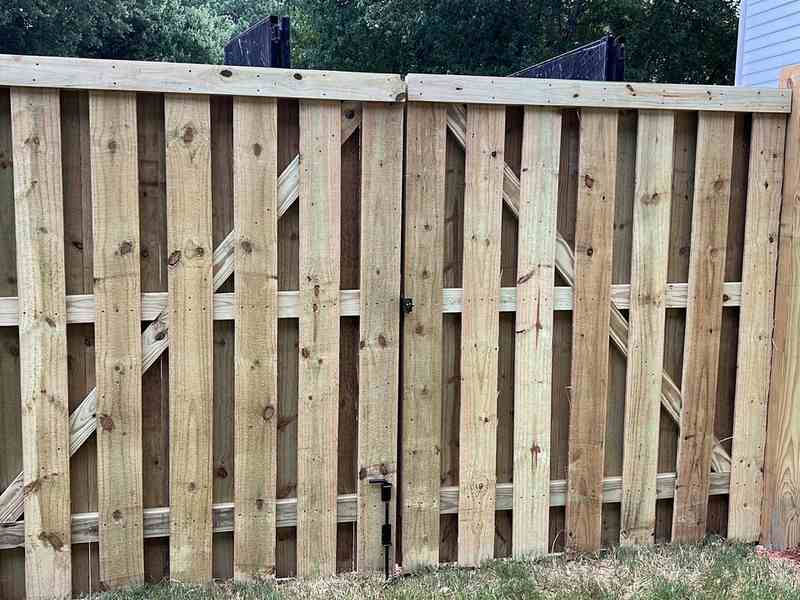
A leaning fence isn’t always about the posts—sometimes the gate is the culprit. Sagging gates pull on adjacent posts, especially if hinges are loose or the gate drags on the ground. In Ball Ground’s larger properties, gates are often wider and heavier, increasing strain on hardware and nearby posts. We inspect gate alignment, hinge condition, and latch function as part of every fence evaluation.
Repairing a sagging gate may involve replacing hinges, adding a diagonal brace, or adjusting the latch post to relieve tension. We avoid over-tightening hardware, which can split wood or crack concrete. If the gate frame is warped or rotted, we may rebuild that section to match the existing fence. Our goal is lasting function, not a quick fix that fails before the year is out.
Ball Ground
Repairing Single Sections vs Replacing a Run
When only one post or panel is damaged, we can often repair just that section instead of replacing the entire fence line. This saves material, reduces disruption, and keeps costs lower—especially important for longer fences common on larger Ball Ground lots. We match new wood to the existing stain and texture so the repair blends in seamlessly. Each section is assessed individually for rot, stability, and alignment.
However, if multiple posts show rot, footings are failing across a stretch, or the fence is old and worn throughout, a full run replacement may be more sensible long-term. We walk the line with you, pointing out what’s salvageable and what’s not, so you can decide with confidence. We never push unnecessary work—our estimates are free, written, and based on what Breno sees in person.
Get a fast estimate
Ball Ground
What to Photograph Before the Estimate
Before Breno arrives, take clear photos of the leaning area from multiple angles—front, side, and close-ups of the post base and any visible rot. Include shots of the gate if it sags, and show how the fence relates to the ground, especially in dips or near creeks. Photos help us understand the issue faster and prepare for the on-site visit, though we still inspect everything in person.
Also photograph any nearby trees, downspouts, or irrigation that might be adding water to the fence line. If you’re in historic downtown Ball Ground or Hawks Ridge, note any HOA or historic district markers—though you must confirm rules with your association or the City of Ball Ground. We do not assume regulations; we remind you to verify them based on your exact address.
Straight answers
Ball Ground homeowner questions
How do I know if my fence post is rotted at the ground line?
Look for dark, soft, or crumbly wood where the post meets the soil. You might be able to push a screwdriver into it easily. If the post wobbles when you shake it, rot is likely weakening its base. We confirm this during our free in-person estimate in Ball Ground.
Can a fence lean because of the soil type alone, even if the wood is good?
Yes. Ball Ground’s red clay holds water and can shift when wet, pulling posts out of alignment over time. Even sound wood can lean if the soil moves beneath it. We assess soil conditions and drainage on-site to determine if the ground is contributing to the lean.
Does a leaning gate always mean the fence posts are bad?
Not always. A sagging gate can pull on good posts due to loose hinges, damaged hardware, or warping in the gate itself. We inspect the gate and posts separately to find the true cause. Fixing the gate may relieve pressure and stop the lean without touching the posts.
Is it less expensive to repair one post than replace a whole fence section?
Usually, yes—if the damage is isolated to one post or panel and the rest of the fence is sound. Matching the repair to the existing fence helps it blend in. We evaluate each section individually during our visit to Ball Ground properties to recommend the most sensible option.
What should I show Breno when he comes for the estimate?
Photos of the lean, close-ups of post bases, the gate if it sags, and any wet areas or water sources nearby. Include shots from different angles and distances. We still inspect everything in person, but photos help us prepare and understand the history of the issue.
Can I fix a leaning fence myself, or should I call a professional?
You might tighten a hinge or prop a post temporarily, but lasting repair often requires digging, setting new footings, and handling heavy materials safely. We recommend a professional assessment—especially in Ball Ground’s varied terrain—to avoid temporary fixes that fail quickly or cause more harm.
Does B&T repair fences in historic downtown Ball Ground or Hawks Ridge?
Yes, we serve all of Ball Ground, including historic downtown Ball Ground and Hawks Ridge. We visit in person, provide free written estimates, and stand behind our work for a full year. You must confirm any HOA or historic district rules with the proper authority based on your address.
Will I need a permit to repair my leaning fence in Ball Ground?
It depends on your address and the scope of work. Fence repairs may not always need a permit, but replacements or changes near property lines or streams might. You must check with the City of Ball Ground if you’re in city limits, or Cherokee County if you’re outside, to confirm requirements before work begins. To talk it through, text or call Breno at 470-863-3707.
Verified Google reviews
What the neighbors are saying
These are verified Google reviews from B&T customers.
★★★★★
“Breno F. is an incredible man. He helped my aging mother when no one else would and went the extra mile with a complex home repair. His work is meticulous and his follow through is commendable. He is a good man with a great heart. Highly recommended!”
★★★★★
“Breno and his team exceeded our expectations. They were organized, efficient, and truly cared about delivering a high-quality result. We couldn't be happier.”
Who’s doing the work
About B&T Properties
Owner-operated by Breno. Collectively, our team brings 10+ years of deck-building experience, and B&T Properties carries General Liability insurance. Serving Ball Ground and the rest of Cherokee County.
Upgrades
Add-ons to consider
Ask about any of these when Breno comes out for your free estimate. They are easiest to price in when we plan the project, not after it is built.
Lighting
Soft LED lighting along the steps and rail, so the deck is usable after dark.
Stairs and landings
Stairs that are easier to use: more width, a mid-level landing, or a better path to the yard.
Composite decking
A surface with no sanding, sealing or yearly staining to keep up with.
Railing styles
Aluminum, composite or wood railing, from classic balusters to a cleaner, low-profile look.
Written warranty
1-year workmanship warranty
Our labor carries a written one-year warranty counted from the finish date: if our workmanship is the cause, we repair it free. The warranty excludes faulty materials (the maker’s warranty applies), ordinary wear, storm damage, misuse, skipped upkeep and other contractors’ work. Send claims in writing.
Free written estimate
Tell Breno about your Ball Ground deck — free and in writing.
No call center, no sales rep — the person who answers is the person who does the work.