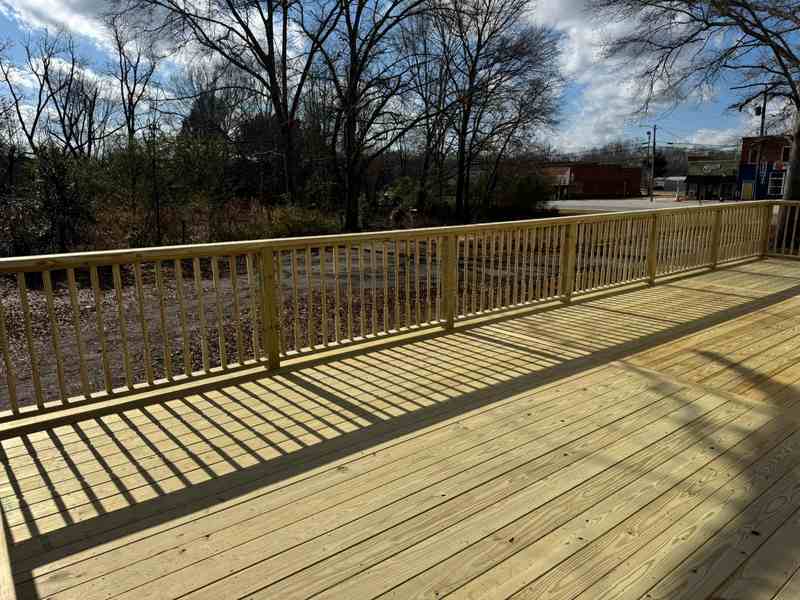
Owner-operated · Homeowner guide
Why do deck footings and posts matter so much?Homeowner guide · Georgia decks
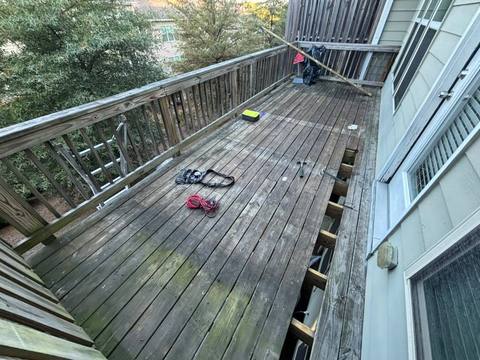
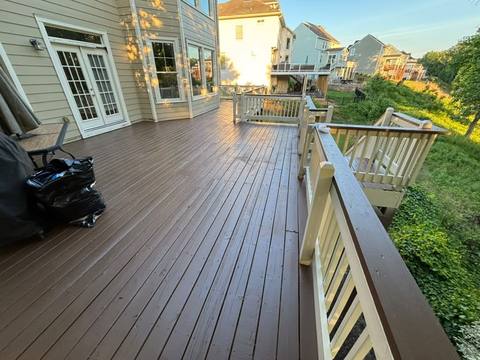
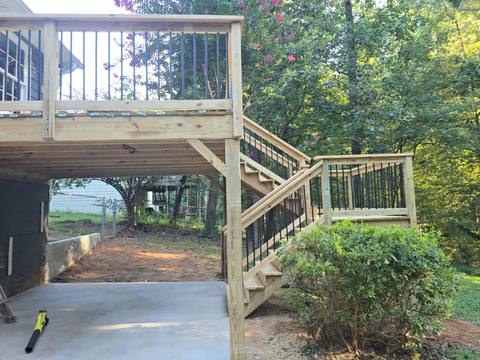
Why do deck footings and posts matter so much? Footings and posts are the only things keeping your deck from sinking or leaning. They transfer the weight of the structure safely into the ground. Without the right depth and proper bases, the Georgia clay will shift, causing your beams to sag and your posts to rot from the bottom up.
Free estimate · opens your texting app · no forms needed
Get a fast estimate
★★★★★ 31 Google reviews as of Nov 2026 — “Great workmanship, fair pricing, and excellent customer service.” Read reviews
- Free written estimate within one day
- General liability coverage
- Crews with 10+ years of combined experience
- Owner on every job
- Text us (470) 863-3707
Homeowner guide
Why do deck footings and posts matter so much?
Your deck is only as good as what is holding it up. Most folks focus on the stain or the railing, but the real work happens underground. If the foundation is wrong, the rest of the build is just a ticking clock. Here is how we handle the bones of a deck to make sure it stays level and safe for years.
- Owner-operated: Breno visits and writes your estimate himself
- A team with 10+ years of combined experience
- Insured with general liability coverage
- 31 Google reviews as of Nov 2026, rated 5.0
- Before-and-after photos from our own completed jobs
Guide
Understanding the load path
The load path is just a fancy way of saying how the weight moves from the top of the deck down to the dirt. Every person, piece of furniture, and heavy grill adds weight that has to go somewhere. It travels from the decking to the joists, then to the beams, and finally down the posts into the footings.
- Weight must move in a straight line.
- Any shift or lean breaks that path.
- Poorly placed posts cause beams to bow.
- Proper alignment prevents the structure from twisting.
If any part of that chain is weak, the whole deck can pull away from your house or dip in the middle.
Guide
Why footing depth is a big deal
You cannot just set a post on a concrete slab on top of the grass. In our neck of the woods, you have to get below the frost line and deep enough to hit stable soil. If the footing is too shallow, the ground can heave or settle, which pushes your deck out of level.
- Deep footings reach stable earth.
- They prevent the deck from sinking over time.
- Proper depth keeps the structure steady during heavy rains.
- It ensures the weight is spread over a wide enough area.
When we dig deep, we are making sure the deck stays where we put it, regardless of how the weather changes throughout the seasons.
How it works
Five steps. No surprises.
Call, text, or send the form
Tell us what is going on: a new deck, a repair, or “not sure yet.” We reply the same day.
Free on-site visit
Breno looks at the deck or the yard himself, measures, and goes over your options with you.
Written estimate
Scope, materials and price come in writing, so you know the plan before anything starts.
Schedule and permits
We agree on a start date and confirm any city, county or HOA requirement for your address first.
Build and final walk-through
Breno is on the job, and we go over the finished work with you before we call it done.
Real B&T work
Photos from real jobs


Real photos from B&T projects in North Georgia.
Guide
Dealing with Georgia red clay
Our red clay soil is a nightmare if you do not respect it. It expands when it gets wet and shrinks when it dries out. This constant movement can act like a slow-motion lever, lifting one side of your deck while the other side sinks.
- Clay holds water longer than sandy soil.
- Shifting soil leads to cracked beams.
- Poor drainage around footings makes clay movement worse.
- Stable footings anchor the deck against this shifting.
We build with the knowledge that the ground is always moving. By using the right footing size and depth, we counteract that natural push and pull of the Georgia earth.
Guide
Stopping rot at ground contact
The worst place for a piece of wood to be is touching the dirt. Even the best pressure-treated lumber will eventually rot if it sits in damp soil or a puddle of water. This is where many decks fail, often hidden from view until a post snaps.
- Wood touching dirt sucks up moisture.
- Termites love damp, ground-contact wood.
- Rot starts at the bottom and works its way up.
- Proper elevation keeps the wood dry.
We make sure there is a clear break between the organic soil and the structural lumber to keep the wood healthy and strong for a long time.
Guide
The importance of post bases
To stop that rot, we use metal post bases. Instead of burying the wood in concrete or letting it sit on a flat stone, a metal bracket lifts the post a few inches off the footing. This keeps the end grain of the wood away from standing water.
- Metal brackets prevent moisture wicking.
- They bolt the post securely to the concrete.
- They keep the post centered on the footing.
- They provide a physical barrier against decay.
Using a sturdy base is a simple step that adds a decade or more to the life of your deck posts. It is the right way to build.
Guide
Signs of a failing foundation
You do not always have to crawl under your deck to know there is a problem. There are clear signs that your footings are giving out or your posts are rotting. If you see these things, you need to get a professional to look at it before it becomes a safety hazard.
- Doors or windows above the deck stop closing right.
- Visible gaps where the deck meets the house.
- A noticeable slope or dip in the floorboards.
- Posts that look pinched or crushed at the bottom.
- Cracks in the concrete footings near the surface.
Once the foundation shifts, the rest of the deck starts to stress and warp.
Get a fast estimate
Guide
Keeping your deck steady
A solid deck starts in the dirt. By focusing on the load path, fighting the red clay, and keeping wood away from the ground, we build structures that last. Do not ignore the parts you cannot see, because those are the parts that keep your family safe.
Guide
Get a Free Deck Health Check
Not sure where your project stands? B&T Properties will take a look and tell you plainly what we see, with no pressure. Text us at 470-863-3707 to schedule your Free Deck Health Check, and we will walk the job with you and explain your options.
Local notes
Around Canton and Ball Ground and nearby
Canton. Setbacks, stream buffers and tree rules can affect where a deck is allowed to go, especially on wooded lots near creeks. We check what applies to your parcel as part of the free estimate instead of leaving you to discover it at inspection. Communities in the area include BridgeMill, Great Sky, Laurel Canyon, River Green.
Ball Ground. Ball Ground's code includes a stream buffer protection chapter, and it treats decks as impervious cover, so a deck close to a creek or wet area can be restricted. There is also a National Register historic district downtown, which matters for homes in that area. Communities in the area include Hawks Ridge, historic downtown Ball Ground.
Holly Springs. Large planned communities like Harmony on the Lakes operate with their own governing rules, and many Holly Springs neighborhoods have an HOA that reviews exterior additions. Tell us yours and we will plan the approval around it. Communities in the area include Harmony on the Lakes, downtown Holly Springs.
Straight answers
Common questions
Can I just pour concrete around an existing post?
No, that usually traps moisture against the wood and speeds up rot. It does not fix a sinking footing and can actually make the problem worse over time.
How often should I check my deck posts?
Give them a look once a year. Check for any leaning, soft wood at the base, or gaps opening up between the deck and the house.
Will metal bases rust in the rain?
We use galvanized steel or coated bases specifically made for outdoor use. These are designed to handle the weather without breaking down.
Why is my deck leaning to one side?
This is usually caused by the red clay soil shifting or a footing that was not dug deep enough. The ground settles unevenly, pushing the structure.
Is pressure-treated wood enough to stop rot?
It helps a lot, but it is not a permanent shield against constant ground contact. Using a post base is the only way to truly stop moisture from eating the wood.
Verified Google reviews
What the neighbors are saying
These are verified Google reviews from B&T customers.
★★★★★
“Outstanding service! Breno is knowledgeable, honest, and takes pride in his work. It's hard to find a company this reliable these days.”
★★★★★
“Breno F. is an incredible man. He helped my aging mother when no one else would and went the extra mile with a complex home repair. His work is meticulous and his follow through is commendable. He is a good man with a great heart. Highly recommended!”
Who’s doing the work
About B&T Properties
Owner-operated by Breno. Collectively, our team brings 10+ years of deck-building experience, and B&T Properties carries General Liability insurance. Serving Canton and the rest of Cherokee County.
Upgrades
Upgrades worth asking about
Ask about any of these when Breno comes out for your free estimate. They are easiest to price in when we plan the project, not after it is built.
Composite decking
Low-maintenance boards in a range of colors, priced next to wood so you can compare.
Lighting
Low-voltage LED lights on stairs, posts or under the rail cap for evenings outside.
Railing styles
Aluminum, composite or wood railing, from classic balusters to a cleaner, low-profile look.
Stairs and landings
A better way down to the yard, with extra width, a landing or a second flight.
Service area
Cities we serve
Written warranty
1-year workmanship warranty
B&T Properties backs the workmanship on every job for one year after completion, free of charge when the fault is ours. It does not cover material defects, natural wear, weather damage, misuse, a lack of upkeep or work by others. To claim, write to us and we will inspect.
Free written estimate
Ask Breno about your deck — free and in writing.
No call center, no sales rep — the person who answers is the person who does the work.