Owner-operated · Homeowner guide
Is my deck railing safe?Homeowner guide · Georgia decks
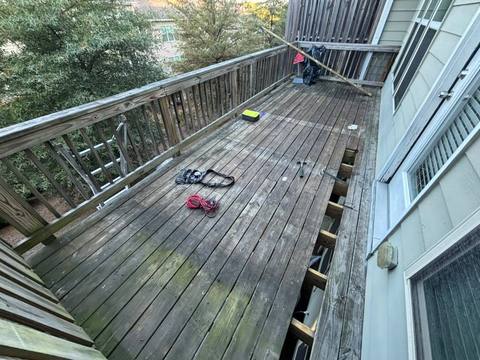
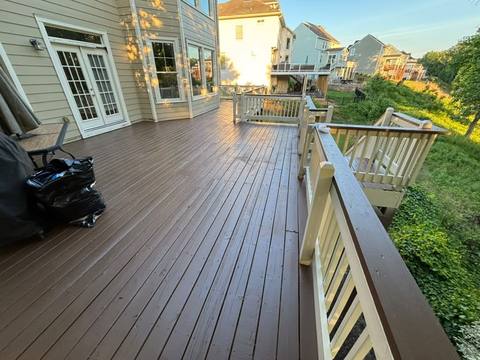
Is my deck railing safe? Your railing is likely unsafe if it wobbles when pushed, has visible rot at the base, or has gaps wide enough for a small child to slip through. Checking your fasteners and post attachments regularly ensures the structure stays solid and prevents accidents before they happen.
Free estimate · opens your texting app · no forms needed
Get a fast estimate
★★★★★ 31 Google reviews as of Nov 2026 — “Great workmanship, fair pricing, and excellent customer service.” Read reviews
- Free written estimate within one day
- General liability coverage
- Crews with 10+ years of combined experience
- Owner on every job
- Text us (470) 863-3707
Homeowner guide
Is my deck railing safe?
I have spent a long time working on decks around Canton, and I can tell you that a railing is only as good as the wood it is attached to. Many folks ignore their railings until something snaps, but a little bit of attention now saves a lot of trouble later. Here is how to check your rails.
- Breno, the owner, measures and writes your estimate
- 10+ years of combined team experience
- General liability insurance
- 5.0 stars from 31 Google reviews as of Nov 2026
- Real before-and-after photos from our own jobs
Guide
Try the wobble test
The easiest way to see if your railing is failing is to give it a good shake. Stand a few feet back and apply steady pressure to the top rail. You are looking for any movement where the post meets the deck surface.
- A solid rail should not move more than a fraction of an inch.
- Any swaying or rocking suggests a failure in the connection.
- Check every single post, not just the corners.
- Feel for any popping sounds that indicate wood splitting.
If the whole system shifts when you lean on it, you have a structural problem that needs a fix.
Guide
Look for rot at the post base
The most common place for a railing to fail is right where the post meets the deck boards. Water tends to pool there, and since that area rarely gets a good breeze, the wood stays damp. This leads to rot that eats away at the strength of the timber.
- Poke the wood with a screwdriver to see if it feels soft.
- Look for dark discoloration or peeling paint at the bottom.
- Check for fungus or moss growing around the base.
- See if the wood is crumbling away in chunks.
Once the base of the post rots, the railing is just a decoration and will not stop a fall.
How it works
Five steps. No surprises.
Call, text, or send the form
Tell us what is going on: a new deck, a repair, or “not sure yet.” We reply the same day.
Free on-site visit
Breno looks at the deck or the yard himself, measures, and goes over your options with you.
Written estimate
Scope, materials and price come in writing, so you know the plan before anything starts.
Schedule and permits
We agree on a start date and confirm any city, county or HOA requirement for your address first.
Build and final walk-through
Breno is on the job, and we go over the finished work with you before we call it done.
Real B&T work
Photos from real jobs


Real photos from B&T projects in North Georgia.
Guide
Check your post attachments
A railing is only safe if it is bolted down tight. Some old decks relied on nails, but nails pull out over time as the wood shrinks and swells. You want to see heavy bolts or structural screws holding those posts in place.
- Look for rusted bolt heads that have eaten into the wood.
- Check for loose nuts that can be turned by hand.
- Make sure the brackets are not bent or cracked.
- Ensure the posts are bolted to the joists, not just the decking boards.
If the posts are only held in by a few nails, they will eventually pull loose under pressure.
Guide
Watch for loose fasteners
Over a few seasons, the heat and rain cause wood to move. This loosens the screws and nails holding your balusters and rails together. When fasteners back out, the whole system loses its rigidity.
- Run your hand along the rails to feel for protruding nail heads.
- Check the joints where the top rail meets the post.
- Look for gaps that have opened up between the wood pieces.
- Check for splitting wood around the screw holes.
Tightening these up or replacing old nails with quality screws can make a huge difference in how the railing feels.
Guide
Understand baluster spacing
The vertical slats, or balusters, are there to keep people from falling through the side of the deck. The general concept is that the gap should be small enough that a small child cannot fit their head or body through it.
- Check the distance between each slat across the entire deck.
- Look for missing balusters that were never replaced.
- Ensure the bottom gap between the deck and the first slat is tight.
- Make sure the slats are not bowing or warping outward.
If you can fit a large ball through the gap, the spacing is likely too wide for safety.
Guide
Know your local rules
Building codes are not the same everywhere. What was acceptable a few decades ago might not meet the rules today. Different counties have different requirements for height and strength to ensure public safety.
- Check with your local building office for current height rules.
- Ask about requirements for railing strength and load.
- Verify if your county requires specific types of fasteners.
- Check if your deck needs a permit for major railing repairs.
Confirm applicable railing requirements with your county, and ask your HOA about any rules that may affect repairs.
Get a fast estimate
Guide
Keeping your railings solid
Checking your deck a few times a year can help you spot railing damage before someone gets hurt. Look for the rot, test the wobble, and keep those fasteners tight. If you find a post that is soft or a rail that sways, get it fixed before someone leans on it.
Guide
Get a Free Deck Health Check
Not sure where your project stands? B&T Properties will take a look and tell you plainly what we see, with no pressure. Text us to schedule your Free Deck Health Check, and we will walk the job with you and explain your options.
Local notes
Around Canton and Woodstock and nearby
Canton. Setbacks, stream buffers and tree rules can affect where a deck is allowed to go, especially on wooded lots near creeks. During the free estimate, we look at visible railing damage and explain which connections or sections may need closer attention. Areas to check include post bases, rail joints, balusters and stair railings.
Older railings. Older deck railings may have loose connections, missing balusters or damaged wood that deserves a closer look. On shaded decks, check damp areas around railing posts for soft wood, crumbling surfaces or fasteners that have loosened. Check shaded post bases and exposed rail joints for signs of moisture damage.
Repair questions. Before planning railing repairs, ask your county to confirm applicable railing requirements and whether the proposed work needs a permit. Ask your HOA to confirm whether any rules apply to changes in railing materials or appearance. Keep notes on damaged posts, loose connections and missing balusters.
Straight answers
Common questions
How often should I check my deck railings?
You should do a full walk around your deck a few times a year. Spring and fall are useful times to look for winter damage or summer rot.
Can I just nail a rotting post back into place?
No, nails will not hold in rotted wood. You need to replace the damaged timber to make the railing safe again.
Do I need to paint my railings for safety?
Paint or stain protects the wood from moisture. This prevents the rot that leads to structural failure over a few years.
What is the safest way to attach a post?
Using heavy structural bolts that go through the post and into the joist is the most secure method. Nails are generally not enough for safety rails.
Should I replace the whole railing if one post is bad?
Not necessarily. Often we can replace a single post or a few sections without tearing down the whole system.
Verified Google reviews
What the neighbors are saying
These are verified Google reviews from B&T customers.
★★★★★
“Breno did an excellent job repairing my home. He was professional, reliable, and paid close attention to every detail. The quality of his work exceeded my expectations…”
★★★★★
“If you're looking for a trustworthy contractor, B&T Properties is the right choice. Great workmanship, fair pricing, and excellent customer service.”
Who’s doing the work
About B&T Properties
You deal with the owner. Breno visits, quotes and oversees the work, and the crew brings more than ten years of deck experience between them. B&T carries General Liability insurance, and Canton is part of our regular service area.
Upgrades
Upgrades worth asking about
Thinking beyond the basics? Mention any of these at your free estimate and Breno will go over what makes sense for your home.
Multi-level layouts
Two levels can follow your slope and give dining and lounging their own space.
Composite decking
Boards that resist rot and skip the yearly stain. Worth pricing in at the start.
Stairs and landings
Wider steps, a landing, or a second set of stairs down to the yard.
Cover or screens
Shade, rain cover or screens, planned in from the start.
Service area
Cities we serve
Written warranty
1-year workmanship warranty
B&T Properties warrants our workmanship for one year from completion and fixes failures caused by our work at no charge. Not covered: material defects (manufacturer warranty), normal wear, weather, misuse, lack of maintenance, or work by others. Claims in writing.
Free written estimate
Ask Breno about your deck — free and in writing.
No call center, no sales rep — the person who answers is the person who does the work.