Owner-operated · Homeowner guide
How do I know if my deck is rotten?Homeowner guide · Georgia decks
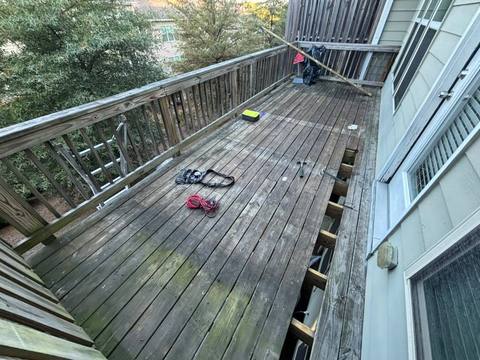
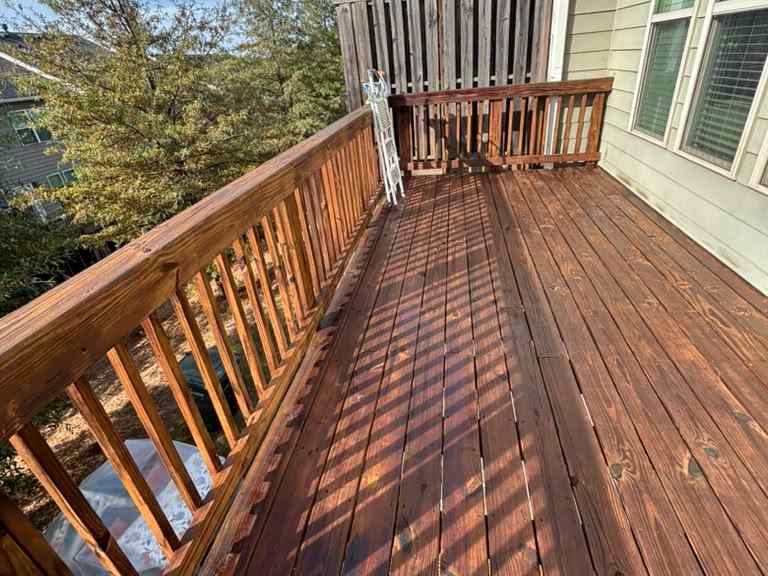
How do I know if my deck is rotten? You can tell if your deck is rotten by looking for dark stains and feeling for spongy boards. Use a screwdriver to poke the wood; if it sinks in easily, you have rot. Pay close attention to the ledger board and support posts where water tends to pool and soak in.
Free estimate · opens your texting app · no forms needed
Get a fast estimate
★★★★★ 31 Google reviews as of Nov 2026 — “Great workmanship, fair pricing, and excellent customer service.” Read reviews
- Free written estimate within one day
- General liability coverage
- Crews with 10+ years of combined experience
- Owner on every job
- Text us (470) 863-3707
Homeowner guide
How do I know if my deck is rotten?
I have spent a lot of time on job sites around Canton, and I see the same mistakes over and over. Many folks mistake a gray, weathered look for actual rot, while others ignore soft spots until the deck is unsafe. Finding decay early saves you a lot of money and keeps your family safe.
- Owner-operated: Breno visits and writes your estimate himself
- A team with 10+ years of combined experience
- Insured with general liability coverage
- 31 Google reviews as of Nov 2026, rated 5.0
- Before-and-after photos from our own completed jobs
Guide
How to use the screwdriver probe test
The easiest way to check your wood is with a simple screwdriver. You want a tool with a sharp point that you can push into the grain. Walk around your deck and poke the wood in several spots, especially where water sits.
- Push the tip firmly into the surface.
- Healthy wood will resist the tool and feel solid.
- Rotten wood will feel like a sponge or wet cardboard.
- If the tool sinks in a few inches without much effort, the wood is gone.
- Check the underside of the joists for the same softness.
This test tells you if the damage is just on the surface or if it has eaten through the core of the beam.
Guide
Spotting soft spots at the ledger and posts
The most dangerous rot happens where you cannot easily see it. The ledger board is where the deck attaches to your house, and this is a prime spot for leaks. If water gets trapped between the house and the deck, the wood will fail.
- Look for gaps in the flashing above the ledger.
- Check the base of the support posts where they meet the concrete.
- Feel for any shifting or swaying when you walk near the house.
- Look for crumbling wood at the connection points.
When these structural areas go soft, the whole deck is at risk of pulling away from the wall or sinking into the ground.
How it works
Five steps. No surprises.
Call, text, or send the form
Tell us what is going on: a new deck, a repair, or “not sure yet.” We reply the same day.
Free on-site visit
Breno looks at the deck or the yard himself, measures, and goes over your options with you.
Written estimate
Scope, materials and price come in writing, so you know the plan before anything starts.
Schedule and permits
We agree on a start date and confirm any city, county or HOA requirement for your address first.
Build and final walk-through
Breno is on the job, and we go over the finished work with you before we call it done.
Real B&T work
Photos from real jobs


Real photos from B&T projects in North Georgia.
Guide
Identifying dark stains and discoloration
Rot usually leaves a mark before it leaves a hole. You are looking for deep, dark stains that do not go away with a scrub. This is often a sign of fungus or mold eating the fibers from the inside out.
- Watch for black or dark brown streaks in the grain.
- Look for white or yellowish fungal growth on the underside.
- Notice areas where the wood looks saturated even in dry weather.
- Check for a musty smell that lingers around the stairs.
While some staining is just cosmetic, deep discoloration often means the wood has stayed wet too long and the decay has started.
Guide
Dealing with spongy boards and dipping
When you walk across your deck, pay attention to how the boards react under your weight. A healthy deck feels firm and steady. A rotten deck feels like it is giving way or bouncing in a way that feels wrong.
- Notice if the boards dip or sag in the middle.
- Feel for a spongy sensation under your feet.
- Check if the boards feel hollow when you tap them.
- Look for boards that have warped or cupped severely.
If the decking boards are spongy, it is a sign that the joists underneath might be failing too. This is a major red flag for safety.
Guide
Rot versus surface weathering
A lot of homeowners call me worried because their deck has turned gray. That is usually just weathering, not rot. Sun and rain strip the color from the wood, but that does not mean the structure is weak.
- Weathered wood is gray but still hard to the touch.
- Weathered wood does not crumble when poked with a tool.
- Rot is soft, damp, and often changes the texture of the wood.
- Weathering is a surface issue; rot is a deep tissue issue.
You can fix weathering with a good cleaning and a fresh coat of stain, but you cannot stain over rot.
Guide
Checking the stairs and railings
Do not forget the parts of the deck that take the most abuse. Railings and stairs are often the first things to go because they are exposed to the elements from all sides.
- Shake the railing posts to see if they wiggle.
- Check the stair treads for soft centers.
- Look for rot where the railing meets the deck surface.
- Inspect the stringers that hold up the steps.
If a railing post is rotten at the base, it will not stop someone from falling. These are the high-priority areas that need immediate attention to keep the area safe for kids and guests.
Get a fast estimate
Guide
Knowing when to call a pro
If you find soft spots in your ledger or support posts, you have a structural problem. A few rotten deck boards are an easy fix, but failing beams require a professional eye to ensure the deck is safe. Trust your gut and your screwdriver.
Guide
Get a Free Deck Health Check
Not sure where your project stands? B&T Properties will take a look and tell you plainly what we see, with no pressure. Text us at 470-863-3707 to schedule your Free Deck Health Check, and we will walk the job with you and explain your options.
Local notes
Around Canton and Woodstock and nearby
Canton. Setbacks, stream buffers and tree rules can affect where a deck is allowed to go, especially on wooded lots near creeks. We check what applies to your parcel as part of the free estimate instead of leaving you to discover it at inspection. Communities in the area include BridgeMill, Great Sky, Laurel Canyon, River Green.
Woodstock. Woodstock blends a walkable downtown with large established neighborhoods like Towne Lake, Eagle Watch and Wyngate. Many of those homes have mature trees around them and decks that have been through a couple of decades of Georgia weather. Communities in the area include Towne Lake, Eagle Watch, Wyngate, Bradshaw Farm.
Holly Springs. Large planned communities like Harmony on the Lakes operate with their own governing rules, and many Holly Springs neighborhoods have an HOA that reviews exterior additions. Tell us yours and we will plan the approval around it. Communities in the area include Harmony on the Lakes, downtown Holly Springs.
Straight answers
Common questions
Can I just paint over rotten wood?
No, painting over rot only hides the problem for a short time. The decay will continue underneath the paint and eventually cause the wood to fail.
How often should I check for rot?
I suggest doing a full walk-through once a year. The best time is in the spring after the winter wetness has settled.
Does pressure treated wood ever rot?
Yes, it does, though it takes much longer than untreated wood. Eventually, the chemicals wear out and water can get inside.
Can I fix a small soft spot myself?
Small spots can sometimes be filled with wood epoxy, but that is a cosmetic fix. If the wood is structurally soft, it must be replaced.
Will a new stain stop rot from spreading?
Stain helps keep water out, but it will not stop rot that has already started. You must remove the decay before applying a new finish.
Verified Google reviews
What the neighbors are saying
These are verified Google reviews from B&T customers.
★★★★★
“Breno did an excellent job repairing my home. He was professional, reliable, and paid close attention to every detail. The quality of his work exceeded my expectations…”
★★★★★
“Outstanding service! Breno is knowledgeable, honest, and takes pride in his work. It's hard to find a company this reliable these days.”
Who’s doing the work
About B&T Properties
Owner-operated by Breno. Collectively, our team brings 10+ years of deck-building experience, and B&T Properties carries General Liability insurance. Serving Canton and the rest of Cherokee County.
Upgrades
Add-ons to consider
Thinking beyond the basics? Mention any of these at your free estimate and Breno will go over what makes sense for your home.
Composite decking
Boards that resist rot and skip the yearly stain. Worth pricing in at the start.
Multi-level layouts
Step down a sloped yard with separate levels for dining and lounging.
Lighting
Low-voltage LED lights on stairs, posts or under the rail cap for evenings outside.
Stairs and landings
Wider steps, a landing, or a second set of stairs down to the yard.
Service area
Cities we serve
Written warranty
1-year workmanship warranty
One year, in writing, on our labor from the completion date. If our own workmanship is why something fails, B&T Properties makes it right at no cost to you. Materials fall under the manufacturer’s warranty; wear, weather, misuse, neglect and third-party work are not covered. Request service in writing.
Free written estimate
Ask Breno about your deck — free and in writing.
No call center, no sales rep — the person who answers is the person who does the work.