Owner-operated · Homeowner guide
How do I tell if termites or carpenter bees are damaging my deck?Homeowner guide · Georgia decks
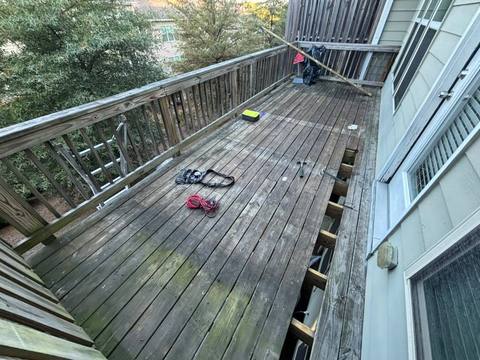
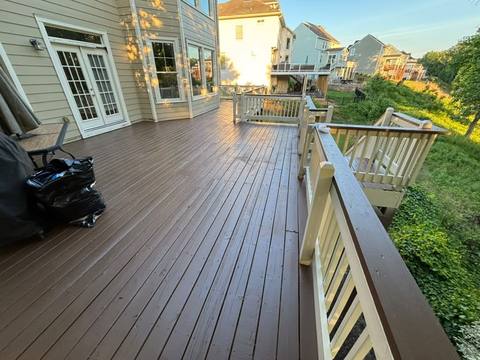
How do I tell if termites or carpenter bees are damaging my deck? Look for perfectly round holes for carpenter bees and muddy tunnels or hollow wood for termites. Bees leave small piles of sawdust, while termites create hidden galleries. If you see these signs, check the wood with a screwdriver and call a pest professional before starting any structural repairs.
Free estimate · opens your texting app · no forms needed
Get a fast estimate
★★★★★ 31 Google reviews as of Nov 2026 — “Great workmanship, fair pricing, and excellent customer service.” Read reviews
- Free written estimate within one day
- General liability coverage
- Crews with 10+ years of combined experience
- Owner on every job
- Text us (470) 863-3707
Homeowner guide
How do I tell if termites or carpenter bees are damaging my deck?
I have spent a lot of time on job sites around Canton, and I can tell you that bugs are the biggest enemy of a good deck. Most folks do not notice the damage until a board snaps or a railing wobbles. You have to know what to look for before the structure becomes unsafe.
- Breno, the owner, measures and writes your estimate
- 10+ years of combined team experience
- General liability insurance
- 5.0 stars from 31 Google reviews as of Nov 2026
- Real before-and-after photos from our own jobs
Guide
Spotting the signs of carpenter bees
Carpenter bees do not eat the wood, but they drill into it to make a home. You can spot them pretty easily if you know where to look.
- Look for perfectly round holes that look like they were made by a drill.
- Check for small piles of sawdust on the deck boards or the ground below.
- Notice if the holes are mostly in untreated softwoods or older railing caps.
- Listen for a buzzing sound coming from inside the wood during the warm months.
These bees usually stay near the surface, but if they leave enough holes, they weaken the integrity of your boards over a few seasons.
Guide
Identifying termite mud tubes and tunnels
Termites are a different beast because they work from the inside out and try to stay hidden from the light. They build their own highways to get around.
- Search for mud tubes, which are thin tunnels made of soil and saliva climbing up your posts.
- Look for wood that looks intact on the outside but feels soft or spongy.
- Check the areas where the wood touches the ground or damp soil.
- Search for discarded wings near the edges of your porch.
Unlike bees, termites eat the cellulose in the wood, leaving behind a hollow shell that can collapse without any warning.
How it works
Five steps. No surprises.
Call, text, or send the form
Tell us what is going on: a new deck, a repair, or “not sure yet.” We reply the same day.
Free on-site visit
Breno looks at the deck or the yard himself, measures, and goes over your options with you.
Written estimate
Scope, materials and price come in writing, so you know the plan before anything starts.
Schedule and permits
We agree on a start date and confirm any city, county or HOA requirement for your address first.
Build and final walk-through
Breno is on the job, and we go over the finished work with you before we call it done.
Real B&T work
Photos from real jobs


Real photos from B&T projects in North Georgia.
Guide
Checking for frass and sawdust
The waste left behind by pests is one of the best clues. You just have to know the difference between bee debris and termite frass.
- Carpenter bees leave piles of coarse sawdust that looks like tiny wood shavings.
- Termites leave frass, which looks like tiny granules or pellets.
- Bee debris usually piles up directly under the entry hole.
- Termite pellets often fall through small cracks in the wood, creating little mounds.
If you see sawdust, you are likely dealing with bees. If you see those tiny pellets or mud, you have a much bigger problem on your hands.
Guide
The wood sound test
When I am walking a deck, I use a simple trick to see how the interior of the wood is holding up. You can do this with a heavy screwdriver or a small hammer.
- Press a screwdriver firmly into a suspect area.
- If the tool sinks in easily, the wood is rotted or eaten through.
- Tap the wood with a hammer or the handle of a tool.
- A healthy board sounds solid and sharp.
- A termite infested board sounds hollow or dull, like a drum.
This test tells you if the damage is just on the surface or if the core of the beam is gone.
Guide
How to prevent future infestations
The best way to handle bugs is to make sure they never want to move in. A little bit of maintenance goes a long way in saving you money.
- Keep your deck boards sealed and stained to block entry points.
- Trim back bushes and trees so they do not touch the railing.
- Ensure the ground under the deck is clear of piles of old mulch or wet leaves.
- Fix any leaking gutters or pipes that keep the wood damp.
- Inspect your deck a few times a year for any new holes or soft spots.
Dry, well-maintained wood is much less attractive to pests than damp, peeling boards.
Guide
Handling the cleanup and repair
Once you find a problem, you cannot just paint over it. You have to stop the bugs first and then fix the damage.
- Call a pest control professional to kill the colony or the hive.
- Wait until the expert confirms the bugs are gone before you start building.
- Remove any boards that have lost their structural strength.
- Replace damaged joists or posts with pressure treated lumber.
- Sand down small bee holes and fill them with wood filler before staining.
If you repair the wood while the bugs are still there, they will just eat through your new boards.
Get a fast estimate
Guide
Keeping your deck solid
Dealing with pests is a pain, but catching it early saves the whole deck. Check your posts and rails often. If the wood sounds hollow or you see mud tubes, get it handled right away. Once the bugs are gone and the bad wood is swapped out, a fresh coat of sealant will keep your home safe for a long time.
Guide
Get a Free Deck Health Check
Not sure where your project stands? B&T Properties will take a look and tell you plainly what we see, with no pressure. Text us at 470-863-3707 to schedule your Free Deck Health Check, and we will walk the job with you and explain your options.
Local notes
Around Canton and Holly Springs and nearby
Canton. Setbacks, stream buffers and tree rules can affect where a deck is allowed to go, especially on wooded lots near creeks. We check what applies to your parcel as part of the free estimate instead of leaving you to discover it at inspection. Communities in the area include BridgeMill, Great Sky, Laurel Canyon, River Green.
Holly Springs. Holly Springs is mostly suburban residential, with quiet streets, big subdivisions and some larger lots. Backyards run from fairly level to gently sloping, and plenty back up to creeks or wooded buffers. Communities in the area include Harmony on the Lakes, downtown Holly Springs.
Woodstock. Several Woodstock communities, including master-planned areas like Towne Lake, operate with HOA covenants that can cover decks and screened structures. Share your HOA name with us early and we will build the approval step into the schedule. Communities in the area include Towne Lake, Eagle Watch, Wyngate, Bradshaw Farm.
Straight answers
Common questions
Can I just fill the bee holes with caulk?
You can, but you must do it after the bees are gone. If you seal them in, they may just drill a new hole somewhere else.
Does pressure treated wood stop all termites?
It makes the wood less tasty, but some termites can still get through it over several years. Regular inspections are still necessary.
How often should I stain my deck to prevent bugs?
I usually suggest a fresh coat every few years. This keeps the moisture out and the wood hard.
Is sawdust always a sign of bees?
Not always, but perfectly round holes combined with sawdust is a classic sign of carpenter bees.
Should I replace the whole deck if I find termites?
Not necessarily. Often, you can just replace the specific boards or posts that were damaged after the pest control team finishes.
Verified Google reviews
What the neighbors are saying
These are verified Google reviews from B&T customers.
★★★★★
“If you're looking for a trustworthy contractor, B&T Properties is the right choice. Great workmanship, fair pricing, and excellent customer service.”
★★★★★
“Breno did an excellent job repairing my home. He was professional, reliable, and paid close attention to every detail. The quality of his work exceeded my expectations…”
Who’s doing the work
About B&T Properties
You deal with the owner. Breno visits, quotes and oversees the work, and the crew brings more than ten years of deck experience between them. B&T carries General Liability insurance, and Canton is part of our regular service area.
Upgrades
Upgrades worth asking about
Planning a project in Canton? Bring up any of these at your free estimate. Changes are easier to plan on paper than on a finished deck.
Cover or screens
Add a roof over part of the deck, or screen it in for shade and fewer bugs.
Stairs and landings
Wider steps, a landing, or a second set of stairs down to the yard.
Multi-level layouts
Step down a sloped yard with separate levels for dining and lounging.
Composite decking
Low-maintenance boards in a range of colors, priced next to wood so you can compare.
Service area
Cities we serve
Written warranty
1-year workmanship warranty
B&T Properties warrants our workmanship for one year from completion and fixes failures caused by our work at no charge. Not covered: material defects (manufacturer warranty), normal wear, weather, misuse, lack of maintenance, or work by others. Claims in writing.
Free written estimate
Ask Breno about your deck — free and in writing.
No call center, no sales rep — the person who answers is the person who does the work.