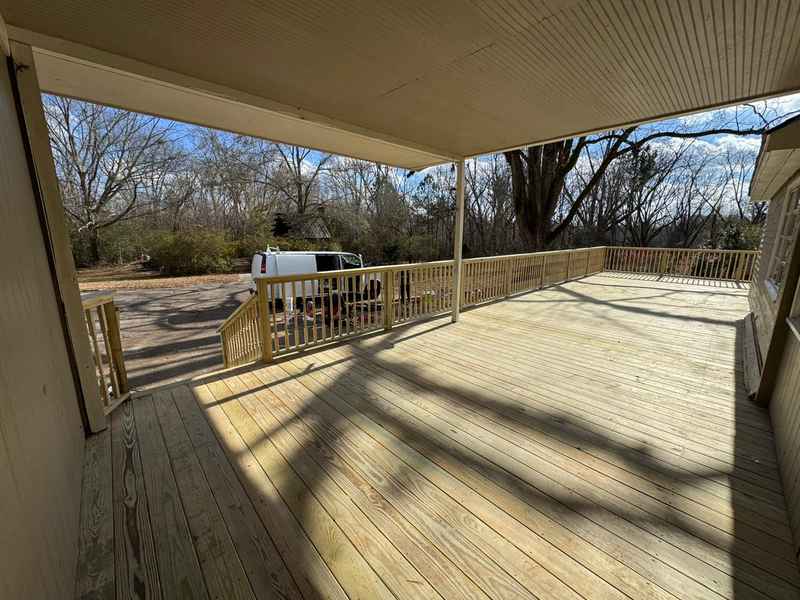
Owner-operated · Homeowner guide · Ball Ground
How a Sloped, Red-Clay Yard Changes a Deck in Ball Ground, GABall Ground · Cherokee County
Ball Ground: A sloped yard with red clay underfoot changes almost every part of a deck, from the height of the posts to the way the stairs land. Owner-operated, with a free written estimate.
Free estimate · opens your texting app · no forms needed
Get a fast estimate
★★★★★ 31 Google reviews as of Nov 2026 — “Great workmanship, fair pricing, and excellent customer service.” Read reviews
- Free written estimate within one day
- General liability coverage
- Crews with 10+ years of combined experience
- Owner on every job
- Text us (470) 863-3707
Homeowner guide · Ball Ground
How does a sloped, red-clay yard change a deck?
Here is how the ground in Ball Ground shapes the design, and what to ask before anyone starts digging.
- Owner-operated: Breno visits and writes your estimate himself
- A team with 10+ years of combined experience
- Insured with general liability coverage
- 31 Google reviews as of Nov 2026, rated 5.0
- Before-and-after photos from our own completed jobs
Ball Ground
The grade sets the design
Every good deck plan starts with the ground, not the drawing. In the Piedmont, yards rarely sit flat. They roll, tilt and drop toward a creek or a tree line, and that grade decides how high the deck floats, where the stairs go and how the whole structure sits on the lot. Two backyards that look alike from the kitchen window can call for very different decks once you walk the slope. That is why we look at the yard before we talk about boards or railings.
A deck drawn from a photo or a flat sketch often falls apart the moment someone stands in the actual yard. Breno visits in person to see how the ground falls away from the house, where the low spots are and which direction water travels after a storm. Around Ball Ground, larger lots and wooded settings mean longer views and often more slope to work with. A slope is not a problem to hide. It can become the right feature of the design when the plan respects it.
Ball Ground
Posts get taller on a slope
On a hillside, the deck surface usually stays close to the level of the back door, while the ground drops away below it. That means the posts at the far edge stand much taller than the ones near the house. Tall posts behave differently from short ones. They can flex or sway if they are not braced well, and they put more load on the footings below. A sloped yard often calls for heavier posts, careful bracing and a thoughtful frame so the deck feels solid underfoot rather than bouncy.
Tall posts also change how the deck looks from the yard. A high, open structure can feel like a big box on stilts if nothing softens it. Some homeowners choose lattice, skirting or landscaping beneath the deck, while others prefer the open space for storage or shade. Around homes near Hawks Ridge, where lots can sit among trees and open views, the way a deck reads from below matters as much as the view from above. We talk through these choices during the free written estimate.
How it works
Five steps. No surprises.
Call, text, or send the form
Tell us what is going on: a new deck, a repair, or “not sure yet.” We reply the same day.
Free on-site visit
Breno looks at the deck or the yard himself, measures, and goes over your options with you.
Written estimate
Scope, materials and price come in writing, so you know the plan before anything starts.
Schedule and permits
We agree on a start date and confirm any city, county or HOA requirement for your address first.
Build and final walk-through
Breno is on the job, and we go over the finished work with you before we call it done.
Real B&T work
Photos from real jobs


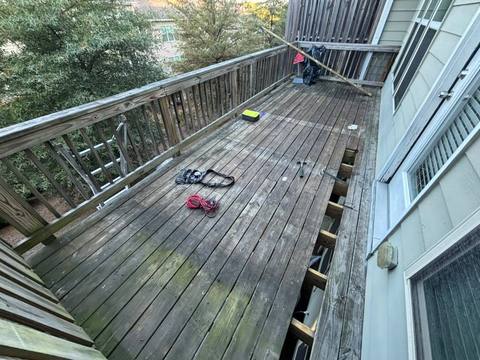
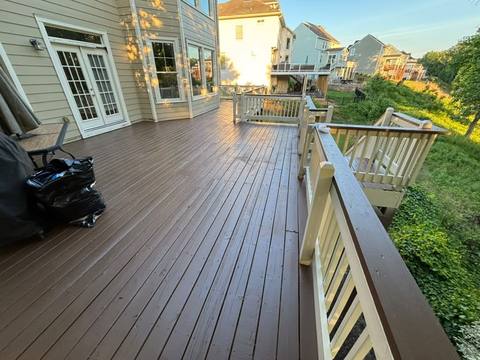
Real photos from B&T projects in North Georgia, not necessarily from Ball Ground.
Ball Ground
Footings must grip red clay
Georgia red clay is a different material from sandy or loamy soil. When it is dry, it can be hard and tight. When it is wet, it tends to turn slick and soft, and it can hold water for a long time. Footings have to carry the weight of the deck through that changing ground, and on a slope they also have to resist the natural tendency of soil to creep downhill. Sound footings are one of the least visible and most important parts of any hillside deck.
Rain and dry spells can move clay more than people expect, so a footing that looks fine on a sunny day may need extra thought. We look at how the soil behaves, how steep the ground is and how much load each post will carry. Rules for footings and inspections depend on your address, so confirm the details with the building department that covers your property. We would rather settle that early than discover a problem after the posts are standing.
Ball Ground
Water needs somewhere to go
Rainwater on a slope does not sit politely. It runs, and red clay does not soak it up quickly, so runoff can race along the surface toward the lowest spot. If that spot is under your deck, near a post or against the foundation, trouble follows. Soil can wash out around footings, mud can pile up and wood that stays damp tends to age faster. Good design steers water away from the structure and from the house instead of fighting it.
Drainage also connects to the rules for building near water. Ball Ground sits among creeks and woods, and the city's code includes a stream buffer protection chapter and treats decks as impervious cover, so a deck close to a creek or wet area can be restricted. Whether that applies to your lot depends on your address. Confirm it with the City of Ball Ground, or with Cherokee County if you live outside the city limits, before you settle on a layout.
Get a fast estimate
Ball Ground
Stairs and landings follow the ground
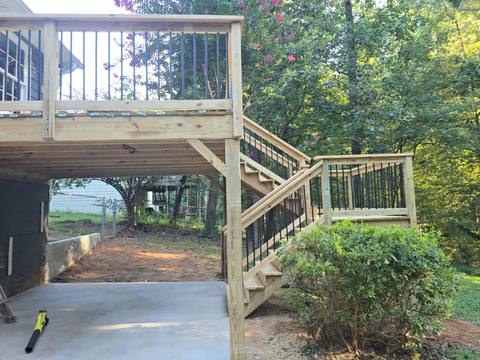
On a flat lot, stairs are a small detail. On a slope, they can become the longest and most important part of the project. A tall deck over falling ground may need a long run of steps, and a long run often needs a landing partway down so the climb feels safe and comfortable. Where that landing sits depends on the grade, and the final step has to meet the ground in a spot that stays firm and does not turn to mud after rain.
Landings also give you a chance to shape how the deck connects to the yard. A stair can turn along the hillside, land on a small pad, or lead to a path toward the garden or the woods. Good railings and solid footing at the bottom matter just as much as the treads. We build and repair stairs, landings and railings, and we plan them around how your family will actually walk from the house to the yard, in dry weather and wet.
Straight answers
Ball Ground homeowner questions
Why does a sloped yard make my deck taller?
The deck usually needs to sit near the level of your back door, and the ground falls away from there. The farther the yard drops, the longer the posts at the outer edge have to be. That extra height affects bracing, footings and how the deck looks from below.
Does red clay make a deck harder to build?
It can. Clay often holds water, turns slick when wet and can shift between wet and dry seasons. None of that rules out a solid deck, but footings, drainage and post placement need more care than they might in easier soil. Seeing the yard in person helps us plan for it.
Will rain wash out the soil around my posts?
It can, especially on a slope where runoff moves quickly across clay. Good planning directs water away from posts and the house, and landscaping or grading can help. If you already see washed-out spots or pooling, point them out during the visit so we can account for them.
Can I build a deck close to a creek behind my house?
Possibly, but it depends on your lot. Ball Ground's code includes a stream buffer protection chapter and treats decks as impervious cover, so a deck near a creek or wet area can be restricted. Check with the city, or Cherokee County if you are outside city limits, before planning.
Do I need a permit for a deck on a hillside?
Permits depend on your address. The City of Ball Ground building department handles permits inside city limits, and its application lists decks and porches among additions that need one. Addresses outside the city fall under Cherokee County. Confirm with the right office before work begins.
How do you handle a long set of stairs on a steep lot?
We usually break a long run into sections with a landing, so the climb is safer and more comfortable. The landing and the bottom step both need firm ground that drains well. Railings are planned along with the stairs, not added as an afterthought.
Does my historic downtown Ball Ground home need anything special?
It might. Downtown Ball Ground has a National Register historic district, and that can matter for homes in that area. Rules depend on the exact address, so ask the city before you design anything. We are happy to work from whatever guidance you receive.
How do I get an estimate for a deck on a sloped lot?
Reach out and Breno will visit your yard in person, walk the slope and look at the soil and drainage. We provide free written estimates. We also serve homeowners in nearby Canton, Holly Springs and Woodstock, so tell us where your property sits.
Verified Google reviews
What the neighbors are saying
These are verified Google reviews from B&T customers.
★★★★★
“Outstanding service! Breno is knowledgeable, honest, and takes pride in his work. It's hard to find a company this reliable these days.”
★★★★★
“Breno F. is an incredible man. He helped my aging mother when no one else would and went the extra mile with a complex home repair. His work is meticulous and his follow through is commendable. He is a good man with a great heart. Highly recommended!”
Who’s doing the work
About B&T Properties
B&T Properties is run by Breno, who visits the job, writes the estimate and stays involved until the work is done. The crew has 10+ years of combined deck experience, and the company carries General Liability insurance. We work in Ball Ground and across Cherokee County.
Upgrades
Make it yours: popular upgrades
Thinking beyond the basics? Mention any of these at your free estimate and Breno will go over what makes sense for your home.
Multi-level layouts
Step down a sloped yard with separate levels for dining and lounging.
Lighting
Soft LED lighting along the steps and rail, so the deck is usable after dark.
Stairs and landings
Wider steps, a landing, or a second set of stairs down to the yard.
Cover or screens
Shade, rain cover or screens, planned in from the start.
Written warranty
1-year workmanship warranty
Workmanship warranty: one year from the day we complete the work, in writing. Faults that come from our labor are repaired at no charge. Not included: manufacturer material defects, normal wear and tear, weather, misuse, no maintenance, repairs by other parties. Submit claims in writing.
Free written estimate
Tell Breno about your Ball Ground deck — free and in writing.
No call center, no sales rep — the person who answers is the person who does the work.