Owner-operated · Homeowner guide · Woodstock
Building a Deck in Woodstock With Sloped Red ClayWoodstock · Cherokee County
Woodstock: A sloped yard with red clay changes how we build a deck in Woodstock. It affects footings, stairs, and how water moves around the structure. Owner-operated, with a free written estimate.
Free estimate · opens your texting app · no forms needed
Get a fast estimate
★★★★★ 31 Google reviews as of Nov 2026 — “Great workmanship, fair pricing, and excellent customer service.” Read reviews
- Free written estimate within one day
- General liability coverage
- Crews with 10+ years of combined experience
- Owner on every job
- Text us (470) 863-3707
Homeowner guide · Woodstock
How does a sloped, red-clay yard change a deck?
Footings are where a Woodstock deck on a slope succeeds or struggles, because heavy red clay holds water and shifts, so each post needs to be placed with the grade in mind.
- The owner comes to the visit and writes the estimate himself
- Crews with 10+ years of combined experience
- Insured (general liability)
- Rated 5.0 on Google across 31 reviews as of Nov 2026
- Photos from our own jobs, not stock images
Woodstock
Understanding the Slope
When the ground slopes away from the house, the deck needs to stay level while following the grade. That means posts on the low side have to be taller to reach the same height as the framing on the high side. We set the ledger board first, then adjust each post length so the beams and joists stay flat and square. It’s not about fighting the slope but working with it to keep the deck safe and comfortable underfoot.
Red clay holds water differently than sandy or loamy soil. It drains slowly, so water can sit against wood or concrete longer than in other areas. We always look at where the water flows during a hard rain before setting footings. If the clay stays wet, it can shift over time, especially under load, so we make sure the footings sit on stable ground and aren’t in a pocket where water collects.
Woodstock
Footings on Clay
Footings need to reach solid, undisturbed soil, and red clay can be tricky because it expands when wet and shrinks when dry. That movement can shift a footing if it’s not deep enough or not on stable ground. We dig past the active zone of the clay where it swells and settles with the seasons. How deep that is depends on the spot, but we never guess—we check the soil as we go and adjust based on what we find.
We use concrete piers or sonotubes set on undisturbed earth, not just dumped in loose fill. If the clay is soft near the surface, we go deeper until we hit firmer ground. The goal is to keep the footing from moving, which keeps the deck from sinking or tilting over the years. In Woodstock, especially in older neighborhoods with mature trees, we often hit roots or old fill, so we probe carefully before pouring.
How it works
Five steps. No surprises.
Call, text, or send the form
Tell us what is going on: a new deck, a repair, or “not sure yet.” We reply the same day.
Free on-site visit
Breno looks at the deck or the yard himself, measures, and goes over your options with you.
Written estimate
Scope, materials and price come in writing, so you know the plan before anything starts.
Schedule and permits
We agree on a start date and confirm any city, county or HOA requirement for your address first.
Build and final walk-through
Breno is on the job, and we go over the finished work with you before we call it done.
Real B&T work
Photos from real jobs


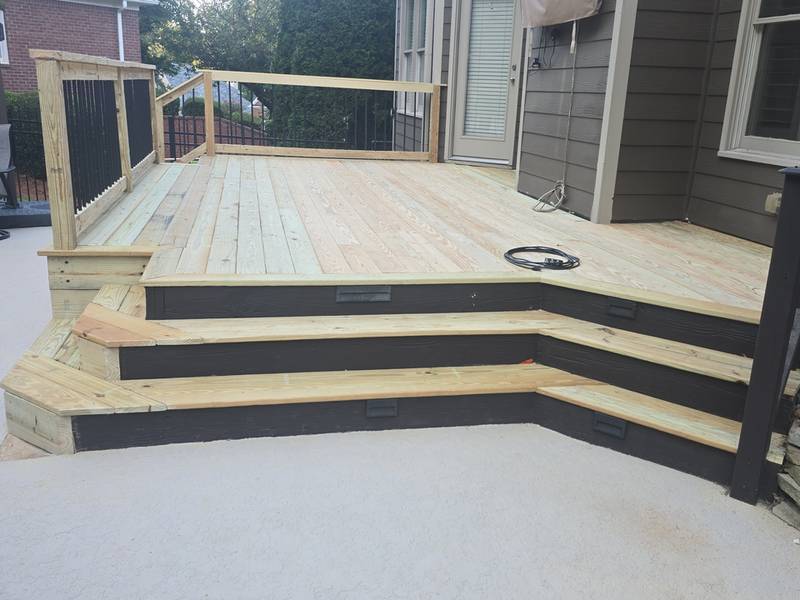
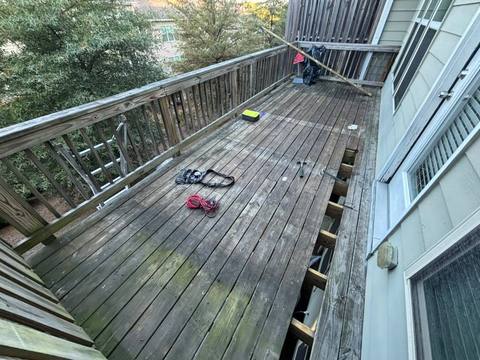
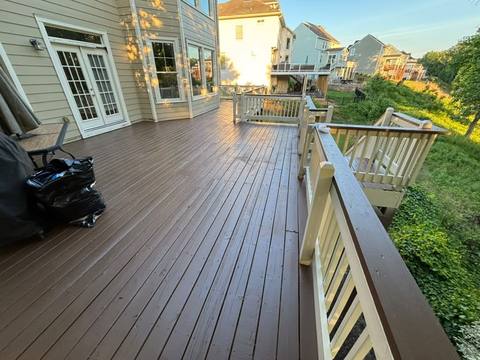
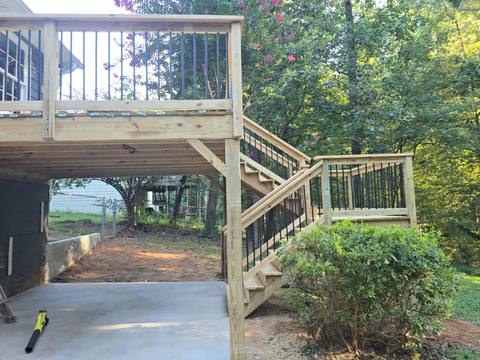
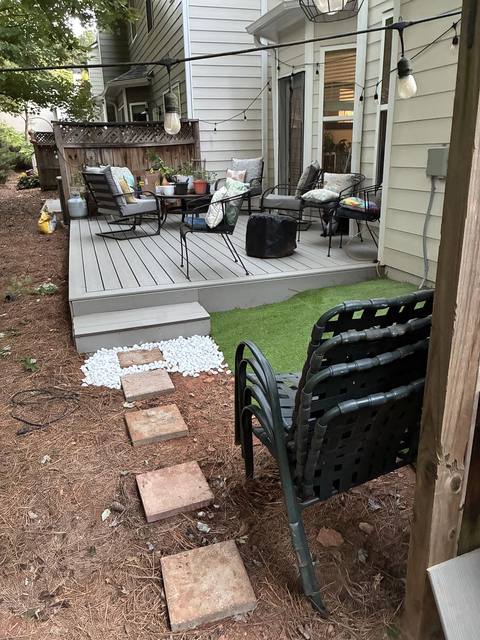
Real photos from B&T projects in North Georgia, not necessarily from Woodstock.
Woodstock
Drainage Matters
Water that sits against the deck frame or posts will shorten the life of the wood, no matter how well it’s built. On a sloped red-clay yard, we make sure the ground falls away from the deck on all sides, even if it means adding a little gravel or regrading a small area. We never let water pool under the deck or run back toward the house. A dry deck lasts longer, especially in the shade where trees keep things damp.
We also think about where the downspouts go and how roof water flows onto the yard. If a downspout dumps right at the base of a post, that’s a problem over time. We might suggest extending the downspout or adding a splash block to move water farther out. In places like Towne Lake or Eagle Watch, where lots are shaded and leaf cover holds moisture, good drainage isn’t optional—it’s part of the build.
Woodstock
Stairs and Landings
On a slope, stairs aren’t just steps—they’re a transition from the yard to the deck, and they have to follow the grade safely. If the drop is tall, we break it into multiple landings so each flight stays within a comfortable rise. Landings also give a place to rest and change direction, which matters on uneven ground. We set the landing on solid footing, just like the deck, so it doesn’t shift underfoot.
The bottom of the stairs needs to land on stable ground that won’t wash out or get muddy. In red clay, that often means putting the landing on a gravel base or a small pad to keep it above wet soil. We also make sure the treads are deep enough and the risers even, especially if the slope changes along the path. A wobbly stair is a hazard, so we build it to stay solid year after year.
Woodstock
Railings and Grade
The height of the railing is measured from the deck surface, not the ground, so a tall post on the low side doesn’t change the rail height—but it does mean more post is buried or visible below the deck. That can affect how the railing looks and how we attach it. We make sure the post is solid in the footing and that the connection to the beam or joist is strong, even if it’s longer than usual.
On a slope, the railing might follow the stair or step down with the grade if it’s a long run. We design it so the handrail stays at a consistent height for safety and comfort, using angled sections or newels where needed. In Woodstock, where many decks are under trees and used year-round, a wobbly or loose railing isn’t just ugly—it’s a risk we avoid by building it tight from the start.
Get a fast estimate
Woodstock
Stains and Shade
Red clay doesn’t directly affect stain, but the moisture it holds does. In shaded yards with slow-draining soil, wood stays damp longer, which can lead to mildew or uneven drying if you stain too soon. We always let the deck acclimate and dry out after building before applying any finish. Rushing the stain traps moisture inside, which causes peeling or blotchiness later.
We also talk about wood choice—some boards handle wet cycles better than others, especially in the shade where decks in places like Bradshaw Farm or near downtown Woodstock see less sun. We might suggest a wood with better dimensional stability or a stain that lets the wood breathe. The goal is to let the deck dry evenly after rain, so the finish lasts and looks good through the seasons.
Straight answers
Woodstock homeowner questions
Does a sloped yard mean I need more posts for my deck in Woodstock?
Not necessarily more posts, but the posts on the low side will be taller to keep the deck level. We set the ledger first, then cut each post to length so the frame stays flat and square, no matter how the ground slopes underneath.
How does red clay affect how deep the footings go for a deck in Woodstock?
Red clay swells when wet and shrinks when dry, so we dig past the active zone where it moves with the seasons. We check the soil as we dig and set the footing on undisturbed ground to prevent shifting over time.
Will water hurt my deck if it sits against the posts in a red-clay yard in Woodstock?
Yes, standing water speeds up rot, especially in shaded areas. We make sure the ground slopes away from the deck and that downspouts don’t dump at the base of posts, so the framing stays dry and lasts longer.
Do I need a landing on my deck stairs if my yard in Woodstock is on a slope?
If the drop is tall, we break the stairs into flights with landings so each step is safe and easy to use. Each landing sits on solid footing, just like the deck, so it doesn’t shift or sink when you walk on it.
Can the slope change how the railing looks on my deck in Woodstock?
The railing height stays the same from the deck surface, but posts on the low side are longer, so more of them is below the deck. We make sure those posts are solid in the footing and tightly connected to the frame.
Should I wait to stain my new deck if my Woodstock yard has red clay and lots of shade?
Yes, we let the deck dry out after building before applying stain. Trapped moisture under the finish causes peeling, so we wait until the wood is ready, especially in damp, shaded spots.
Does the city of Woodstock handle deck permits if I live near I-575 or Highway 92?
Permits depend on your exact address—some areas are city, some are county. We confirm the right office for you, whether you’re near I-575, Highway 92, or another part of Woodstock.
Do HOAs in places like Towne Lake or Eagle Watch affect deck builds in Woodstock?
Many communities have HOA guidelines that can cover decks, screens, or stairs. We ask for your HOA name early so we can include any approval steps in the schedule from the start.
How do trees and creeks near my property in Woodstock affect where we can build a deck?
Woodstock’s tree ordinance and stream buffers mean we check for large trees or creeks before planning the footprint. If a protected tree or buffer is nearby, we adjust the layout to stay outside those zones.
Can I build a deck in a shaded Woodstock yard with red clay and still expect it to last?
Yes, we pick materials and details that handle damp, shaded conditions—like proper drainage, airflow, and wood choice—so the deck stays solid and looks good, even under trees and in slow-draining soil.
Verified Google reviews
What the neighbors are saying
These are verified Google reviews from B&T customers.
★★★★★
“If you're looking for a trustworthy contractor, B&T Properties is the right choice. Great workmanship, fair pricing, and excellent customer service.”
★★★★★
“Breno and his team exceeded our expectations. They were organized, efficient, and truly cared about delivering a high-quality result. We couldn't be happier.”
Who’s doing the work
About B&T Properties
B&T Properties is run by Breno, who visits the job, writes the estimate and stays involved until the work is done. The crew has 10+ years of combined deck experience, and the company carries General Liability insurance. We work in Woodstock and across Cherokee County.
Upgrades
Make it yours: popular upgrades
Thinking beyond the basics? Mention any of these at your free estimate and Breno will go over what makes sense for your home.
Cover or screens
Shade, rain cover or screens, planned in from the start.
Lighting
Stair and post lights that make evenings outside safer and nicer.
Stairs and landings
Wider steps, a landing, or a second set of stairs down to the yard.
Composite decking
Low-maintenance boards in a range of colors, priced next to wood so you can compare.
Service area
Cities we serve
Written warranty
1-year workmanship warranty
Workmanship warranty: one year from the day we complete the work, in writing. Faults that come from our labor are repaired at no charge. Not included: manufacturer material defects, normal wear and tear, weather, misuse, no maintenance, repairs by other parties. Submit claims in writing.
Free written estimate
Tell Breno about your Woodstock deck — free and in writing.
No call center, no sales rep — the person who answers is the person who does the work.