Owner-operated · Homeowner guide · Buckhead
Understanding Moisture Problems in Buckhead DecksBuckhead · Fulton County
Buckhead: A deck that feels damp, slick or soft underfoot can be frustrating and may signal underlying issues. In Buckhead’s wooded, hilly settings, moisture problems often stem from shade, debris and drainage. Owner-operated, with a free written estimate.
Free estimate · opens your texting app · no forms needed
Get a fast estimate
★★★★★ 31 Google reviews as of Nov 2026 — “Great workmanship, fair pricing, and excellent customer service.” Read reviews
- Free written estimate within one day
- General liability coverage
- Crews with 10+ years of combined experience
- Owner on every job
- Text us (470) 863-3707
Homeowner guide · Buckhead
Why is my deck always damp, slick or soft?
A Buckhead deck that never seems to dry out is worth a closer look, since slow drying can mean anything from a layer of algae on the boards to wood weakening underneath.
- The owner comes to the visit and writes the estimate himself
- Crews with 10+ years of combined experience
- Insured (general liability)
- Rated 5.0 on Google across 31 reviews as of Nov 2026
- Photos from our own jobs, not stock images
Buckhead
What makes my deck stay damp after rain?
Shade from mature trees common in Buckhead neighborhoods like Tuxedo Park and Garden Hills limits sunlight, slowing evaporation. When decks sit under dense canopies, especially on north-facing slopes, moisture lingers longer on the surface and between boards. Leaf debris from oaks, maples and pines traps water against the wood, creating a constantly damp environment. This is especially true in low spots where debris collects and isn’t cleared regularly. Over time, this persistent dampness can lead to surface growth of algae or mildew, making the deck feel slick even when it hasn’t rained recently. While surface dampness alone may not mean structural damage, it accelerates wear if not addressed.
Buckhead
Why does my deck feel soft or spongy in spots?
Soft or spongy areas usually indicate trapped moisture where water isn’t draining properly, often at board ends or where the deck meets the house. In Buckhead’s rolling terrain, decks built on slopes may have poor runoff, allowing water to pool underneath or against the ledger board. When leaves and dirt accumulate in these joints, they hold moisture like a sponge, preventing the wood from drying. Over time, this leads to rot, especially in untreated or older pressure-treated lumber. You might notice the softness near posts, stairs or where railings attach—places that are harder to inspect. If the wood gives easily under pressure or crumbles when probed, it’s no longer just a surface issue and likely needs repair.
How it works
Five steps. No surprises.
Call, text, or send the form
Tell us what is going on: a new deck, a repair, or “not sure yet.” We reply the same day.
Free on-site visit
Breno looks at the deck or the yard himself, measures, and goes over your options with you.
Written estimate
Scope, materials and price come in writing, so you know the plan before anything starts.
Schedule and permits
We agree on a start date and confirm any city, county or HOA requirement for your address first.
Build and final walk-through
Breno is on the job, and we go over the finished work with you before we call it done.
Real B&T work
Photos from real jobs


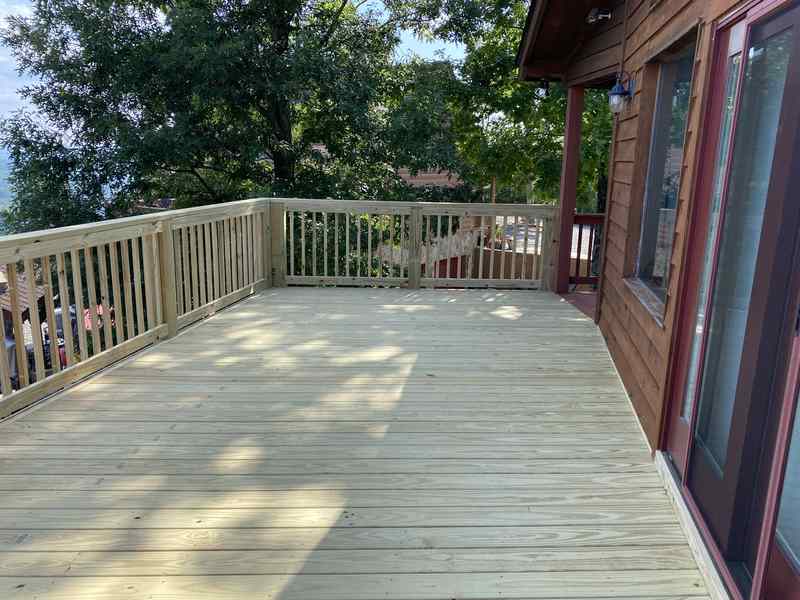
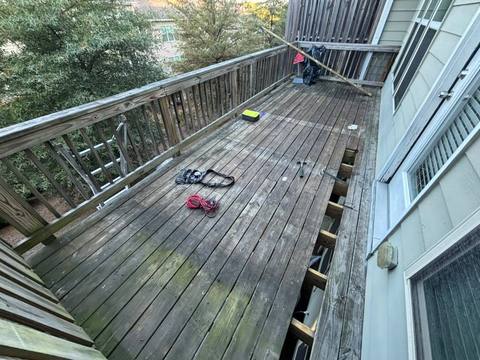
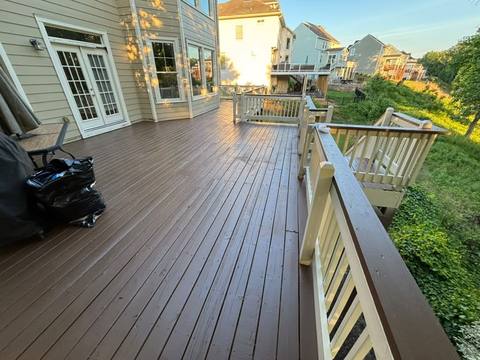
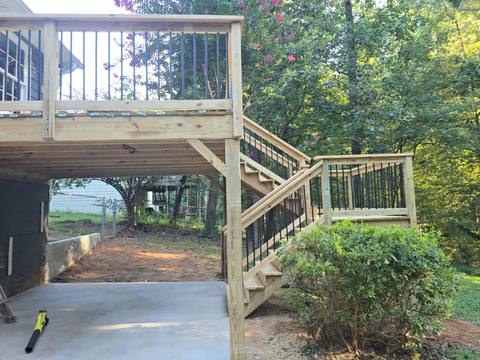
Real photos from B&T projects in North Georgia, not necessarily from Buckhead.
Buckhead
Is a slick deck just from algae or something worse?
A slick deck is often caused by algae, moss or mildew growing in damp, shaded areas—common in Buckhead’s wooded yards like those near Peachtree Heights or Chastain Park. These organisms thrive when moisture stays on the surface and aren’t usually a sign of structural decay at first. Cleaning with a wood-safe solution can remove the slickness and improve safety temporarily. However, if the slickness returns quickly after cleaning or is accompanied by soft spots, it may mean moisture is trapped beneath the surface. Persistent growth despite cleaning suggests the wood is staying wet too long, which can lead to rot. Always check underneath and at the edges when you see recurring slickness—it’s a clue that drainage or airflow needs improvement.
Buckhead
When is dampness just cosmetic and when does it mean repair?
Surface dampness that dries within a day or two after rain and doesn’t leave the wood soft or discolored is often just environmental, especially in shaded yards around Piedmont Road or West Paces Ferry Road. If the wood feels solid, shows no cracking or crumbling, and only looks dull or slightly stained, it may only need cleaning and better maintenance. But if you notice dark streaks, soft spots, or wood that splinters easily when touched, the moisture has likely penetrated and started to break down the fibers. This is more than cosmetic—it means the deck’s integrity is compromised in those areas. Ignoring it can lead to unsafe conditions, especially on stairs or railings where strength matters most.
Get a fast estimate
Buckhead
How does poor drainage under my deck cause problems?
In Buckhead, many lots have deep setbacks and sloped backyards, but if the ground under the deck isn’t graded to shed water, moisture can collect and linger. This is especially problematic in low areas or near the house where downspouts dump water without proper drainage. When the soil stays soggy, it keeps the underside of the deck boards and support framing wet, accelerating rot and inviting pests. Over time, this can cause posts to sink or beams to weaken, particularly in older decks near historic districts where original construction may not account for modern drainage needs. Even if the top looks fine, hidden damage can spread silently. We always check the underside during inspections because what’s underneath often tells the real story.
Straight answers
Buckhead homeowner questions
How often should I clean my deck to prevent dampness issues in Buckhead?
In Buckhead’s shaded, leafy yards, we recommend cleaning your deck at least twice a year—once in spring after pollen season and once in fall after leaves drop. This helps remove debris that traps moisture and prevents algae buildup that makes surfaces slick.
Can staining help reduce dampness problems on my Buckhead deck?
A quality stain can help slow moisture absorption and protect against UV damage, but it won’t fix poor drainage or trapped water. Stain is part of maintenance, not a substitute for fixing underlying issues like rot or poor airflow under the deck.
Should I worry if only the ends of my deck boards feel soft?
Yes—soft board ends often mean water is soaking in and not drying out, especially where boards butt together or meet the house. This is a common trouble spot and usually means those boards need to be replaced to prevent further damage.
Does Buckhead’s hilly terrain make deck drainage harder to manage?
Sloped yards can help water run off, but if the deck blocks natural flow or creates a flat pocket underneath, water can pool. We assess each site individually because grading and deck height affect how moisture moves beneath the structure.
Can moss on my deck mean there’s a leak from my house above?
Moss itself usually comes from surface dampness and shade, not leaks. But if you see moss or rot concentrated where the deck attaches to the house, it’s worth checking the flashing and ledger board for water intrusion from above.
Why does my deck feel slick only in the morning in Buckhead?
Morning slickness is often dew combined with algae or mildew in shaded areas. As the sun rises and evaporates moisture, the slickness fades—but if it returns daily, it means the surface stays damp too long due to poor airflow or debris.
Should I replace just the soft boards or the whole deck in Buckhead?
We only replace what’s damaged. If the frame is solid and only a few boards are soft, we can repair those spots. But if rot has spread to joists, posts or the ledger, more extensive work may be needed for safety and longevity.
How do I know if my deck’s dampness is affecting the house?
Check where the deck meets the siding or foundation—look for soft wood, peeling paint or mold on the house side. If the ledger board or rim joist feels damp or soft, water may be trapped and could affect the structure over time.
Verified Google reviews
What the neighbors are saying
These are verified Google reviews from B&T customers.
★★★★★
“Breno and his team exceeded our expectations. They were organized, efficient, and truly cared about delivering a high-quality result. We couldn't be happier.”
★★★★★
“The quality of the work was exceptional. The team was friendly, responsive, and made sure everything was done right. I would definitely recommend B&T Properties.”
Who’s doing the work
About B&T Properties
B&T Properties is run by Breno, who visits the job, writes the estimate and stays involved until the work is done. The crew has 10+ years of combined deck experience, and the company carries General Liability insurance. We work in Buckhead and across Fulton County.
Upgrades
Add-ons to consider
Ask about any of these when Breno comes out for your free estimate. They are easiest to price in when we plan the project, not after it is built.
Composite decking
Boards that resist rot and skip the yearly stain. Worth pricing in at the start.
Stairs and landings
A better way down to the yard, with extra width, a landing or a second flight.
Railing styles
Railing is what you see first, so we go over the options before the estimate is final.
Lighting
Low-voltage LED lights on stairs, posts or under the rail cap for evenings outside.
Written warranty
1-year workmanship warranty
Our labor carries a written one-year warranty counted from the finish date: if our workmanship is the cause, we repair it free. The warranty excludes faulty materials (the maker’s warranty applies), ordinary wear, storm damage, misuse, skipped upkeep and other contractors’ work. Send claims in writing.
Free written estimate
Tell Breno about your Buckhead deck — free and in writing.
No call center, no sales rep — the person who answers is the person who does the work.