Owner-operated · Homeowner guide · Milton
Is It Rot, Termites or Carpenter Bees on My Milton Deck?Milton · Fulton County
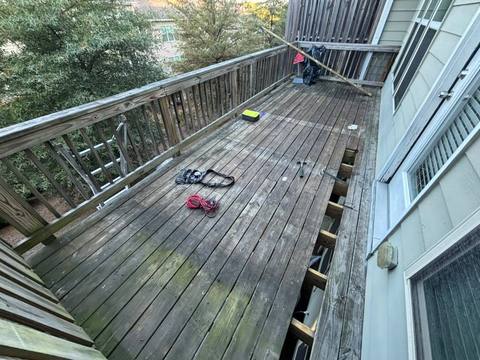
Milton: Soft spots, holes and sawdust on a deck can come from moisture, from insects, or from both at once. Owner-operated, with a free written estimate.
Free estimate · opens your texting app · no forms needed
Get a fast estimate
★★★★★ 31 Google reviews as of Nov 2026 — “Great workmanship, fair pricing, and excellent customer service.” Read reviews
- Free written estimate within one day
- General liability coverage
- Crews with 10+ years of combined experience
- Owner on every job
- Text us (470) 863-3707
Homeowner guide · Milton
Is it rot, termites or carpenter bees chewing my deck?
Here is how a Milton homeowner can tell the difference by looking and probing, and why the frame and ledger area deserve more attention than the surface boards.
- Owner-operated: Breno visits and writes your estimate himself
- A team with 10+ years of combined experience
- Insured with general liability coverage
- 31 Google reviews as of Nov 2026, rated 5.0
- Before-and-after photos from our own completed jobs
Milton
How can I tell rot from insect damage?
Start with what the wood looks like and how it feels. Rot tends to show up where water sits: darkened boards, a spongy surface, wood that crumbles or peels away in stringy layers, and sometimes a musty smell. The damage usually spreads in a patch, and the grain often looks cracked across like a dried-out riverbed. Insect damage looks different. It usually involves holes, tunnels, or fine powdery debris, and the wood around a tunnel may stay firm while the inside is hollowed out.
Carpenter bees leave the clearest signature. Look for round, neat entry holes on the underside of rails, fascia, and board ends, often with coarse sawdust or yellowish staining below. Termites are quieter and harder to spot. They tend to work inside the wood, leaving a thin skin of surface wood over hollow galleries, along with mud tubes on posts or masonry near the ground. If a board sounds hollow when tapped, take note. Rot and insects can also feed on each other, since damp wood is easier for pests to start on.
Milton
What can I probe with, and what will I feel?
A screwdriver is all you need. Press the tip into the wood and push firmly, then compare a suspect spot with a board you know is sound. Healthy wood resists and the tip barely dents it. Rotted wood lets the tip sink in easily, and a small piece often lifts out in a soft, wet clump. Try it along the grain too, because a sharp pick can pull out a long splinter from sound wood but will crumble out short, mushy bits from decayed wood.
Insect damage feels different under the probe. The tip may break through a thin shell into an empty tunnel, or you may find clean channels running along the grain. Carpenter bee galleries are smooth and round, while termite galleries are rougher and often packed with soil or fine debris. Probe gently near posts, joist ends, and stair stringers, and do not force the tool through anything you are standing on. If the wood gives way more than you expected, stop and call someone.
How it works
Five steps. No surprises.
Call, text, or send the form
Tell us what is going on: a new deck, a repair, or “not sure yet.” We reply the same day.
Free on-site visit
Breno looks at the deck or the yard himself, measures, and goes over your options with you.
Written estimate
Scope, materials and price come in writing, so you know the plan before anything starts.
Schedule and permits
We agree on a start date and confirm any city, county or HOA requirement for your address first.
Build and final walk-through
Breno is on the job, and we go over the finished work with you before we call it done.
Real B&T work
Photos from real jobs


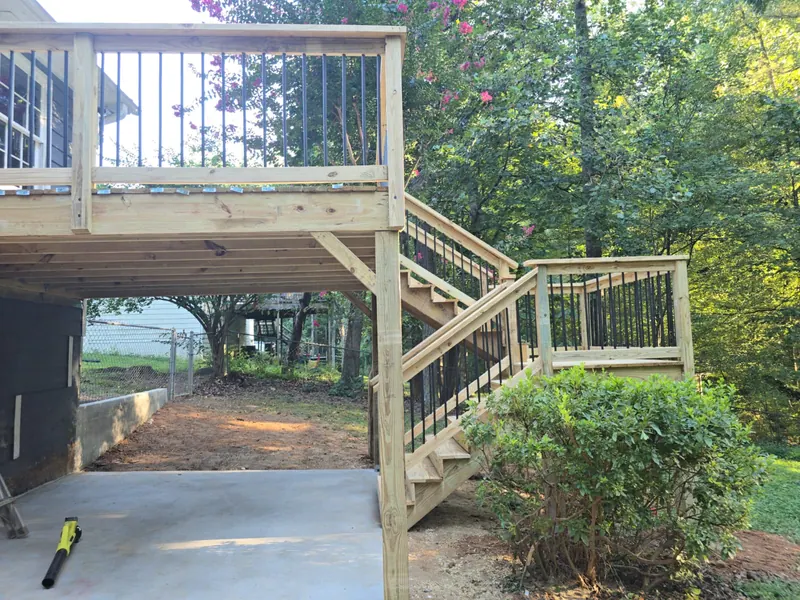
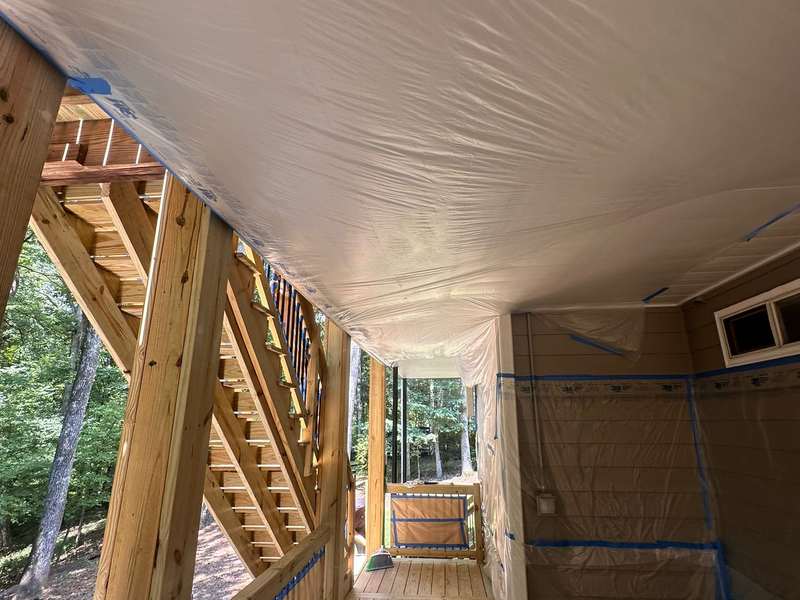
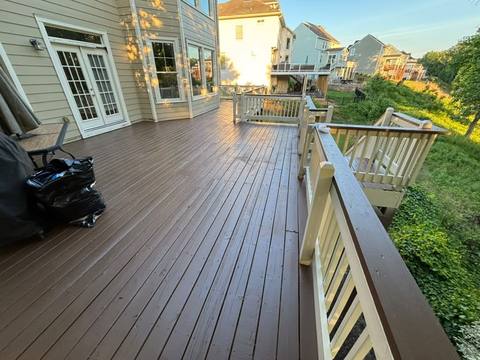
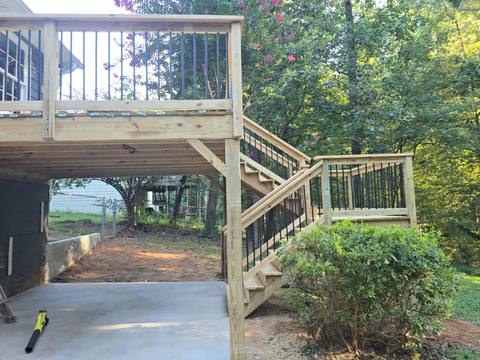
Real photos from B&T projects in North Georgia, not necessarily from Milton.
Milton
Why does the frame matter more than the boards?
Surface boards are what you see, but the frame is what holds you up. Joists, beams, posts, and the ledger carry the whole load, and damage there can be serious even when the top looks fine. A rotted deck board can be swapped out in an afternoon. A weakened joist or beam is a different problem, because it can sag, flex, or give way under a crowd. Many Milton lots are large and the decks here are often long or multi-level, which can mean longer spans resting on that hidden framing.
Frame damage is also easy to miss. Boards hide what is beneath them, and dark, damp spaces under a raised deck are where moisture lingers and where pests like to work. Sound-looking boards can sit on a frame that has been slowly decaying for a long time. That is why we always look underneath, not just on top. If the surface looks rough but the frame is solid, repair is often simple. If the frame is soft, the plan changes.
Milton
What makes the ledger area so important?
The ledger is the board that fastens the deck to your house, and it is one of the most important parts of the whole structure. It is also one of the most exposed. Water runs down the house wall and collects where the deck meets it, and unless the joint is flashed and detailed carefully, moisture can sit behind the ledger for a long time. Rot can quietly eat into both the ledger and the house rim behind it without much showing from the outside.
Check along the ledger for dark staining, soft spots, gaps pulling away from the wall, rusted fasteners, or sawdust and small holes. Insects like that damp, sheltered spot as well. Do not lean hard on a rail or load a deck you suspect is loosening from the house. If the ledger looks questionable, treat it as a priority and have it inspected in person. A ledger problem is not a good place for guesswork, and fixing it properly may involve more than a simple board swap.
Milton
What should I photograph before calling anyone?
Good photos save everyone time. Take wide shots of the whole deck from the yard, then the underside from as far back as you can safely stand. Close up, photograph every soft spot, hole, crack, or stain, and include a coin, pen, or screwdriver for scale without needing any measurements. Capture the ledger where the deck meets the house, the tops and bottoms of posts, joist ends, stair stringers, and the connections where rails attach. Take each one in daylight, and add a flash photo of dark areas.
Photograph the debris as well. A small pile of sawdust on a lower board, a mud tube, or a handful of crumbly wood in your palm tells a lot. Note when you first noticed it and whether it seems to be spreading. Jot down whether the damaged spots are in sun or shade and near a downspout or gutter. Send us the pictures along with your address, and we can start sorting rot from insects before Breno ever drives out.
Get a fast estimate
Milton
What happens when Breno visits?
Breno visits in person, because a deck problem is hard to judge from a photo alone. He looks at the surface, then gets underneath to check the frame, the posts, the footings, and the ledger. He probes the suspect wood, tells you what he is seeing, and explains whether it points to moisture, to insects, or to both. If there is a possible active insect problem, he will say so plainly, and you may want a pest professional involved alongside any repairs.
After the visit we give you a free written estimate that spells out what we would repair, replace, or leave alone. Sometimes the answer is a few boards and some sealing. Sometimes it is new framing, a rebuilt ledger connection, or a full replacement. Permits and HOA or architectural review depend on your address, so confirm with the City of Milton Community Development Department and your association. We can tell you what your project will likely need before anything is scheduled.
Straight answers
Milton homeowner questions
Are carpenter bee holes a sign my deck is rotting?
Not necessarily. Carpenter bees often choose sound, bare wood, and the round holes can appear in healthy rails and fascia. Over time the tunnels let water in, and that moisture can start rot. So the holes are worth dealing with, but they do not prove the wood was already decayed.
How do I know if termites are in my deck?
Look for mud tubes on posts or nearby masonry, hollow-sounding wood, and thin surface layers over tunnels. Winged insects near the deck can be another clue. Because termites work out of sight, a pest professional should confirm any suspicion, and we can check the framing for structural damage.
Can I just replace the soft boards?
Sometimes, if the frame beneath is sound. Soft surface boards are a common, easy fix. But if the joists, beam, or ledger are also soft, new boards on top only hide the problem. We look underneath first so the repair matches what is really going on.
Is a deck near GA-400 or Birmingham Highway at more risk?
Not because of the road. Rot and insect trouble come from moisture, shade, airflow, and wood contact with the ground, not from where a street runs. Homes around Birmingham Highway, Crabapple Road, or Hopewell Road can face the same issues, so inspect your own deck rather than guessing.
Do shady, wooded lots rot decks faster?
They can. Shade, leaf litter, and slow-drying air keep wood damp longer, and Milton has plenty of mature trees and rolling ground. Debris stuck between boards holds water against the wood. Regular sweeping, good airflow underneath, and sealed ends can help, and a wooded lot is worth checking more closely.
Is it safe to keep using a deck with soft spots?
Use caution. A single soft board is usually minor, but you cannot tell from the top whether the frame or ledger is affected. If rails wobble, the deck bounces more than before, or stairs feel loose, keep people off it until someone has looked underneath.
Will repairs need a permit or HOA approval?
It depends on the address and the scope of work. Permit rules for decks depend on your address, so check with the City of Milton Community Development Department, and Fulton County may have a say too. HOA or architectural review varies by neighborhood, so confirm with the city, county, and your association.
Do you work outside Milton, near Crabapple and nearby cities?
Yes. We build, repair, and replace decks, porches, rails, and stairs around Milton, including homes near Crabapple, and we also serve Alpharetta, Roswell, and Johns Creek. Send photos and your address, and Breno will visit in person to give you a free written estimate.
Verified Google reviews
What the neighbors are saying
These are verified Google reviews from B&T customers.
★★★★★
“If you're looking for a trustworthy contractor, B&T Properties is the right choice. Great workmanship, fair pricing, and excellent customer service.”
★★★★★
“The quality of the work was exceptional. The team was friendly, responsive, and made sure everything was done right. I would definitely recommend B&T Properties.”
Who’s doing the work
About B&T Properties
You deal with the owner. Breno visits, quotes and oversees the work, and the crew brings more than ten years of deck experience between them. B&T carries General Liability insurance, and Milton is part of our regular service area.
Upgrades
Add-ons to consider
Ask about any of these when Breno comes out for your free estimate. They are easiest to price in when we plan the project, not after it is built.
Stairs and landings
Stairs that are easier to use: more width, a mid-level landing, or a better path to the yard.
Lighting
Stair and post lights that make evenings outside safer and nicer.
Multi-level layouts
Two levels can follow your slope and give dining and lounging their own space.
Railing styles
Railing is what you see first, so we go over the options before the estimate is final.
Written warranty
1-year workmanship warranty
B&T Properties backs the workmanship on every job for one year after completion, free of charge when the fault is ours. It does not cover material defects, natural wear, weather damage, misuse, a lack of upkeep or work by others. To claim, write to us and we will inspect.
Free written estimate
Tell Breno about your Milton deck — free and in writing.
No call center, no sales rep — the person who answers is the person who does the work.