Owner-operated · Homeowner guide · Sandy Springs
Rot, Termites or Carpenter Bees? Deck Damage in Sandy SpringsSandy Springs · Fulton County
Sandy Springs: When boards feel soft or little piles of sawdust show up, many Sandy Springs homeowners wonder what is eating their deck. Rot, termites and carpenter bees leave different clues, and knowing which one you are looking at helps you act before small damage becomes a big repair. Owner-operated, with a free written estimate.
Free estimate · opens your texting app · no forms needed
Get a fast estimate
★★★★★ 31 Google reviews as of Nov 2026 — “Great workmanship, fair pricing, and excellent customer service.” Read reviews
- Free written estimate within one day
- General liability coverage
- Crews with 10+ years of combined experience
- Owner on every job
- Text us (470) 863-3707
Homeowner guide · Sandy Springs
Is it rot, termites or carpenter bees chewing my deck?
Sandy Springs decks face damp shade, summer humidity and busy insects, so a careful look at where the wood is damaged helps separate ordinary weathering from a problem that needs repair.
- The owner comes to the visit and writes the estimate himself
- Crews with 10+ years of combined experience
- Insured (general liability)
- Rated 5.0 on Google across 31 reviews as of Nov 2026
- Photos from our own jobs, not stock images
Sandy Springs
Look for Softness and Discoloration
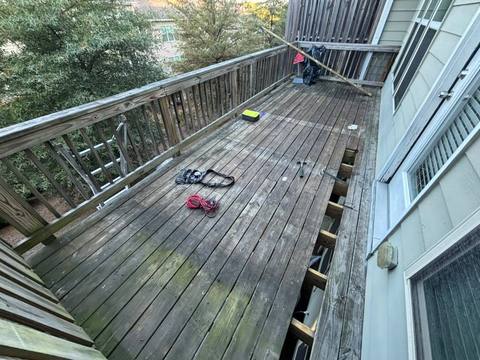
Rot usually feels spongy or crumbly when you press a screwdriver or fingernail into it. The wood may darken, turn brownish or break into stringy fibers or small cubes as moisture breaks it down. Rot spreads where water lingers, so start with shaded spots, the ends of boards, the base of posts and anywhere leaves pile up.
Insect damage often feels different. The surface may stay fairly hard while the inside has been hollowed out, so tapping the wood with a screwdriver handle can reveal a dull, hollow sound. Probe suspect areas gently; you are testing firmness, not digging a hole. Many wooded, sloped lots in Sandy Springs, especially those draining toward streams or the Chattahoochee River corridor, keep decks damp for long stretches, which favors rot.
Sandy Springs
Check for Holes, Tubes and Sawdust
Termites usually work from the inside and avoid open air. Look for pencil-thin mud tubes running up posts, footings or the foundation near the deck, and for wood that looks fine on the surface but sounds hollow. You often will not see sawdust from termites, because they eat the wood rather than push it out.
Carpenter bees leave a very different sign: clean, round holes, often on the underside of rails, fascia boards or joists, with coarse sawdust piled below. You may see the bees hovering nearby in spring. A few old holes do not always mean an active problem, but fresh sawdust and buzzing do, and the tunnels can weaken boards and invite moisture over time.
How it works
Five steps. No surprises.
Call, text, or send the form
Tell us what is going on: a new deck, a repair, or “not sure yet.” We reply the same day.
Free on-site visit
Breno looks at the deck or the yard himself, measures, and goes over your options with you.
Written estimate
Scope, materials and price come in writing, so you know the plan before anything starts.
Schedule and permits
We agree on a start date and confirm any city, county or HOA requirement for your address first.
Build and final walk-through
Breno is on the job, and we go over the finished work with you before we call it done.
Real B&T work
Photos from real jobs

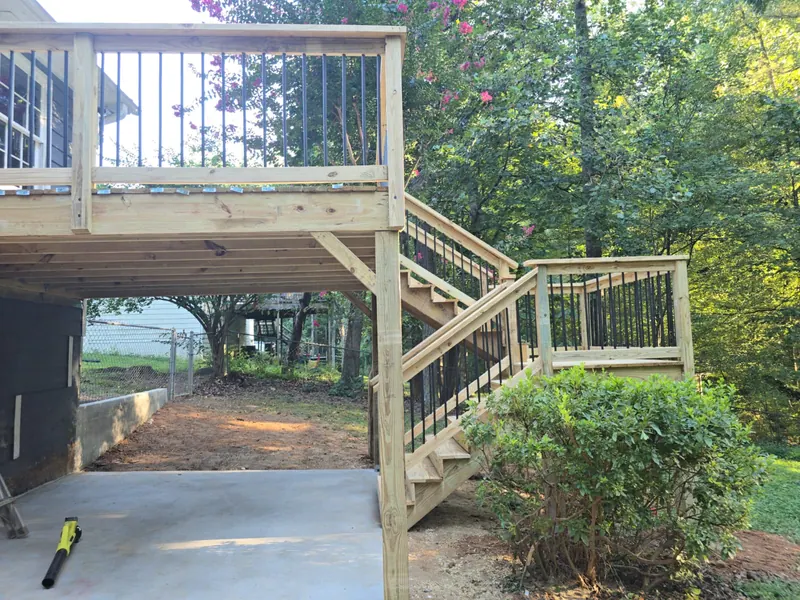

Real photos from B&T projects in North Georgia, not necessarily from Sandy Springs.
Sandy Springs
Photograph the Damage Clearly
Take close-up photos of every suspicious area, plus a wider shot that shows where it is on the deck. Include holes, discoloration and the spots you probed, with a coin or a key in the frame for scale. Photos taken in daylight from a few angles are far more useful than one blurry shot.
Good photos help a builder judge whether the problem is on the surface or reaching into the structure, and they make it easy to see whether damage is spreading over time. Share them when you set up a visit, so the conversation starts with the right questions.
Sandy Springs
Focus on the Frame and the Ledger
Surface boards can look fine while the frame underneath carries the real damage. The ledger, where the deck attaches to the house, is especially vulnerable to trapped water and hidden rot, and it carries a lot of load. Insects also tend to go after damp framing close to the ground, such as post bases and the lowest joists.
Use a flashlight to look under the deck and along the ledger. Check for dark stains, soft spots, rust streaks from fasteners and any gap between the deck and the house. If getting underneath means crawling into a tight or unstable space, skip it and let someone else take a look rather than risk an injury.
Get a fast estimate
Sandy Springs
Know When to Call for Help
If probing shows soft wood that goes well below the surface, if you find mud tubes or active carpenter bees, or if a post or railing moves, stop using that part of the deck and get it checked. Active termites call for a pest professional first; once they are dealt with, damaged wood can be repaired or replaced.
We repair and replace decks, railings and stairs across Sandy Springs, including homes near Riverside, along Johnson Ferry Road, off Abernathy Road and close to I-285. Breno visits in person, looks at the boards and framing with you and follows up with a free written estimate. Permit and HOA requirements depend on your exact address, so confirm them with the City of Sandy Springs and your association before larger repairs.
Straight answers
Sandy Springs homeowner questions
What does early rot look like on a pressure-treated deck in Sandy Springs?
Early rot often shows as darkened, soft spots that feel spongy when probed, especially where water collects or shade lingers. It tends to start at board ends and joints and can spread into the frame unseen.
Can carpenter bees damage a deck without being seen?
Yes. They often drill into the underside of rails, fascia or joists, where the holes are hard to spot. Sawdust piles below are frequently the first sign.
How does moisture near the Chattahoochee River corridor affect decks in Sandy Springs?
Homes near the river corridor or local streams can see more humidity and damp soil, which speeds up rot when framing stays wet. Good airflow under the deck and drainage away from posts help reduce the risk.
Should I worry about termites if I do not see mud tubes on my deck?
Not seeing tubes does not rule them out, since termites can enter through hidden spots. Wood that sounds hollow or crumbles inside deserves a closer look, and a pest professional can confirm activity.
Is staining enough to protect my deck from rot and bugs?
Stain helps shed water and slows sun damage, but it does not stop boring insects or rot where moisture is trapped. Regular checks and quick repairs are still needed.
Which part of the deck should I check first if I suspect damage near the house?
Start with the ledger and the rim joist where the deck attaches to the house. That area carries load and is prone to hidden water damage, so look for stains, softness and gaps.
Can a lot that slopes toward the water raise the risk of deck damage in Sandy Springs?
Yes. Sloped lots near streams or the river can keep soil damp around posts and footings, which favors rot. Drainage and post bases that sit above the soil make a real difference.
How do I know if damage is surface wear or needs replacement?
If the wood is firm beneath surface cracks or fading, it is likely wear that cleaning and refinishing can handle. If framing feels soft, sags or will not hold a fastener, structural repair or replacement is likely needed.
Verified Google reviews
What the neighbors are saying
These are verified Google reviews from B&T customers.
★★★★★
“Outstanding service! Breno is knowledgeable, honest, and takes pride in his work. It's hard to find a company this reliable these days.”
★★★★★
“Breno and his team exceeded our expectations. They were organized, efficient, and truly cared about delivering a high-quality result. We couldn't be happier.”
Who’s doing the work
About B&T Properties
You deal with the owner. Breno visits, quotes and oversees the work, and the crew brings more than ten years of deck experience between them. B&T carries General Liability insurance, and Sandy Springs is part of our regular service area.
Upgrades
Make it yours: popular upgrades
Planning a project in Sandy Springs? Bring up any of these at your free estimate. Changes are easier to plan on paper than on a finished deck.
Railing styles
Railing is what you see first, so we go over the options before the estimate is final.
Stairs and landings
Stairs that are easier to use: more width, a mid-level landing, or a better path to the yard.
Multi-level layouts
Two levels can follow your slope and give dining and lounging their own space.
Cover or screens
Shade, rain cover or screens, planned in from the start.
Written warranty
1-year workmanship warranty
Workmanship warranty: one year from the day we complete the work, in writing. Faults that come from our labor are repaired at no charge. Not included: manufacturer material defects, normal wear and tear, weather, misuse, no maintenance, repairs by other parties. Submit claims in writing.
Free written estimate
Tell Breno about your Sandy Springs deck — free and in writing.
No call center, no sales rep — the person who answers is the person who does the work.