Owner-operated · Comparison
Oil-Based vs Water-Based Deck Stain for North Georgia DecksComparison · Georgia decks
Oil-Based vs Water-Based Deck Stain for North Georgia Decks Both kinds of stain can protect a wood deck, but they get there in different ways. Which one fits comes down to your wood, its current finish, how much shade the deck gets and your plans for recoating.
Free estimate · opens your texting app · no forms needed
Get a fast estimate
★★★★★ 31 Google reviews as of Nov 2026 — “Great workmanship, fair pricing, and excellent customer service.” Read reviews
- Free written estimate within one day
- General liability coverage
- Crews with 10+ years of combined experience
- Owner on every job
- Text us (470) 863-3707
Comparison
Oil-Based vs Water-Based Deck Stain for North Georgia Decks
The right pick depends on the wood you have, the finish already on it, how much shade the deck gets and how often you want to recoat.
- Breno, the owner, measures and writes your estimate
- 10+ years of combined team experience
- General liability insurance
- 5.0 stars from 31 Google reviews as of Nov 2026
- Real before-and-after photos from our own jobs
Comparison
How Each Stain Works
Oil-based stain uses a solvent and oils that soak down into the wood fibers. It feeds dry, weathered boards, brings out the grain and tends to give a warm, rich color. Because most of the product ends up inside the wood rather than on top of it, it usually fades away gradually instead of peeling.
Water-based stain uses water as the carrier and acrylic or similar binders that stay closer to the surface. It dries fast, has less odor, cleans up with soap and water and holds its color well in strong sun. Newer water-based formulas penetrate better than older ones, but on a dense or previously oiled board they still tend to sit more on top.
Comparison
Drying Time, Odor and Application
Oil-based stain stays workable longer, which makes it more forgiving on long runs of deck boards because lap marks blend in. The tradeoff is a longer wait before furniture goes back and foot traffic resumes, and a stronger smell during the job. Rags soaked in oil stain also need careful handling and disposal, since they can heat up as they dry.
Water-based stain dries quickly, so a deck can often be back in use sooner. That speed is a help on humid summer days when you want to finish between afternoon storms, but it also means the stain has to be applied with a steady wet edge. On a hot board in direct sun it can dry before it soaks in, so early morning or late afternoon coats work better.
How it works
Five steps. No surprises.
Call, text, or send the form
Tell us what is going on: a new deck, a repair, or “not sure yet.” We reply the same day.
Free on-site visit
Breno looks at the deck or the yard himself, measures, and goes over your options with you.
Written estimate
Scope, materials and price come in writing, so you know the plan before anything starts.
Schedule and permits
We agree on a start date and confirm any city, county or HOA requirement for your address first.
Build and final walk-through
Breno is on the job, and we go over the finished work with you before we call it done.
Real B&T work
Photos from real jobs


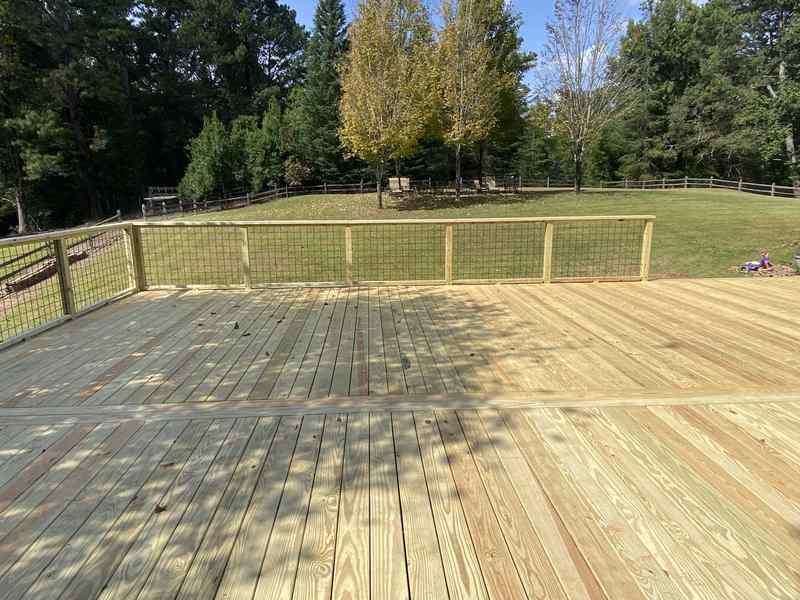
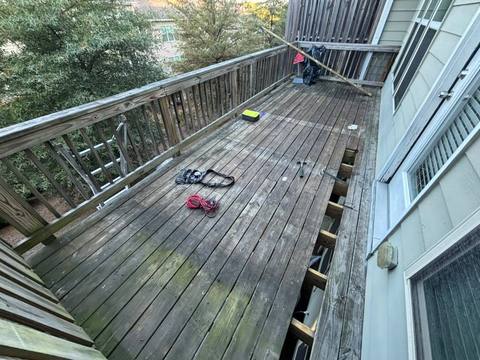
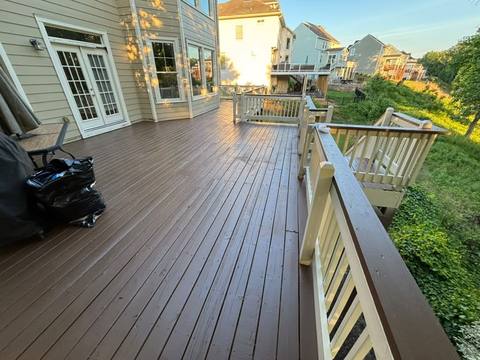
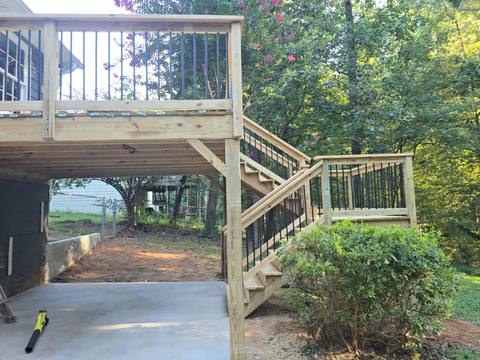
Real photos from B&T projects in North Georgia.
Comparison
Color, Mildew and Shade
Many wooded lots in Cherokee County keep part of the deck in shade most of the day, and those boards dry slowly after rain. Oil-based stains contain natural oils that mildew can feed on, so on a damp, shaded deck they may darken or grow a gray film sooner unless the product includes an additive that resists mildew. Water-based stains generally resist mildew better in those spots.
In full sun the picture flips a bit. Oil-based stain can fade faster under strong ultraviolet light, while a quality water-based stain with good pigment tends to hold its tone longer. A deck that gets sun on one side and shade on the other, which is common on lots in BridgeMill and Great Sky, may need a product chosen for the harsher of the two exposures.
Comparison
Recoating and Switching Products
Oil-based stain is usually easy to maintain: clean the deck, let it dry and apply a fresh coat over the old one. Water-based stain that forms more of a surface film can peel when it fails, and peeling areas need to be cleaned or sanded back before the next coat so the new layer has something sound to grip.
Switching from one type to the other takes more prep. Putting water-based stain over an oil finish that has not fully weathered away often leads to poor adhesion, and going from a film-forming water-based product back to oil means removing that film first. If you are not sure what is on your deck now, a small test patch in a hidden spot tells you a lot before you commit.
Comparison
Which One Fits Your Deck
Oil-based stain is often a good fit for older, dry, weathered pressure-treated wood, for owners who like a deep natural look and for decks that already have an oil finish. Water-based stain often suits shaded or damp decks, homeowners who want quick drying and easy cleanup, and decks where long-lasting color in sun matters most.
Either way, the prep decides how long the finish lasts. Clean boards, wood that is fully dry and sound framing underneath matter more than the label on the can. Rotten boards or loose railings should be fixed before any stain goes on.
Get a fast estimate
Comparison
How B&T Properties Helps
We build, repair, replace and restore wood decks, porches, railings, stairs and fences across Canton and nearby Woodstock, Holly Springs and Ball Ground. Breno visits in person, looks at the condition of the wood, the old finish and how sun and shade fall on the deck, and talks through which stain type makes sense for it.
Any boards, rails or stair parts that need work are noted along with the finish, and you receive a free written estimate before anything is scheduled.
Local notes
Around Canton and Ball Ground and nearby
Canton. Setbacks, stream buffers and tree rules can affect where a deck is allowed to go, especially on wooded lots near creeks. We check what applies to your parcel as part of the free estimate instead of leaving you to discover it at inspection. Communities in the area include BridgeMill, Great Sky, Laurel Canyon, River Green.
Ball Ground. Some Ball Ground subdivisions have HOAs, and older in-town and rural properties often do not. We ask up front so approval time does not surprise you. Communities in the area include Hawks Ridge, historic downtown Ball Ground.
Woodstock. Woodstock's city code includes a tree ordinance and references 50-foot and 25-foot stream buffers that are meant to stay undisturbed, so a creek or large tree near the planned footprint can shape the layout. We look at that before pricing. Communities in the area include Towne Lake, Eagle Watch, Wyngate, Bradshaw Farm.
Straight answers
Common questions
Can I put water-based stain over a deck that already has oil-based stain?
Only after the old oil finish has weathered away or been removed. Water-based stain over a fresh oil coat often fails to bond and can peel. Cleaning the deck and doing a small test patch shows whether the surface is ready.
Which stain type handles mildew better on a shaded deck?
Water-based stain usually resists mildew better, because natural oils in many oil-based stains can feed mold and mildew. On a deck under heavy tree cover, look for a product with a mildew-resistant additive either way, and keep leaves and debris off the boards.
Why does oil-based stain give a richer color than water-based stain?
Oil soaks deeper into the wood fibers and darkens the grain as it does, which creates a warmer, more natural look. Water-based stain stays closer to the surface, so the color comes more from the pigment than from the wood itself.
Does water-based stain peel while oil-based stain fades?
That is the general pattern. Penetrating oil stain tends to wear away slowly, while water-based products that build a film can peel when they fail. Thin coats of a penetrating water-based formula reduce that risk.
Is oil-based stain harder to clean up after the job?
Yes. Brushes and spills need mineral spirits, and rags soaked in oil stain should be laid flat to dry or stored in a sealed metal container with water, since they can heat up. Water-based stain cleans up with soap and water.
Which stain works better on new pressure-treated boards?
New treated lumber is often still wet from treatment and resists any stain. It needs time to dry out before either type is applied. A simple water drop test helps: if drops soak in, the wood is ready.
Can I mix oil-based and water-based stain on different parts of the same deck?
It can be done, for example a solid water-based color on railings and a penetrating oil stain on the floor boards, but the colors will not match exactly and each part has its own recoat schedule. Many owners prefer one system for simpler upkeep.
Verified Google reviews
What the neighbors are saying
These are verified Google reviews from B&T customers.
★★★★★
“Breno did an excellent job repairing my home. He was professional, reliable, and paid close attention to every detail. The quality of his work exceeded my expectations…”
★★★★★
“Outstanding service! Breno is knowledgeable, honest, and takes pride in his work. It's hard to find a company this reliable these days.”
Who’s doing the work
About B&T Properties
B&T Properties is run by Breno, who visits the job, writes the estimate and stays involved until the work is done. The crew has 10+ years of combined deck experience, and the company carries General Liability insurance. We work in Canton and across Cherokee County.
Upgrades
Upgrades worth asking about
Planning a project in Canton? Bring up any of these at your free estimate. Changes are easier to plan on paper than on a finished deck.
Cover or screens
Add a roof over part of the deck, or screen it in for shade and fewer bugs.
Stairs and landings
Wider steps, a landing, or a second set of stairs down to the yard.
Railing styles
Aluminum, composite or wood railing, from classic balusters to a cleaner, low-profile look.
Multi-level layouts
Two levels can follow your slope and give dining and lounging their own space.
Written warranty
1-year workmanship warranty
B&T Properties warrants our workmanship for one year from completion and fixes failures caused by our work at no charge. Not covered: material defects (manufacturer warranty), normal wear, weather, misuse, lack of maintenance, or work by others. Claims in writing.
Free written estimate
Ask Breno about your deck — free and in writing.
No call center, no sales rep — the person who answers is the person who does the work.