Owner-operated · Homeowner guide · Acworth
What to Check on Older Deck Railings and Stairs in AcworthAcworth · Cobb County
Acworth: If you own an older deck in Acworth, the railings and stairs are the parts most likely to hurt someone when they fail. A slow, hands-on walk-around shows you wobble, soft wood, loose parts and dark spots before they turn into an accident. Owner-operated, with a free written estimate.
Free estimate · opens your texting app · no forms needed
Get a fast estimate
★★★★★ 31 Google reviews as of Nov 2026 — “Great workmanship, fair pricing, and excellent customer service.” Read reviews
- Free written estimate within one day
- General liability coverage
- Crews with 10+ years of combined experience
- Owner on every job
- Text us (470) 863-3707
Homeowner guide · Acworth
What should I check on the railings and stairs of an older deck?
A careful inspection of an older Acworth deck means pressing on rails, testing each stair tread and stringer, and looking underneath for signs of moisture where hidden damage often begins.
- The owner comes to the visit and writes the estimate himself
- Crews with 10+ years of combined experience
- Insured (general liability)
- Rated 5.0 on Google across 31 reviews as of Nov 2026
- Photos from our own jobs, not stock images
Acworth
Shake the railing before anyone leans on it
Grab the top rail and give it a firm shake side to side and then outward. A little flex is normal, but any real movement means posts or connectors have loosened. Check where the rail meets each post for gaps or shifting, and look at the base of each post where it attaches to the deck frame or stair stringer.
Rust on metal brackets or dark, soft wood around a post weakens the connection. If a whole section sways, keep people off that part of the deck until it is repaired. Tightening alone may not fix it if the wood is damaged or the fastener has pulled through, and a wobbly railing is a real fall risk on a raised deck or along the stairs.
Acworth
Probe the posts where they meet the frame
Push and pull each post; it should not move separately from the frame. Look for corrosion on steel connectors and for cracks in the wood where bolts pass through. Water stains or mildew at the base can signal long-term moisture and the rot that follows it.
Acworth is a wooded city, from the older blocks a short drive off I-75 to the subdivisions along Cobb Parkway, and posts on shaded lots or near the breezes off Lake Acworth can stay damp longer after rain. A screwdriver pressed into an out-of-the-way spot tells you a lot: if it sinks in easily, the wood is soft and may no longer hold fasteners. A post with advanced rot or insect damage needs to be replaced, even if it still looks solid from a distance.
How it works
Five steps. No surprises.
Call, text, or send the form
Tell us what is going on: a new deck, a repair, or “not sure yet.” We reply the same day.
Free on-site visit
Breno looks at the deck or the yard himself, measures, and goes over your options with you.
Written estimate
Scope, materials and price come in writing, so you know the plan before anything starts.
Schedule and permits
We agree on a start date and confirm any city, county or HOA requirement for your address first.
Build and final walk-through
Breno is on the job, and we go over the finished work with you before we call it done.
Real B&T work
Photos from real jobs


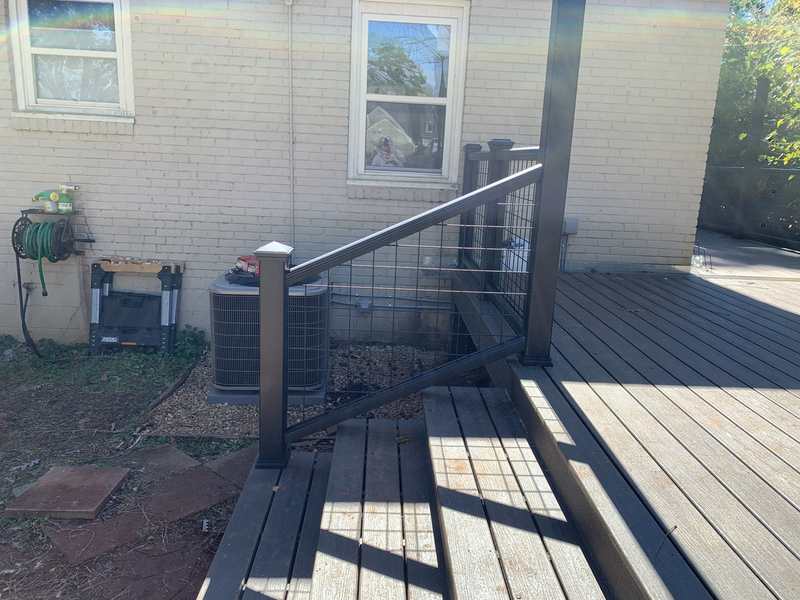
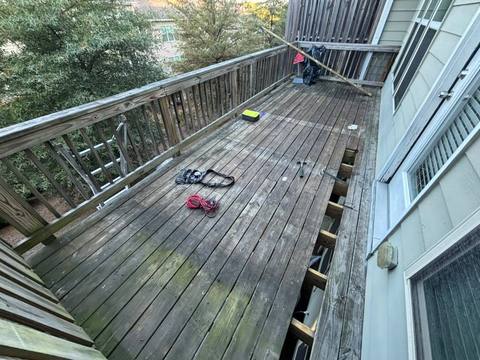
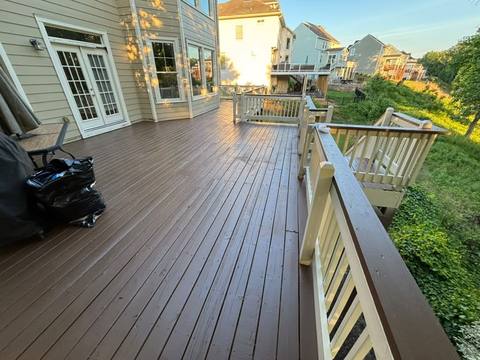
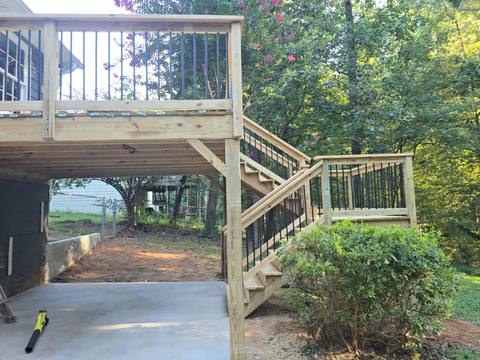
Real photos from B&T projects in North Georgia, not necessarily from Acworth.
Acworth
Feel each stair tread underfoot
Walk slowly up and down the stairs and pay attention to how every tread feels. A soft or springy step often means the wood is decaying from moisture or insects. Look for dark spots, cracks and splinters on the surface and at the ends of each tread, and check where the tread sits on the stringer for gaps or movement.
Cobb County summers are humid, and older treads on shaded or north-facing stairs tend to wear out first. A dull thud when you tap a tread can mean rot inside the board. Soft treads are a tripping hazard and can break under weight, so replace any tread that gives or feels spongy rather than waiting for it to fail.
Acworth
Look for loose or missing balusters
Look along the railing for missing or broken balusters and for any opening that is clearly wider than the rest. Large gaps can let a small child slip through or get stuck. Check the space under the bottom rail, too, because a big opening there is easy to overlook.
On older decks around downtown Acworth, original balusters may have split or been swapped out unevenly over time. Nails or screws that have backed out let balusters lean, twist or pop free, and a loose baluster may not stop a fall even if the spacing looks right. Fasten or replace any that move by hand.
Acworth
Run your hand down the handrail and check the lights
Run your hand along the stair handrail from bottom to top. It should be smooth, easy to grip and continuous, without splinters, cracks or sudden breaks that force you to let go. Sap and leaf debris from nearby trees can make a rail slippery after rain, so a clean surface matters as much as a solid bracket.
Then check the stairs after dark. You should be able to see each step edge and both landings clearly. Shadows from posts, railings or trees can hide a step, and homes on wooded lots may have little outside light at night. Make sure existing fixtures work, are aimed at the steps and are not blocked by branches.
Get a fast estimate
Acworth
Know when to stop using the stairs
Stop using the stairs if the railing or stairs move a lot, treads give way under weight, balusters are missing, the handrail is loose or gone, or the stringers are cracked, split or pulling away from the frame. Temporary fixes like tying off a rail or propping up a tread only create false confidence.
B&T Properties repairs and replaces deck railings, stairs, posts and boards, and Breno visits in person to look at the problem and write up a free estimate. Whether a repair needs a permit depends on the scope of the work and your address, so check with the city building department and with your HOA before work begins.
Straight answers
Acworth homeowner questions
How often should I check the railings and stairs on an older Acworth deck?
At least twice a year, ideally in spring and fall, and again after a major storm or a season of heavy use. Regular checks catch problems while they are still small repairs.
What simple tools help with a railing and stair inspection?
A flashlight for dark corners and a screwdriver or awl to test for soft wood are enough. Most of the check is done with your eyes, your hands and your weight.
Should I tighten loose railing bolts myself?
You can snug up bolts you can reach, but if the wood around them is stripped or rotted, the fastener will not hold for long. Look at the surrounding wood first.
What lumber is usually used for replacement stair treads?
Pressure-treated lumber is common for treads because it stands up to moisture. Straight boards without large knots work well, and we can match the material to your deck.
How can I tell if a post is rotting at the bottom?
Look for water stains, mildew or softness near the base and where it meets the frame. If a screwdriver sinks in easily, there may be rot inside the post.
Can tree roots affect deck stairs?
Yes. Roots growing under or beside the stairs can lift or crack the pads and footings over time, especially on wooded lots. Look for stairs that tilt or bottom steps that have shifted.
Is a deck with loose balusters safe if I watch the kids closely?
No. A loose baluster can pull out when someone leans or falls against it, and supervision cannot prevent that. Repair or replace loose balusters before the deck is used.
Does a railing or stair repair need a permit in Acworth?
That depends on the scope of the work and your specific address. Confirm with the city building department, and with your HOA if you have one, before the work starts.
Verified Google reviews
What the neighbors are saying
These are verified Google reviews from B&T customers.
★★★★★
“Breno and his team exceeded our expectations. They were organized, efficient, and truly cared about delivering a high-quality result. We couldn't be happier.”
★★★★★
“Breno did an excellent job repairing my home. He was professional, reliable, and paid close attention to every detail. The quality of his work exceeded my expectations…”
Who’s doing the work
About B&T Properties
You deal with the owner. Breno visits, quotes and oversees the work, and the crew brings more than ten years of deck experience between them. B&T carries General Liability insurance, and Acworth is part of our regular service area.
Upgrades
Upgrades worth asking about
Thinking beyond the basics? Mention any of these at your free estimate and Breno will go over what makes sense for your home.
Cover or screens
Add a roof over part of the deck, or screen it in for shade and fewer bugs.
Composite decking
A surface with no sanding, sealing or yearly staining to keep up with.
Lighting
Soft LED lighting along the steps and rail, so the deck is usable after dark.
Multi-level layouts
Step down a sloped yard with separate levels for dining and lounging.
Written warranty
1-year workmanship warranty
For 12 months after we finish, B&T Properties stands behind its labor in writing. A problem traced to how we built or repaired it is corrected at no cost. Excluded: defective materials, age-related wear, weather events, improper use, missing maintenance, and anyone else’s repairs. Put your claim in writing.
Free written estimate
Tell Breno about your Acworth deck — free and in writing.
No call center, no sales rep — the person who answers is the person who does the work.