Owner-operated · Homeowner guide
Do I need HOA approval to build or replace a deck?Homeowner guide · Georgia decks
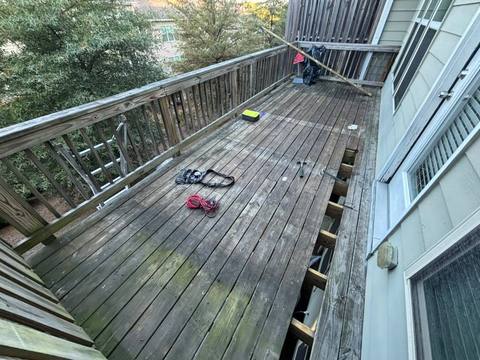
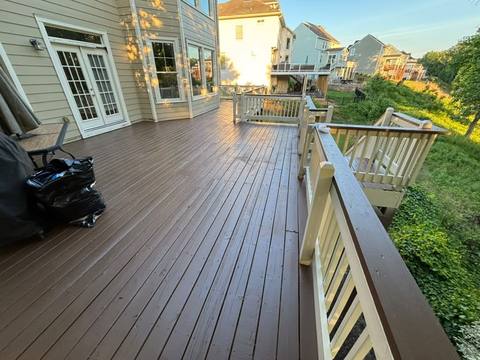
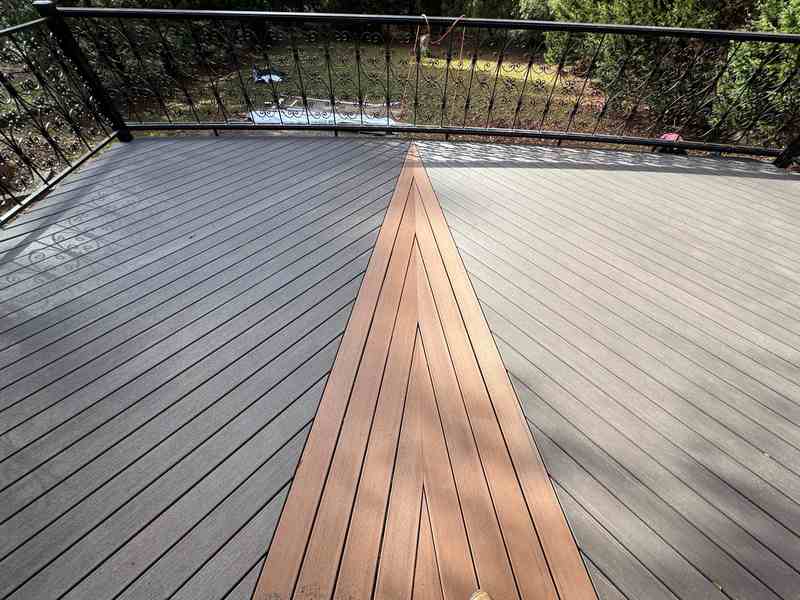
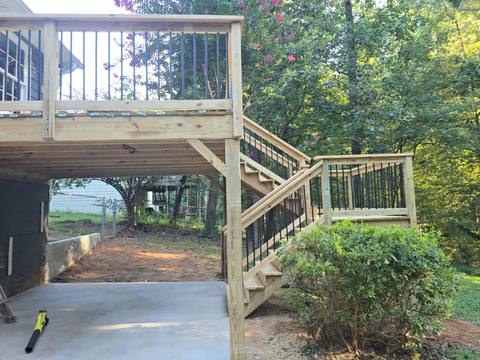
Do I need HOA approval to build or replace a deck? Yes, most home owners associations require approval before you build or replace a deck. You usually have to submit plans to an architectural review board to ensure your materials and colors match the neighborhood standards. It is best to get this approval in writing before any construction begins.
Free estimate · opens your texting app · no forms needed
Get a fast estimate
★★★★★ 31 Google reviews as of Nov 2026 — “Great workmanship, fair pricing, and excellent customer service.” Read reviews
- Free written estimate within one day
- General liability coverage
- Crews with 10+ years of combined experience
- Owner on every job
- Text us (470) 863-3707
Homeowner guide
Do I need HOA approval to build or replace a deck?
Building a deck is a big investment for your home. While you own the property, your neighborhood rules often dictate what you can actually do with it. Dealing with the association can feel like a chore, but doing it right saves you from costly mistakes or forced removals later on.
- Breno, the owner, measures and writes your estimate
- 10+ years of combined team experience
- General liability insurance
- 5.0 stars from 31 Google reviews as of Nov 2026
- Real before-and-after photos from our own jobs
Guide
Dealing with the Architectural Review Board
Most neighborhoods have a group that looks over every change a homeowner makes. This board ensures that one house does not look completely different from the rest of the street. When you plan a deck, you are essentially asking them for permission to change the footprint or look of your home. You will need to find out who handles these requests and what their specific process looks like. Some boards meet once a month, while others review things on a rolling basis. It is your responsibility to start this conversation early so you do not hold up your project.
Guide
What to include in your submittals
The board cannot approve a project they cannot see. You will need to provide a clear package of information before they give you the green light. This usually involves a few specific items:
- A basic sketch showing where the deck sits on your lot.
- A description of the framing and decking materials.
- Samples or names of the stain or paint colors you plan to use.
- A rough timeline for how long the construction will take.
The more detail you provide up front, the less likely they are to send your application back with questions, which keeps your project moving forward.
How it works
Five steps. No surprises.
Call, text, or send the form
Tell us what is going on: a new deck, a repair, or “not sure yet.” We reply the same day.
Free on-site visit
Breno looks at the deck or the yard himself, measures, and goes over your options with you.
Written estimate
Scope, materials and price come in writing, so you know the plan before anything starts.
Schedule and permits
We agree on a start date and confirm any city, county or HOA requirement for your address first.
Build and final walk-through
Breno is on the job, and we go over the finished work with you before we call it done.
Real B&T work
Photos from real jobs


Real photos from B&T projects in North Georgia.
Guide
Choosing colors and materials
This is where most homeowners run into trouble with the association. Your board likely has a list of approved colors and materials to keep the neighborhood looking uniform. For example, they might allow pressure treated wood or composite decking in certain earthy tones, but they might ban bright colors or certain types of metal railings. If you want a specific stain, check the rules first. If you are unsure, it is better to pick a neutral shade that fits the existing palette of your street. Using a color that is too bold can lead to a request to repaint the entire structure.
Guide
Understanding setbacks and boundaries
A setback is simply the distance between your structure and the property line. Even if you have plenty of room in your yard, the association often has strict rules about how close a deck can get to the fence or the neighbor's land. If you build too close to the edge, the board can force you to tear it down or move it. We always suggest double checking your plot map. Making sure your deck stays within the allowed buildable area prevents disputes with neighbors and keeps you in the good graces of the board members.
Guide
Timing and getting it in writing
Patience is key when dealing with home owners associations. The review process can take a few weeks or even longer depending on the board. Never assume that a verbal "yes" from a neighbor on the board is a formal approval. You need a signed letter or an email confirmation stating that your plan is approved. If you start digging post holes or ordering lumber before you have that paper in hand, you are taking a huge risk. Having written proof protects you if the board changes its mind or if a new member joins the committee and dislikes your design.
Guide
Permits are separate from HOA rules
A common mistake is thinking that a city permit is the same thing as association approval. They are completely different. The local government cares about safety, structural integrity, and building codes. The association cares about aesthetics and neighborhood harmony. You can have a permit from the county but still be in violation of your neighborhood rules. Conversely, the association might love your color choice, but the city might tell you the stairs are not up to code. You must secure both the association approval and the necessary permits before the first board is cut.
Get a fast estimate
Guide
Get Your Paperwork Ready
The easiest way to handle this is to treat the association as the first step in your building process. Gather your sketches, pick your colors, and get your written approval before you commit to a start date. This ensures your new outdoor space is a source of pride rather than a legal headache.
Guide
Get a Free Deck Health Check
Not sure where your project stands? B&T Properties will take a look and tell you plainly what we see, with no pressure. Text us at 470-863-3707 to schedule your Free Deck Health Check, and we will walk the job with you and explain your options.
Local notes
Around Canton and Ball Ground and nearby
Canton. Canton is the Cherokee County seat, a city where the historic downtown sits a few minutes from master-planned communities such as BridgeMill, Great Sky and River Green. That mix of older in-town streets and newer subdivisions means the decks we see range from decades-old wood to recent builder-grade installs. Communities in the area include BridgeMill, Great Sky, Laurel Canyon, River Green.
Ball Ground. Ball Ground is the quieter, more rural end of Cherokee County, with a small historic downtown and communities such as Hawks Ridge. Homes there often sit on more land and closer to creeks, woods and open views than in the busier southern part of the county. Communities in the area include Hawks Ridge, historic downtown Ball Ground.
Woodstock. Woodstock is a suburban North Georgia city of established subdivisions with mature trees and, in some older neighborhoods, larger lots. Shade and fallen leaves keep wood damp longer, which matters for both framing and board choice. Communities in the area include Towne Lake, Eagle Watch, Wyngate, Bradshaw Farm.
Straight answers
Common questions
Can I just replace the boards on my old deck without approval?
It depends on your specific rules. If you are using the exact same material and color, you might be fine, but any change in look usually requires a quick check with the board.
What happens if I build without approval?
The association can fine you or force you to remove the structure. In some cases, they can even place a lien on your property.
Does the HOA provide the building permits?
No, the association only handles aesthetic and neighborhood rules. You must apply for building permits through the local government office.
Will the board approve composite decking over wood?
Many boards prefer composite because it lasts longer and looks clean, but they will still want to approve the specific color you choose.
What should I include in my application to the HOA?
Most boards want a simple drawing or sketch with the size and location of the deck, a description of the materials and colors, and sometimes a photo of the house and yard. Ask the association for its application form and guidelines first, so you submit everything they expect in one go and avoid a round of follow-up questions.
What if my HOA denies the deck design?
Ask for the reasons in writing, then see whether a small change, such as a different color, rail style or footprint, would satisfy the guidelines. You can usually resubmit the revised plan. Keep every message and approval letter in one folder so there is a clear record before any work begins.
Verified Google reviews
What the neighbors are saying
These are verified Google reviews from B&T customers.
★★★★★
“Breno and his team exceeded our expectations. They were organized, efficient, and truly cared about delivering a high-quality result. We couldn't be happier.”
★★★★★
“Breno did an excellent job repairing my home. He was professional, reliable, and paid close attention to every detail. The quality of his work exceeded my expectations…”
Who’s doing the work
About B&T Properties
B&T Properties is run by Breno, who visits the job, writes the estimate and stays involved until the work is done. The crew has 10+ years of combined deck experience, and the company carries General Liability insurance. We work in Canton and across Cherokee County.
Upgrades
Upgrades worth asking about
Ask about any of these when Breno comes out for your free estimate. They are easiest to price in when we plan the project, not after it is built.
Stairs and landings
A better way down to the yard, with extra width, a landing or a second flight.
Composite decking
Boards that resist rot and skip the yearly stain. Worth pricing in at the start.
Railing styles
Aluminum, composite or wood railing, from classic balusters to a cleaner, low-profile look.
Multi-level layouts
Step down a sloped yard with separate levels for dining and lounging.
Service area
Cities we serve
Written warranty
1-year workmanship warranty
B&T Properties warrants our workmanship for one year from completion and fixes failures caused by our work at no charge. Not covered: material defects (manufacturer warranty), normal wear, weather, misuse, lack of maintenance, or work by others. Claims in writing.
Free written estimate
Ask Breno about your deck — free and in writing.
No call center, no sales rep — the person who answers is the person who does the work.