Owner-operated · Homeowner guide
How can I tell if my deck ledger board is safe?Homeowner guide · Georgia decks
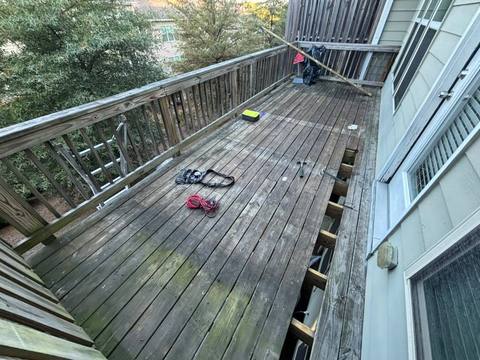
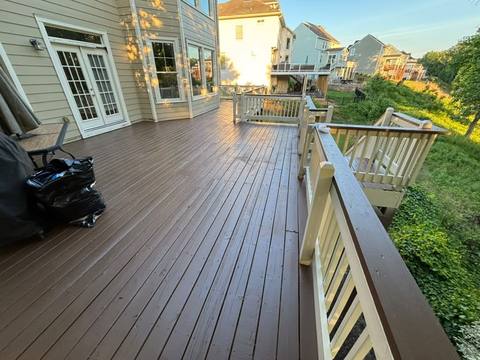
How can I tell if my deck ledger board is safe? Check for gaps between the deck and your house. Look for rusted nails instead of heavy bolts and check for missing metal flashing. If the board is pulling away or rotting, it is a major safety risk. When in doubt, have a professional builder inspect the connection.
Free estimate · opens your texting app · no forms needed
Get a fast estimate
★★★★★ 31 Google reviews as of Nov 2026 — “Great workmanship, fair pricing, and excellent customer service.” Read reviews
- Free written estimate within one day
- General liability coverage
- Crews with 10+ years of combined experience
- Owner on every job
- Text us (470) 863-3707
Homeowner guide
How can I tell if my deck ledger board is safe?
Short answer: Check for gaps between the deck and your house.
I have spent a lot of time building and fixing decks across Canton. Most folks look at the railings or the floorboards, but the real danger is where the deck meets the house. If that connection fails, the whole structure can drop. Here is how to tell if your ledger board is doing its job or if it is a ticking clock.
- Owner-operated: Breno visits and writes your estimate himself
- A team with 10+ years of combined experience
- Insured with general liability coverage
- 31 Google reviews as of Nov 2026, rated 5.0
- Before-and-after photos from our own completed jobs
Guide
Why the ledger is the highest risk spot
The ledger board is the heavy beam that bolts your deck directly to the house. It carries a massive amount of weight, especially when you have a crowd over for a cookout. If this board fails, the deck does not just sag; it pulls away from the wall entirely. This is the most common point of catastrophic failure in residential decks. Because it is tucked against the house, rot often hides where you cannot see it until it is too late. It is the single most important piece of lumber in the whole build.
Guide
Checking the attachment to the house
You want to see a tight, seamless fit between the ledger and your home. Take a walk around the perimeter and look for any daylight between the board and the siding.
- Check for gaps where the board meets the rim joist.
- Look for leaning or sloping toward the yard.
- Feel for soft spots in the wood using a screwdriver.
- Search for signs of crushing in the house framing.
If you see a gap even a fraction of an inch wide, the connection is compromised. Water gets in there, freezes, and pushes the board further away over a few seasons.
How it works
Five steps. No surprises.
Call, text, or send the form
Tell us what is going on: a new deck, a repair, or “not sure yet.” We reply the same day.
Free on-site visit
Breno looks at the deck or the yard himself, measures, and goes over your options with you.
Written estimate
Scope, materials and price come in writing, so you know the plan before anything starts.
Schedule and permits
We agree on a start date and confirm any city, county or HOA requirement for your address first.
Build and final walk-through
Breno is on the job, and we go over the finished work with you before we call it done.
Real B&T work
Photos from real jobs


Real photos from B&T projects in North Georgia.
Guide
The danger of nails versus bolts
Some older decks were built using nails or simple screws to hold the ledger up. That is a recipe for disaster. Nails can pull straight out under the weight of a heavy load. You want to see heavy duty lag bolts or through bolts that go all the way through the board and the house frame.
- Lag bolts should be spaced evenly across the beam.
- Through bolts should have a washer and nut on the inside.
- Avoid any ledger held up by only nails.
- Look for rusted hardware that has eaten through the wood.
Bolts provide the shear strength needed to keep the deck from falling.
Guide
Looking for proper flashing
Flashing is the metal or plastic stripping that keeps water from soaking into your house wall. Without it, rain runs behind the ledger and rots your house rim joist from the inside out.
- Look for a metal drip cap over the top of the board.
- Ensure the flashing extends past the edges of the beam.
- Check for peeling caulk or gaps in the sealant.
- Look for water stains on the siding just above the deck.
If you do not see a visible layer of metal protecting the joint, water is likely getting into your home's structure.
Guide
Spotting signs of separation
Separation happens slowly, then all at once. You might notice it first in the small things before the big shift happens.
- Check if the siding is cracking where it meets the deck.
- Look for "stair-stepping" gaps in the house wrap.
- See if the deck feels bouncy when you walk near the house.
- Watch for a visible lean when you stand back and look at the profile.
Once the board starts to pull away, the bolts are under immense tension. This is a critical warning sign that the structure is no longer stable.
Guide
When to call a pro
You do not need to be a master builder to spot these red flags, but you should not try to fix a failing ledger yourself. If you find missing flashing or see nails instead of bolts, it is time for a professional.
- Call a pro if you see any daylight between the house and deck.
- Get help if the wood feels spongy or soft.
- Reach out if you see rusted bolts.
- Consult a builder if you are planning to add a hot tub or heavy planters.
A quick inspection can save you from a total collapse.
Get a fast estimate
Guide
Keep your connection solid
Checking your ledger board once a year is a smart move for any homeowner. Most of these issues start small and can be fixed before they become dangerous. Just keep an eye on the flashing and the bolts, and make sure everything stays tight against the house.
Guide
Get a Free Deck Health Check
Not sure where your project stands? B&T Properties will take a look and tell you plainly what we see, with no pressure. Text us at 470-863-3707 to schedule your Free Deck Health Check, and we will walk the job with you and explain your options.
Local notes
Around Canton and Woodstock and nearby
Canton. Canton sits in the rolling Piedmont foothills of North Georgia, and a lot of backyards step down from the house instead of running flat. That changes how a deck is framed: taller posts, extra footings, and sometimes a landing partway down the stairs. Communities in the area include BridgeMill, Great Sky, Laurel Canyon, River Green.
Woodstock. Woodstock is a suburban North Georgia city of established subdivisions with mature trees and, in some older neighborhoods, larger lots. Shade and fallen leaves keep wood damp longer, which matters for both framing and board choice. Communities in the area include Towne Lake, Eagle Watch, Wyngate, Bradshaw Farm.
Holly Springs. Holly Springs is a fast-growing Cherokee County city of sprawling subdivisions such as Harmony on the Lakes, with some homes on lots of an acre or more. Many houses date from the early 2000s and later, so a lot of original builder decks are now at the age where they need attention. Communities in the area include Harmony on the Lakes, downtown Holly Springs.
Straight answers
Common questions
How often should I check my deck ledger?
I recommend a thorough walk around your deck once a year. Do this in the spring after the winter weather has settled.
Can I just add more screws to a loose ledger?
No, adding a few screws will not provide the structural strength needed. You need heavy bolts to safely secure a ledger board.
What is the best material for flashing?
Metal or high quality vinyl flashing is the standard. It must be sloped to push water away from the house.
Will painting the ledger protect it from rot?
Paint helps, but it cannot stop water that gets behind the board. Proper flashing is the only way to prevent rot at the house connection.
Is a floating deck safer than a ledger deck?
A floating deck does not attach to the house, so it cannot pull the wall down. However, it requires more posts to stay level.
Verified Google reviews
What the neighbors are saying
These are verified Google reviews from B&T customers.
★★★★★
“The quality of the work was exceptional. The team was friendly, responsive, and made sure everything was done right. I would definitely recommend B&T Properties.”
★★★★★
“Outstanding service! Breno is knowledgeable, honest, and takes pride in his work. It's hard to find a company this reliable these days.”
Who’s doing the work
About B&T Properties
You deal with the owner. Breno visits, quotes and oversees the work, and the crew brings more than ten years of deck experience between them. B&T carries General Liability insurance, and Canton is part of our regular service area.
Upgrades
Make it yours: popular upgrades
Ask about any of these when Breno comes out for your free estimate. They are easiest to price in when we plan the project, not after it is built.
Composite decking
Low-maintenance boards in a range of colors, priced next to wood so you can compare.
Lighting
Soft LED lighting along the steps and rail, so the deck is usable after dark.
Stairs and landings
A better way down to the yard, with extra width, a landing or a second flight.
Cover or screens
A roof or a screened section for shade and bug-free evenings.
Service area
Cities we serve
Written warranty
1-year workmanship warranty
For 12 months after we finish, B&T Properties stands behind its labor in writing. A problem traced to how we built or repaired it is corrected at no cost. Excluded: defective materials, age-related wear, weather events, improper use, missing maintenance, and anyone else’s repairs. Put your claim in writing.
Free written estimate
Ask Breno about your deck — free and in writing.
No call center, no sales rep — the person who answers is the person who does the work.