Owner-operated · Homeowner guide · Acworth
Planning Your Privacy Fence in AcworthAcworth · Cobb County
Acworth: Before a new privacy fence goes up, a little planning saves a lot of rework. Property lines, local rules, slope and gates all shape where the fence can go and how well it works for your household. Owner-operated, with a free written estimate.
Free estimate · opens your texting app · no forms needed
Get a fast estimate
★★★★★ 31 Google reviews as of Nov 2026 — “Great workmanship, fair pricing, and excellent customer service.” Read reviews
- Free written estimate within one day
- General liability coverage
- Crews with 10+ years of combined experience
- Owner on every job
- Text us (470) 863-3707
Homeowner guide · Acworth
What should I think about before installing a new privacy fence?
Thinking through a privacy fence in Acworth before ordering anything means checking where your boundary runs, how the ground slopes and where family and visitors will need to walk through.
- Owner-operated: Breno visits and writes your estimate himself
- A team with 10+ years of combined experience
- Insured with general liability coverage
- 31 Google reviews as of Nov 2026, rated 5.0
- Before-and-after photos from our own completed jobs
Acworth
Where the Property Line Really Is
The first step is knowing exactly where your property line runs. A fence that lands even slightly on the wrong side can lead to a dispute or a fence that has to come down. Pull out your plat or closing survey, and if the corners are unclear, a surveyor can mark them. Older in-town blocks in downtown Acworth, a short drive from I-75 and Cobb Parkway, sometimes have less obvious boundaries than newer subdivisions, so it pays to confirm rather than guess from an old fence or a hedge line.
Easements matter too. Utility and drainage easements often run along the back or side of a lot, and a fence placed across one may need to be moved later. Your plat usually shows them. If you are not sure what a line on the plat means, ask the City of Acworth or Cobb County, depending on your address, before you settle on a layout.
Acworth
HOA and City Rules by Address
Fence rules depend on your address, so check before you choose a design. If you live in a subdivision with an HOA, ask the association whether it reviews fence height, style, color or material, and get any approval in writing. Do not assume the rules match a friend's neighborhood, even one nearby.
On the city side, contact the City of Acworth or Cobb County, whichever covers your lot, and ask what applies to a privacy fence: height limits, front yard rules, corner lot sight lines and whether a permit is needed. Acworth's code also includes tree protection and references stream buffers and undisturbed areas, so a wooded lot or a creek behind the house is worth asking about before any post holes are dug.
How it works
Five steps. No surprises.
Call, text, or send the form
Tell us what is going on: a new deck, a repair, or “not sure yet.” We reply the same day.
Free on-site visit
Breno looks at the deck or the yard himself, measures, and goes over your options with you.
Written estimate
Scope, materials and price come in writing, so you know the plan before anything starts.
Schedule and permits
We agree on a start date and confirm any city, county or HOA requirement for your address first.
Build and final walk-through
Breno is on the job, and we go over the finished work with you before we call it done.
Real B&T work
Photos from real jobs


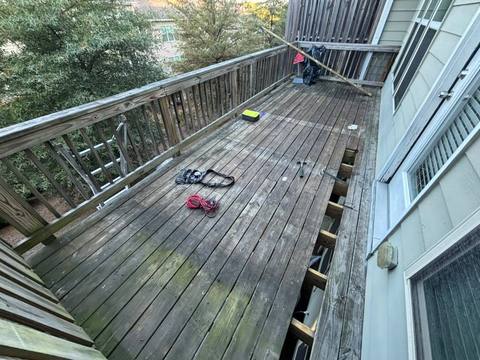
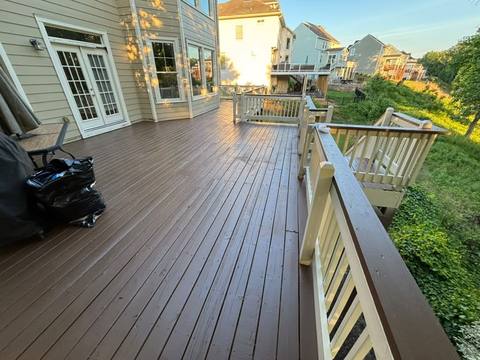
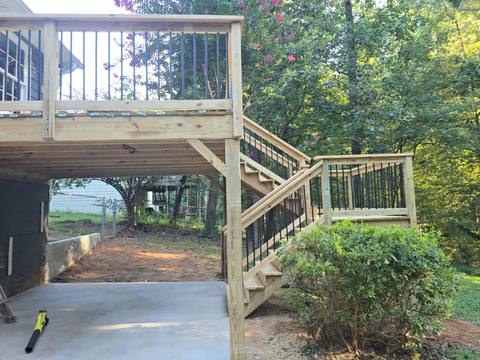
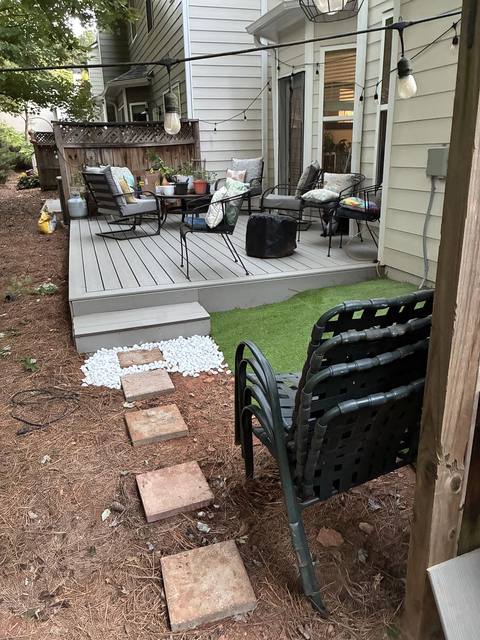
Real photos from B&T projects in North Georgia, not necessarily from Acworth.
Acworth
Slope and Steps in the Fence Line
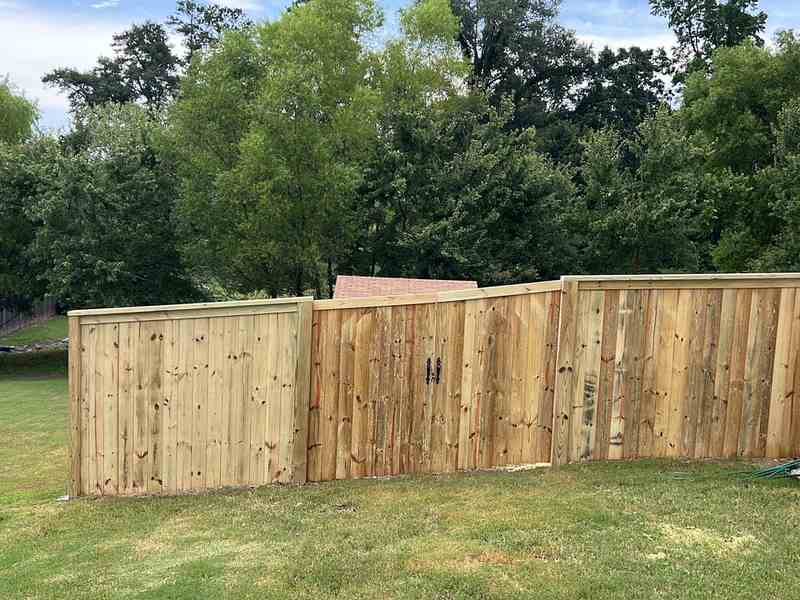
Few back yards are perfectly flat. On a slope you have two basic options. A racked fence follows the ground, so the bottom gap stays even but the top line slopes with the yard. A stepped fence keeps each panel level, which gives a crisp top line but leaves triangle-shaped gaps under each step. Dogs and small animals find those gaps quickly, so the choice often comes down to what you need the fence to do.
Trees and roots complicate post layout. Around Lake Acworth and on wooded lots elsewhere in town, large roots can force a post to shift a little or a panel to be shortened. Plan the line with some flexibility, and keep posts back from the trunks of trees you want to keep. Where buffers or protected trees are involved, confirm with the city before you adjust the line closer to them.
Acworth
Gates and Dogs
Think about how you will actually use each gate. A walk gate for daily trips to the trash cans can be narrow, but a gate for a mower, a wheelbarrow or a future project needs more width, and a double gate may make sense. Put gates where people already walk so nobody ends up climbing over a low section or cutting through a flower bed.
For dogs, a self-closing hinge and a latch that sits out of reach of paws and noses go a long way. Wood gates sag over time if they are not braced well, so a sturdy frame and good hardware matter more than the look of the boards. Check the gap at the bottom of the gate too, since a small dog can slip through a surprisingly narrow opening.
Acworth
Talking with Neighbors
A short conversation with the neighbors before the fence goes up prevents a lot of hard feelings. Share where the line is, how tall the fence will be and roughly when the work will happen. Some neighbors will want to split the work on a shared line, and others will simply appreciate the heads-up.
Decide which side faces out. Many homeowners put the finished side toward the neighbor, and talking it through ahead of time avoids surprises. If a neighbor raises a concern about the line, looking at the plat together usually settles it faster than a debate in the yard.
Get a fast estimate
Acworth
Wood Choices in General Terms
Treated pine is the common choice for privacy fences because it resists rot and insects and takes stain well once it dries. Cedar has natural decay resistance and a warm color, though it is softer and dents more easily. Whatever the wood, the posts carry the load, so they deserve the most attention: the right depth, good drainage at the base and no soil piled against the boards.
Every wood fence in Acworth's humid weather benefits from a penetrating stain or sealer once the wood is dry enough to take it, followed by a fresh coat when water stops beading. B&T also builds, repairs, stains and seals wood fences next to its deck work across Cobb County and nearby Kennesaw, Woodstock and East Cobb. Breno visits in person and leaves a free written estimate.
Straight answers
Acworth homeowner questions
How close to the property line can I build my fence in Acworth?
It depends on your address, your zoning and any easements or HOA rules. Confirm the distance with the City of Acworth or Cobb County, whichever covers your lot, and with your association if you have one. Your plat shows the line itself and any easements along it.
Do I need a permit to build a privacy fence in Acworth?
That depends on your address and the scope of the fence. Ask the City of Acworth or Cobb County directly, and check with your HOA as well, before any work starts. Getting the answer in writing keeps the project from stalling halfway through.
Can I attach my fence to my neighbor's existing fence?
Only with your neighbor's permission, and it can blur who maintains what later. Talk it through openly and put the agreement in writing. If the fence sits right on the line, both owners may share responsibility for it, which is worth settling up front.
How do tree protection rules affect fence placement?
Acworth's code includes tree protection measures and references stream buffers and undisturbed areas. On a wooded lot or near a creek, ask the city what applies before digging post holes, and keep posts back from the trunks of trees you plan to keep.
What height is allowed for a privacy fence?
Height limits depend on your zoning, which yard the fence sits in and any HOA guidelines or deed restrictions. Front yards often have tighter limits than back yards. Confirm the numbers for your address with the city or county and your association.
Should I set fence posts in concrete?
Concrete gives posts strong support, but water must be able to drain away from the base or the wood can rot at the ground line. Crowning the top of the concrete so it sheds water and keeping soil off the boards both help the posts last.
Should the fence follow the slope or step down?
Following the slope keeps the bottom gap even, while stepping keeps the top level but leaves gaps under each panel. If the fence needs to hold a dog, a racked fence or added boards at the bottom usually works better than wide steps.
What should I do if my neighbor disagrees with the fence plan?
Listen to the concern and look at the plat together, since many disagreements are about where the line actually is. A surveyor can settle a boundary question. If you share an HOA, the association may help the conversation along.
Verified Google reviews
What the neighbors are saying
These are verified Google reviews from B&T customers.
★★★★★
“Outstanding service! Breno is knowledgeable, honest, and takes pride in his work. It's hard to find a company this reliable these days.”
★★★★★
“The quality of the work was exceptional. The team was friendly, responsive, and made sure everything was done right. I would definitely recommend B&T Properties.”
Who’s doing the work
About B&T Properties
You deal with the owner. Breno visits, quotes and oversees the work, and the crew brings more than ten years of deck experience between them. B&T carries General Liability insurance, and Acworth is part of our regular service area.
Upgrades
Add-ons to consider
Thinking beyond the basics? Mention any of these at your free estimate and Breno will go over what makes sense for your home.
Multi-level layouts
A split-level layout that works with the lay of your lot instead of fighting it.
Cover or screens
Add a roof over part of the deck, or screen it in for shade and fewer bugs.
Lighting
Soft LED lighting along the steps and rail, so the deck is usable after dark.
Stairs and landings
Stairs that are easier to use: more width, a mid-level landing, or a better path to the yard.
Written warranty
1-year workmanship warranty
B&T Properties warrants our workmanship for one year from completion and fixes failures caused by our work at no charge. Not covered: material defects (manufacturer warranty), normal wear, weather, misuse, lack of maintenance, or work by others. Claims in writing.
Free written estimate
Tell Breno about your Acworth deck — free and in writing.
No call center, no sales rep — the person who answers is the person who does the work.