Owner-operated · Homeowner guide · Buckhead
How a Sloped, Red Clay Yard Changes Your Buckhead DeckBuckhead · Fulton County
Buckhead: If your back yard drops away from the house, the deck you picture and the deck the ground allows can be two different things. Owner-operated, with a free written estimate.
Free estimate · opens your texting app · no forms needed
Get a fast estimate
★★★★★ 31 Google reviews as of Nov 2026 — “Great workmanship, fair pricing, and excellent customer service.” Read reviews
- Free written estimate within one day
- General liability coverage
- Crews with 10+ years of combined experience
- Owner on every job
- Text us (470) 863-3707
Homeowner guide · Buckhead
How does a sloped, red-clay yard change a deck?
Here is how the slope and the red clay underneath it shape posts, footings, drainage and stairs on a Buckhead lot.
- Owner-operated: Breno visits and writes your estimate himself
- A team with 10+ years of combined experience
- Insured with general liability coverage
- 31 Google reviews as of Nov 2026, rated 5.0
- Before-and-after photos from our own completed jobs
Buckhead
Why the grade decides the design
Every deck starts with one question: where does the ground sit compared to the back door? On a flat lot the answer is simple and the deck stays low. On a Buckhead lot that rolls and falls away, the answer changes from one corner of the yard to the other. Homes around Peachtree Heights and North Buckhead often sit on hillsides, and the same house can have a low edge and a tall edge on one deck. We walk the yard first, before we draw anything, because the grade sets the height, the stairs and the footprint.
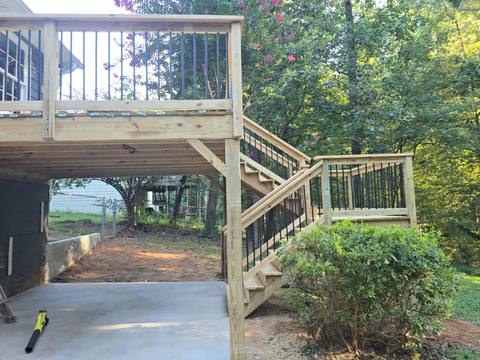
The slope also tells us what the deck should feel like. A tall deck over a falling yard can give you a treetop view and shaded space underneath, which is why elevated decks make sense on so many hilly lots. But height has consequences for posts, bracing, rails and stairs. Breno visits in person because a photo flattens the hill. Standing in the yard, we can see where water runs, where the ground is soft, where roots reach and where a landing could sit. Then the design follows the land instead of fighting it.
Buckhead
Taller posts and what they ask of the structure
On a slope, posts get longer, and longer posts need more care. A tall post that is only fastened at the top and bottom can sway, so we think about bracing early. Bracing ties the posts together so the whole frame acts like one stiff piece instead of a row of sticks. It also affects how the space underneath looks, since diagonal braces can crowd a view or a patio below. We plan those details at the start so the deck feels solid underfoot and looks tidy from the yard.
Taller posts also change the wood. Long posts stay damp near the ground and dry out near the top, and that difference can cause twisting and checking over time. We pay attention to the grade of lumber, to straight stock, and to sealing cut ends. A deck near Chastain Park or any wooded lot may sit under heavy shade, which keeps wood wet longer. That is not a reason to skip height. It is a reason to build it carefully, keep air moving around the posts, and plan on regular staining so the wood is protected.
How it works
Five steps. No surprises.
Call, text, or send the form
Tell us what is going on: a new deck, a repair, or “not sure yet.” We reply the same day.
Free on-site visit
Breno looks at the deck or the yard himself, measures, and goes over your options with you.
Written estimate
Scope, materials and price come in writing, so you know the plan before anything starts.
Schedule and permits
We agree on a start date and confirm any city, county or HOA requirement for your address first.
Build and final walk-through
Breno is on the job, and we go over the finished work with you before we call it done.
Real B&T work
Photos from real jobs


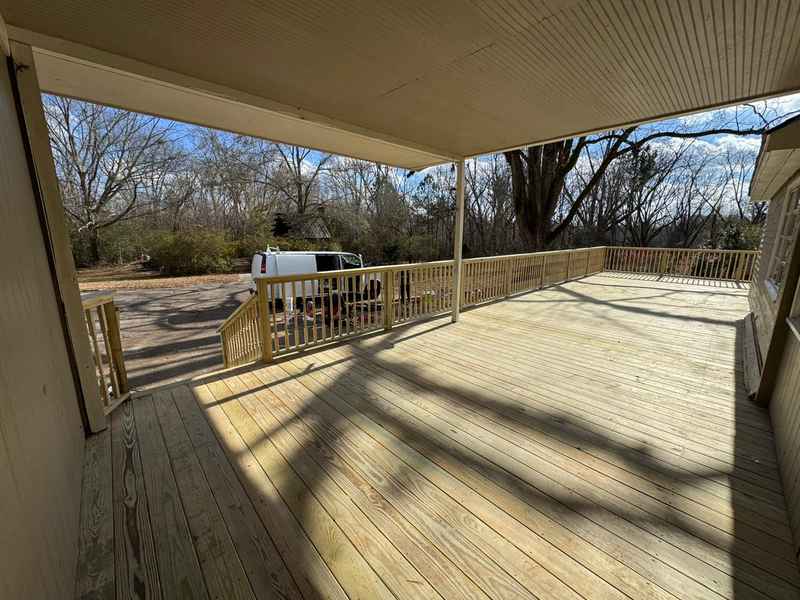
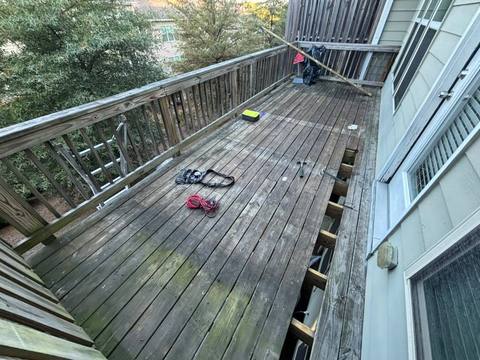
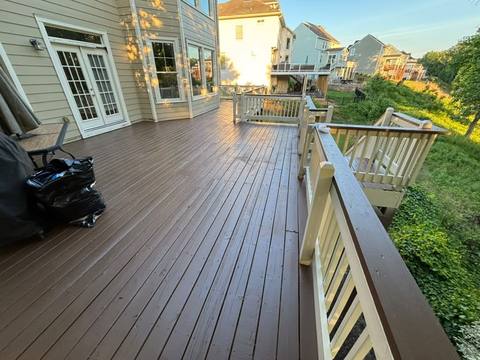
Real photos from B&T projects in North Georgia, not necessarily from Buckhead.
Buckhead
Footings in red clay
Red clay is dense and sticky when wet and hard as a brick when dry. It can hold a footing well, but it does not behave the same way all season. Clay swells when it soaks and shrinks when it dries, and on a slope the soil near the surface can slowly creep downhill. So a footing on a hillside has a harder job than one on level ground. We dig down to firm, undisturbed soil rather than trusting loose fill, and we look for places where the ground has been built up or disturbed before.
We also think about what is uphill from the footing. Water running down a slope can soften clay and carry soil away from a footing over time. We try to keep footings out of the path of runoff, or direct the water around them. Footing size and depth depend on the deck, the soil and the local code, so we confirm those details for your address rather than guessing. If you have seen your yard stay muddy for days after rain, tell us. That detail helps us read the ground before we set a single post.
Buckhead
Drainage above and below the deck
Clay drains slowly, so water has to be handled on purpose. A hillside yard can send a surprising amount of runoff toward the house and under the deck, especially during a hard summer storm. If that water pools around footings or against the foundation, it causes trouble for both the deck and the house. We look at roof downspouts, low spots and the natural flow of the yard, and we plan the deck so water has a clear way to keep moving downhill.
Drainage under the deck matters too. Tall decks leave a lot of open space below, and some homeowners want to use it for storage or a dry patio. That takes more planning than simply nailing boards on a frame. We also keep in mind that some lots near creeks or large trees may have extra restrictions. Whether that applies to you depends on the address, so we check the live city permitting portal and tell you what we find. Never assume a drainage fix is allowed until it is confirmed.
Get a fast estimate
Buckhead
Stairs and landings on a slope
Stairs are where a sloped yard shows up most. A tall deck means a long run down to the grass, and a long run means more steps, a sturdier rail and often a landing partway down. A landing breaks the climb into shorter flights, gives your feet a flat place to rest and lets the stairs turn toward a path or a garden instead of marching straight into the hillside. We think about where you actually want to walk, whether that is toward a fire pit, a gate or the driveway off West Paces Ferry Road.
Landings also need solid footings, and on red clay that means the same careful ground work as the main deck. A stair that sits on soft or washed out soil can settle and pull away from the frame. We plan how the bottom step meets the ground, because slippery clay in wet weather is no friend to a stair. Rails, lighting and good traction on the treads matter more when the climb is long. Some historic districts review exterior work, so we ask early about any association or preservation review for your home.
Straight answers
Buckhead homeowner questions
Will a sloped yard make my deck harder to build?
It can, mainly because posts get taller, footings face more pressure and stairs get longer. None of that is a deal breaker. It means the plan needs more care up front. Breno looks at the yard in person, we walk the slope together, and we explain what the ground allows before anything gets built.
Why does red clay matter for deck footings?
Clay swells when wet and shrinks when dry, and on a hillside the surface soil can slowly shift downhill. A footing needs to rest on firm, undisturbed ground rather than loose fill. We look for soft spots, disturbed soil and runoff paths so the footings stay steady through wet and dry seasons.
Do taller posts mean a weaker deck?
Not if the deck is braced and framed properly. Tall posts can sway if they are left to stand alone, so we tie them together with bracing and connect the frame carefully. The result should feel solid underfoot. Good lumber, sealed cut ends and regular staining also help tall posts last.
How do you handle water running down my yard?
We start by watching where it goes, then plan the deck so water can keep moving downhill instead of pooling around footings or the foundation. Downspouts, low spots and shaded damp areas all matter. If a yard stays muddy after rain, tell us, because that clue shapes the design.
Why would I need a landing on my deck stairs?
A tall deck over a falling yard means a long run of steps. A landing splits that run into shorter flights, gives you a flat place to rest and lets the stairs turn toward a path or garden. It also keeps one long staircase from running straight into the hillside.
Can I build a deck near a creek or in a wooded yard?
Possibly, but those lots can carry extra rules. Lots near streams or large trees may have restrictions. Whether they apply depends on your address. We check the live Atlanta permitting portal, tell you what we find and suggest you confirm with the city before work starts.
Does a deck near Roswell Road or Peachtree Road need different planning?
The road itself does not change how we build, but your lot, your slope and your address do. Lots near busy roads can still be hilly or wooded. Permits and any association review depend on the specific property, so we check those for your address instead of guessing from the street.
How do I get an estimate for a deck on a slope?
Contact us and Breno will visit your Buckhead home in person, look at the grade, the soil, the trees and the water, and talk through what you want. We give free written estimates. We also ask about any HOA or review board at the start so approvals are planned from day one.
Verified Google reviews
What the neighbors are saying
These are verified Google reviews from B&T customers.
★★★★★
“If you're looking for a trustworthy contractor, B&T Properties is the right choice. Great workmanship, fair pricing, and excellent customer service.”
★★★★★
“The quality of the work was exceptional. The team was friendly, responsive, and made sure everything was done right. I would definitely recommend B&T Properties.”
Who’s doing the work
About B&T Properties
Owner-operated by Breno. Collectively, our team brings 10+ years of deck-building experience, and B&T Properties carries General Liability insurance. Serving Buckhead and the rest of Fulton County.
Upgrades
Upgrades worth asking about
Ask about any of these when Breno comes out for your free estimate. They are easiest to price in when we plan the project, not after it is built.
Composite decking
Low-maintenance boards in a range of colors, priced next to wood so you can compare.
Multi-level layouts
Two levels can follow your slope and give dining and lounging their own space.
Lighting
Low-voltage LED lights on stairs, posts or under the rail cap for evenings outside.
Railing styles
Pick the rail that fits the house: aluminum, composite or wood, in several styles.
Written warranty
1-year workmanship warranty
Workmanship warranty: one year from the day we complete the work, in writing. Faults that come from our labor are repaired at no charge. Not included: manufacturer material defects, normal wear and tear, weather, misuse, no maintenance, repairs by other parties. Submit claims in writing.
Free written estimate
Tell Breno about your Buckhead deck — free and in writing.
No call center, no sales rep — the person who answers is the person who does the work.