Owner-operated · Homeowner guide · Johns Creek
Diagnosing Deck Damage in Johns Creek HomesJohns Creek · Fulton County
Johns Creek: Homeowners in Johns Creek often wonder if their deck damage comes from rot, termites or carpenter bees. Knowing the difference helps you act fast and protect your investment. Owner-operated, with a free written estimate.
Free estimate · opens your texting app · no forms needed
Get a fast estimate
★★★★★ 31 Google reviews as of Nov 2026 — “Great workmanship, fair pricing, and excellent customer service.” Read reviews
- Free written estimate within one day
- General liability coverage
- Crews with 10+ years of combined experience
- Owner on every job
- Text us (470) 863-3707
Homeowner guide · Johns Creek
Is it rot, termites or carpenter bees chewing my deck?
Deck damage in Johns Creek can look alike at first glance, yet decay, termite tunnels and carpenter bee galleries each leave their own marks, and learning them keeps a small repair from growing.
- Breno, the owner, measures and writes your estimate
- 10+ years of combined team experience
- General liability insurance
- 5.0 stars from 31 Google reviews as of Nov 2026
- Real before-and-after photos from our own jobs
Johns Creek
Look for Soft Spots and Color Changes
Start by checking the wood for soft areas that give way under finger pressure or a screwdriver tip. Rot often feels spongy or stringy and may look darker than surrounding wood, sometimes with white or yellow fungal growth in damp spots. Insect damage usually leaves the surface hard but hollow inside, with small holes or sawdust-like frass near entry points. Termites create mud tubes on wood surfaces, while carpenter bees leave round, clean holes about the width of a pencil. Probe gently with an awl or nail to test depth, rot spreads with moisture, insects follow grain.
Johns Creek
Photograph the Problem Areas Clearly
Take close-up photos of any suspicious spots, showing both the surface texture and any holes or discoloration. Include a reference object like a coin or key for scale so we can judge size accurately. Capture wide shots too, showing where the damage sits on the deck, near the house, at ground level or on railings. Good photos help us tell if the issue is surface wear or deeper structural trouble. We use these images during your free written estimate to plan the right repair or replacement approach.
How it works
Five steps. No surprises.
Call, text, or send the form
Tell us what is going on: a new deck, a repair, or “not sure yet.” We reply the same day.
Free on-site visit
Breno looks at the deck or the yard himself, measures, and goes over your options with you.
Written estimate
Scope, materials and price come in writing, so you know the plan before anything starts.
Schedule and permits
We agree on a start date and confirm any city, county or HOA requirement for your address first.
Build and final walk-through
Breno is on the job, and we go over the finished work with you before we call it done.
Real B&T work
Photos from real jobs


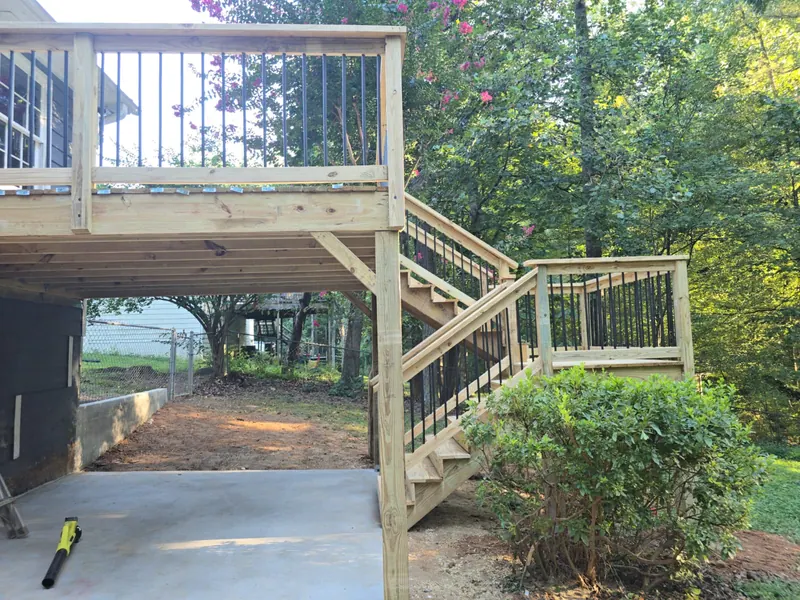
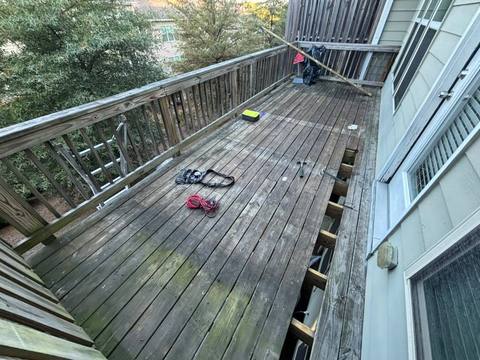
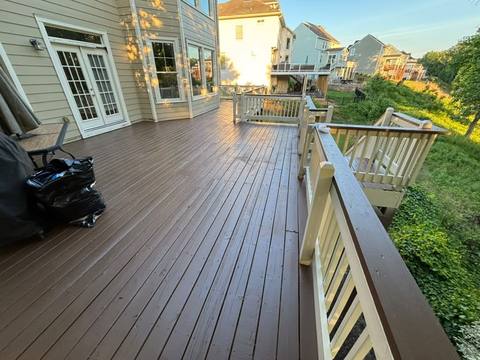
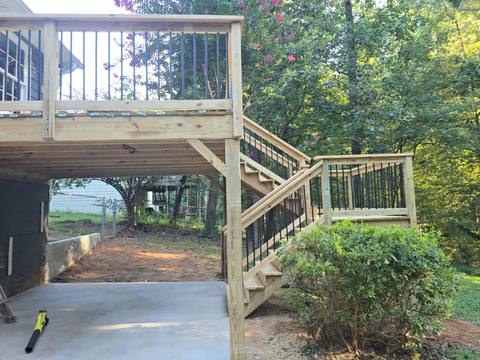
Real photos from B&T projects in North Georgia, not necessarily from Johns Creek.
Johns Creek
Focus on the Frame and Ledger First
The ledger board where your deck attaches to the house is critical, it carries the most load and hides behind trim where moisture collects. Check here first for rot, as failure here risks collapse. Look for staining, soft wood or gaps between the ledger and house frame. Insects often attack untreated ends of joists or beams near the ground, especially in shaded, damp corners. Surface boards show wear faster but rarely threaten safety, rot or insects in the frame demand urgent attention.
Johns Creek
Know How Terrain Affects Risk
Johns Creek's gently rolling terrain means many lots slope toward streams or wooded buffers, holding moisture longer after rain. Homes near Medlock Bridge or along Jones Bridge Road often have shaded yards where decks stay damp, inviting rot. Wooded lots in Country Club of the South or around St. Ives Country Club may see more carpenter bee activity in untreated pine or cedar. Lots near stream corridors tend to stay damp, and even pressure-treated framing needs checking at cut ends and joints, where the treatment is thinnest.
Get a fast estimate
Johns Creek
Act Early to Avoid Bigger Problems
If you spot soft wood, holes or frass, delay only long enough to schedule an inspection, problems worsen fast in our humid climate. We visit in person to probe suspect areas, explain what we find and give a free written estimate for repair or replacement. Addressing rot or insect damage early protects your deck's life and your home's value. If the damage is limited to a few boards, a targeted repair is often enough; if it has reached the joists or ledger, we explain the repair and replacement options side by side.
Straight answers
Johns Creek homeowner questions
What does termite damage look like on a deck pressure-treated for ground contact?
Termite damage often shows as hollowed wood along the grain with mud tubes on surfaces or inside joints. The outside may look intact while the inside is eaten away. Probe suspect areas, if the wood crumbles or feels paper-thin, termites may be active. Look for wings or droppings near holes.
Can carpenter bees ruin a deck frame or just make holes in the surface?
Carpenter bees bore round holes into wood to lay eggs, preferring untreated or weathered surfaces like railings or joist tops. They rarely compromise structural strength unless many colonies weaken the same beam over time. Their holes invite moisture, which can lead to rot later if not sealed.
How do I check if my deck ledger is rotting without removing the siding?
You can often see the ledger edge where it meets the house foundation or rim joist. Probe any exposed wood with a screwdriver, if it sinks in easily or feels spongy, rot is likely. Look for water stains, mold or gaps between the ledger and house frame as warning signs.
Why does my deck feel bouncy in the middle but the boards look fine?
A bouncy deck often means weakened joists or beam connections underneath, even if surface boards appear solid. Rot or insect damage in the frame reduces support, causing flex under weight. Probe the joist tops and beam ends, soft wood there explains the bounce better than surface wear.
Does staining my deck prevent rot or insect damage?
Stain helps repel water and UV rays, slowing surface checking and rot in exposed wood. It does not stop termites or carpenter bees, which burrow inside regardless of finish. For insect resistance, pressure-treated or naturally resistant woods like cedar work better, stain then protects against weather.
How often should I inspect my deck for rot or bugs in Johns Creek?
Check your deck at least twice a year, once in spring after winter rains and again in fall before cold sets in. Focus on shaded areas, ground-level posts and the ledger board. After heavy storms or if you see sawdust or holes, inspect sooner to catch issues early.
Can HOA rules in Country Club of the South affect how I repair my deck?
HOA design review may require approval for changes to materials, color or size, even repairs that match the original. Submit your plans early with details so we can help avoid delays. Always confirm requirements with your association before work begins, as rules vary by community.
What should I do if I find sawdust-like material under my deck?
Sawdust or frass under the deck often signals insect activity, termite droppings are granular, carpenter bee frass looks like fine wood powder. Note where it falls and check above for holes or tunnels. Do not disturb the area, let us inspect the wood to judge the damage, and call a pest professional if insects are still active.
Is it safe to use a pressure washer to clean a deck with possible rot?
Pressure washing can force water into weakened wood, accelerating rot or hiding damage. Use low pressure and a wide fan nozzle if cleaning, keeping the spray moving to avoid gouging. If you suspect rot, skip washing and have us inspect first, we'll assess condition during your free written estimate.
Verified Google reviews
What the neighbors are saying
These are verified Google reviews from B&T customers.
★★★★★
“Outstanding service! Breno is knowledgeable, honest, and takes pride in his work. It's hard to find a company this reliable these days.”
★★★★★
“Breno F. is an incredible man. He helped my aging mother when no one else would and went the extra mile with a complex home repair. His work is meticulous and his follow through is commendable. He is a good man with a great heart. Highly recommended!”
Who’s doing the work
About B&T Properties
You deal with the owner. Breno visits, quotes and oversees the work, and the crew brings more than ten years of deck experience between them. B&T carries General Liability insurance, and Johns Creek is part of our regular service area.
Upgrades
Make it yours: popular upgrades
Thinking beyond the basics? Mention any of these at your free estimate and Breno will go over what makes sense for your home.
Cover or screens
Add a roof over part of the deck, or screen it in for shade and fewer bugs.
Multi-level layouts
A split-level layout that works with the lay of your lot instead of fighting it.
Composite decking
Boards that resist rot and skip the yearly stain. Worth pricing in at the start.
Railing styles
Aluminum, composite or wood railing, from classic balusters to a cleaner, low-profile look.
Written warranty
1-year workmanship warranty
For 12 months after we finish, B&T Properties stands behind its labor in writing. A problem traced to how we built or repaired it is corrected at no cost. Excluded: defective materials, age-related wear, weather events, improper use, missing maintenance, and anyone else’s repairs. Put your claim in writing.
Free written estimate
Tell Breno about your Johns Creek deck — free and in writing.
No call center, no sales rep — the person who answers is the person who does the work.