Owner-operated · Homeowner guide
How to Add Shade to a Deck Near BuckheadHomeowner guide · Georgia decks
How to Add Shade to a Deck Near Buckhead It is late afternoon, the sun is hanging low over the rail, the iced tea has gone warm, and everyone has drifted back indoors.
Free estimate · opens your texting app · no forms needed
Get a fast estimate
★★★★★ 31 Google reviews as of Nov 2026 — “Great workmanship, fair pricing, and excellent customer service.” Read reviews
- Free written estimate within one day
- General liability coverage
- Crews with 10+ years of combined experience
- Owner on every job
- Text us (470) 863-3707
Homeowner guide
How to Add Shade to a Deck Near Buckhead
Short answer: What are your options for adding shade to a deck? You can choose a pergola, a covered section, a retractable awning, an umbrella, a shade sail or a well-placed tree, and the right one depends on where the sun hits, how much wind you get and whether you want rain cover too.
- Owner-operated: Breno visits and writes your estimate himself
- A team with 10+ years of combined experience
- Insured with general liability coverage
- 31 Google reviews as of Nov 2026, rated 5.0
- Before-and-after photos from our own completed jobs
Guide
Start With Where the Sun Actually Hits
Before choosing anything, spend a full day watching the deck. Note when the sun reaches the boards, when it reaches the seating, and when it finally slides behind the house or the trees. Morning sun and late afternoon sun behave very differently. Low western sun slips under almost any overhead cover and lands right on your face, while high midday sun is easy to block from above. Homes around Garden Hills and North Buckhead often sit on sloped lots, so an elevated deck can catch sun that a ground-level patio never sees.
Then think about how you use the space. A deck for morning coffee needs different shade than one for evening dinners. Shade also changes the feel. A solid roof makes a deck feel like an outdoor room, while open slats feel airy and dappled. Some choices block rain as well as sun, and some do not. Anything attached to the house adds weight and needs solid framing, so the deck itself should be checked first. If the boards or posts are tired, we can look at that during a free written estimate visit with Breno.
Guide
Pergolas and Covered Sections
A pergola is an open frame of posts and beams, usually with crossing rafters on top. It gives the deck a defined edge and a sense of ceiling without closing it in. On its own, a pergola filters sun into stripes that move through the day, so it cools the space but does not stop rain. Closer rafters tend to give more shade, though the angle of the sun still decides how much gets through. Some owners add climbing vines or a fabric canopy across the top for more cover. The trade-off is simple: an open pergola will not keep a cushion dry.
A covered section is a true roof over part of the deck, tied into the house or standing on its own posts. It handles both sun and rain, so you can stay outside through a summer shower, and it can be a first step toward a screened porch later. The trade-off is light. A solid roof can make nearby windows and the room inside feel darker, and it catches more wind than an open frame. It also tends to need more structure, flashing and drainage planning, so it deserves careful design.
How it works
Five steps. No surprises.
Call, text, or send the form
Tell us what is going on: a new deck, a repair, or “not sure yet.” We reply the same day.
Free on-site visit
Breno looks at the deck or the yard himself, measures, and goes over your options with you.
Written estimate
Scope, materials and price come in writing, so you know the plan before anything starts.
Schedule and permits
We agree on a start date and confirm any city, county or HOA requirement for your address first.
Build and final walk-through
Breno is on the job, and we go over the finished work with you before we call it done.
Real B&T work
Photos from real jobs


Real photos from B&T projects in North Georgia.
Guide
Retractable Awnings and Shade Sails
A retractable awning mounts to the house wall and rolls out over the deck when you want shade. Pulled in, it leaves the sky open, which suits people who enjoy bright spring and fall days but want relief in summer. It handles sun well, and some setups handle light rain, but it is a fabric surface, so wind is the weak point. Gusty days call for rolling it in, and a storm can damage one left out. Whether your home sits near Roswell Road or on a quiet side street, watch how wind actually moves across your own deck.
Shade sails are tensioned fabric panels stretched between anchor points, often hung at a slant so rain runs off. In general terms they give a lighter, more modern look and can cover an odd-shaped area that a rectangle would miss. They need strong anchors, whether posts, the house or a beam, because the fabric pulls hard in wind. Some owners take them down for storms or winter. They filter heat but are not a roof, and they can flap or sag if poorly tensioned. Lighter fabric tends to reflect more heat than dark fabric.
Guide
Umbrellas and Trees
A freestanding umbrella is the simplest option and the easiest to change. You can tilt it as the sun moves, close it when wind picks up, and shift it to a different corner. It works best when the sun is fairly high, since one canopy cannot block a low, slanted beam. Weight matters, because a light stand can tip and an open umbrella catches wind like a sail. A heavy base can also scratch or mark deck boards over time, so check where it sits and move it now and then.
Trees give the most natural shade and the best feel, with moving leaves and cooler air underneath. Buckhead is wooded and hilly, and many established lots already have mature trees near the back of the house. Trees take time to grow, though, and they drop leaves, pollen and sap that can leave boards slick and stained. Branches over a deck or roof need watching in storms. Atlanta has a tree ordinance, so before planting, trimming or removing a large tree, confirm the rules with the city for your address.
Guide
Wind, Rain, Permits and Approvals
Wind and rain deserve a plain look. Solid and fabric surfaces catch wind, so posts, footings and attachment points matter more than how the top looks. Open slats let wind pass but shed little rain. A roof also sends water off its edge, so think about gutters and where that water lands, especially on a sloped back yard. Shaded boards can dry slowly and may pick up algae or mildew sooner, so they may need cleaning and fresh stain. On the other hand, shade can ease the sun's wear on the wood.
Permits and approvals depend on your address. Buckhead is part of the City of Atlanta, so permits are handled by the city, and the exact requirements for a roof or pergola are best confirmed through the live Atlanta permitting portal. Civic associations, HOAs and review boards may also be involved, and Buckhead includes historic districts where exterior work can be reviewed. The tree ordinance and stream buffer protections can also shape where a structure goes. Ask your association directly. We ask about these at the start, tell you what we find for your address, and plan for approvals. A free written estimate is available from B&T.
Get a fast estimate
Local notes
Around Buckhead and Sandy Springs and nearby
Buckhead. Many Buckhead neighborhoods have civic associations, and some have HOAs or review boards, so we ask about those at the start and plan for any needed approvals. Communities in the area include Tuxedo Park, Garden Hills, Peachtree Heights, Chastain Park.
Sandy Springs. Parts of Sandy Springs sit near the Chattahoochee River corridor and local streams, which makes buffers and clearing limits a real part of planning a deck. Many lots are wooded and sloped toward the water. Communities in the area include Huntcliff, Riverside, Grogans Bluff, Aberdeen Forest.
Straight answers
Common questions
Will a pergola cool the deck during the late afternoon?
It can help, but not always. Low western sun comes in sideways under the rafters, so an open pergola may only soften it. Closer rafters, a fabric canopy, or a side screen can add relief. Watching where the sun lands at that hour will tell you whether overhead cover alone is enough.
Should a pergola attach to the house or stand alone?
Both work. Attaching saves posts on one side but ties the structure to your wall, so flashing and framing need care. A freestanding frame leaves the house untouched and can sit anywhere on the deck, though it needs its own solid footings. The best choice depends on your siding, layout and how the deck is built.
Does a retractable awning suit a deck that faces west?
It can, since you extend it only when the sun is strong and low. A drop-style panel on the lower edge may help with that slanted light. The catch is wind, because a fabric awning must be rolled in when gusts pick up, so it suits people who will actually do that.
How do shade sails behave in a summer thunderstorm?
Poorly, if left up. Fabric catches wind and rain, and the anchors take heavy strain. Many owners take them down when storms are forecast. If you want something that can stay up in bad weather, a roofed section or sturdy pergola is usually a better fit than a sail.
Will shade help my deck boards last longer?
It can slow some sun damage, such as fading and surface cracking. But shade can also keep boards damp longer, which invites algae and mildew. The best result comes from airflow, regular cleaning and fresh stain on schedule, whichever shade option you choose.
Can I plant a tree for deck shade on a sloped back yard?
You can, but think about roots, falling limbs, leaves and drainage on a slope. Choose a spot with room to grow, away from the house and the deck frame. Atlanta has a tree ordinance and stream buffer protections, so confirm the rules for your address with the city before planting or removing anything large.
Will a covered section make the inside of the house darker?
It often can, especially if the roof sits over windows or a back door. A solid roof blocks light that used to pour in. Open slats, clear panels or a roof placed away from the main windows can reduce the effect. It helps to picture the room at midday before deciding.
What is the easiest shade fix if I do not want construction?
A heavy, tilting umbrella is the quickest, followed by a rolling planter screen or outdoor curtains on a simple frame. These cost no structural work and you can adjust them through the day. They will not block rain, but they let you test how much shade you really want.
Do I need approval to add a roof over part of my deck?
Often some approval is involved, but it depends on your address. Permits come from the City of Atlanta for Buckhead homes, and an association, HOA or historic review may apply as well. Confirm with the city and your association before you build. We ask about these at the start and plan for them.
Verified Google reviews
What the neighbors are saying
These are verified Google reviews from B&T customers.
★★★★★
“Breno and his team exceeded our expectations. They were organized, efficient, and truly cared about delivering a high-quality result. We couldn't be happier.”
★★★★★
“The quality of the work was exceptional. The team was friendly, responsive, and made sure everything was done right. I would definitely recommend B&T Properties.”
Who’s doing the work
About B&T Properties
You deal with the owner. Breno visits, quotes and oversees the work, and the crew brings more than ten years of deck experience between them. B&T carries General Liability insurance, and Buckhead is part of our regular service area.
Upgrades
Add-ons to consider
Ask about any of these when Breno comes out for your free estimate. They are easiest to price in when we plan the project, not after it is built.
Cover or screens
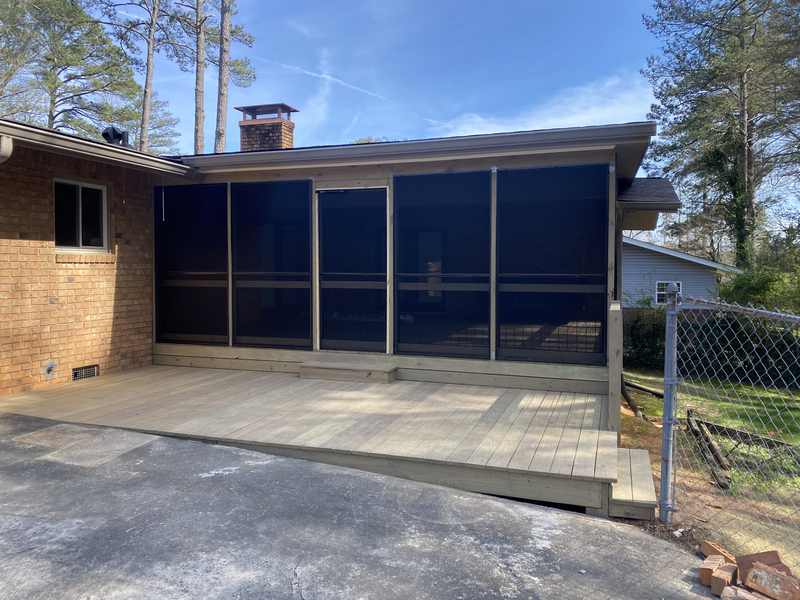
Add a roof over part of the deck, or screen it in for shade and fewer bugs.
Railing styles
Pick the rail that fits the house: aluminum, composite or wood, in several styles.
Multi-level layouts
Step down a sloped yard with separate levels for dining and lounging.
Stairs and landings
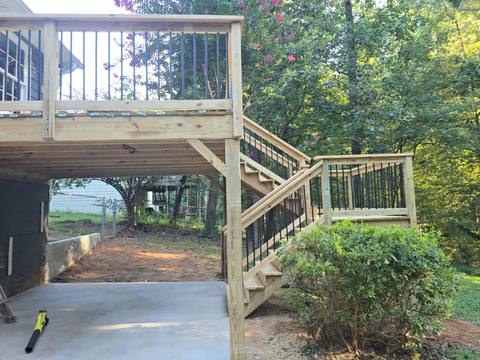
Wider steps, a landing, or a second set of stairs down to the yard.
Written warranty
1-year workmanship warranty
B&T Properties backs the workmanship on every job for one year after completion, free of charge when the fault is ours. It does not cover material defects, natural wear, weather damage, misuse, a lack of upkeep or work by others. To claim, write to us and we will inspect.
Free written estimate
Ask Breno about your deck — free and in writing.
No call center, no sales rep — the person who answers is the person who does the work.