Owner-operated · Homeowner guide
Why Is My Deck Splintering and Cracking, and Can I Fix It?Homeowner guide · Georgia decks
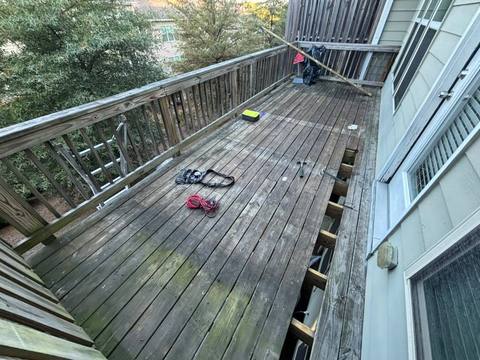
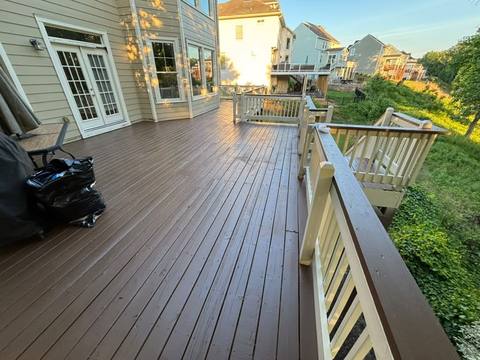
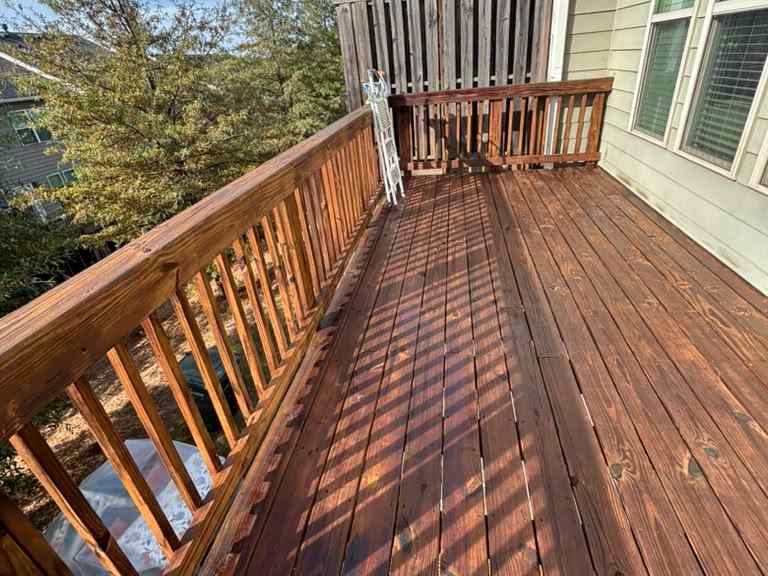
Why Is My Deck Splintering and Cracking, and Can I Fix It? A deck usually splinters because weather has worn through its protective finish. Rough spots can often be sanded smooth, and boards with deep splits or rot can be replaced. Regular cleaning and sealing keep moisture from cycling in and out of the grain, which is what makes wood check and split over time.
Free estimate · opens your texting app · no forms needed
Get a fast estimate
★★★★★ 31 Google reviews as of Nov 2026 — “Great workmanship, fair pricing, and excellent customer service.” Read reviews
- Free written estimate within one day
- General liability coverage
- Crews with 10+ years of combined experience
- Owner on every job
- Text us (470) 863-3707
Homeowner guide
Why Is My Deck Splintering and Cracking, and Can I Fix It?
Cracks in deck boards worry a lot of homeowners, but most of the time they are a sign that the wood is fighting the elements, not that the deck is about to fail. Here is how to tell the difference and what to do about it.
- Owner-operated: Breno visits and writes your estimate himself
- A team with 10+ years of combined experience
- Insured with general liability coverage
- 31 Google reviews as of Nov 2026, rated 5.0
- Before-and-after photos from our own completed jobs
Guide
What causes those small cracks?
Thin cracks running along the grain of a board are called checking. Wood is a natural material that takes on and gives off moisture. It swells when it rains and shrinks when the sun bakes it dry.
- Repeated swelling and shrinking pull the fibers apart.
- Strong heat dries out the surface faster than the core.
- Heavy Georgia humidity keeps moisture moving in and out of the grain.
Checking is usually cosmetic, but if it is left alone, small checks can widen into deeper splits that catch bare feet or trip someone.
Guide
Dealing with weathering and splinters
Weathering is the slow breakdown of the wood surface from sunlight and rain. It is the reason for the splinters that can ruin a backyard cookout. As surface fibers loosen from the board, they lift and stand up like needles.
- Gray wood means the top layer of fibers has broken down.
- A rough, fuzzy texture means the surface has lost its protection.
- Splinters often start along the edges and ends of boards.
If the deck feels like sandpaper, the protective finish is gone and the weather is wearing the boards from the outside in.
How it works
Five steps. No surprises.
Call, text, or send the form
Tell us what is going on: a new deck, a repair, or “not sure yet.” We reply the same day.
Free on-site visit
Breno looks at the deck or the yard himself, measures, and goes over your options with you.
Written estimate
Scope, materials and price come in writing, so you know the plan before anything starts.
Schedule and permits
We agree on a start date and confirm any city, county or HOA requirement for your address first.
Build and final walk-through
Breno is on the job, and we go over the finished work with you before we call it done.
Real B&T work
Photos from real jobs


Real photos from B&T projects in North Georgia.
Guide
How to fix rough surfaces with sanding
If the boards are rough but still solid, sanding is usually the way to make them smooth again. The goal is to remove the gray, broken-down layer and get back to sound wood underneath.
- Start with a coarse grit and finish with a finer one.
- Sand with the grain to avoid swirl marks and scratches.
- Remove all the dust before applying any finish.
Sanding takes off the splinters and opens the grain, so a new finish can soak in instead of sitting on top.
Guide
When to replace the boards
Sanding cannot fix everything. If a board has a split that runs all the way through, or it feels soft when you press a screwdriver into it, that board needs to come out.
- Look for rot around joists and fasteners.
- Replace boards that are badly bowed or twisted.
- Swap out boards with large holes or cracks around old hardware.
Replacing a few boards early is easier than waiting until damage spreads to the framing. Matching the thickness and type of the existing boards keeps the surface flat and the look consistent.
Guide
Signs that your finish has failed
Splintering is often the first warning that a stain or sealer has worn out. Once the finish is gone, rain soaks straight into the wood. A simple test is to sprinkle some water on the boards: if it soaks in quickly instead of beading, the protection is gone.
- Water that darkens the wood right away means the finish is spent.
- Faded color shows the sun protection has worn off.
- Peeling or flaking coatings can trap moisture against the wood.
Without a finish, the wood dries too fast in the sun, which leads straight back to checking and splitting.
Guide
How to prevent future damage
The way to break the cycle is steady maintenance. A deck cannot be built and forgotten. The wood needs to be kept clean and shielded from sun and standing water.
- Reapply a penetrating stain or sealer whenever water stops beading.
- Move planters and mats now and then so moisture does not collect underneath.
- Sweep away leaves and debris that hold water against the boards.
- Walk the deck each spring and check for soft spots.
A good coat of stain works like sunscreen for the deck, slowing moisture swings and keeping the fibers from pulling apart.
Get a fast estimate
Guide
Keeping your wood strong in Cherokee County
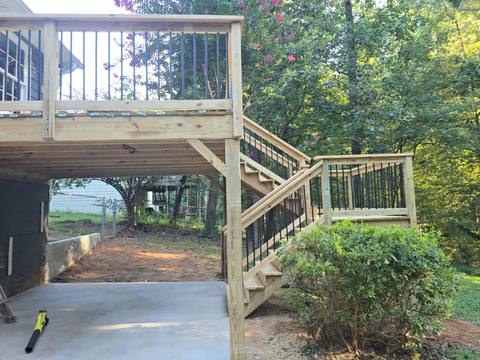
Many Canton backyards step down from the house, so decks in places like BridgeMill, Great Sky and the Hickory Flat area often sit high on taller posts, with stairs and railings that take the full force of the weather. Shaded lots near creeks stay damp longer, while open decks bake in the afternoon sun. Both conditions speed up checking, so inspect the boards that see the most sun and the most shade first.
Stay on top of cleaning and sealing, address cracks early before they turn into rot and replace bad boards as they show up. That routine keeps a wood deck safe and comfortable for many seasons.
Guide
Get a second opinion on your deck
Not sure whether your boards need sanding or replacing? Breno from B&T Properties can come out in person, walk the deck with you and tell you plainly what he sees, with no pressure. You get a free written estimate for any repair, board replacement or refinishing work.
Local notes
Around Canton and Holly Springs and nearby
Canton. Canton sits in the rolling Piedmont foothills of North Georgia, and a lot of backyards step down from the house instead of running flat. That changes how a deck is framed: taller posts, extra footings, and sometimes a landing partway down the stairs. Communities in the area include BridgeMill, Great Sky, Laurel Canyon, River Green.
Holly Springs. Holly Springs is mostly suburban residential, with quiet streets, big subdivisions and some larger lots. Backyards run from fairly level to gently sloping, and plenty back up to creeks or wooded buffers. Communities in the area include Harmony on the Lakes, downtown Holly Springs.
Ball Ground. Ball Ground is a low-density part of north Cherokee County with many larger lots and scenic, wooded or creek-adjacent settings. Bigger lots mean longer views and often more slope to work with. Communities in the area include Hawks Ridge, historic downtown Ball Ground.
Straight answers
Common questions
Can I just sand over a deep crack?
No. Sanding only fixes the surface. A split that runs through the board calls for replacing that board.
Does pressure-treated wood still splinter?
Yes. Treated wood resists rot better than untreated wood, but it still weathers, checks and splinters without regular care.
Should I use paint or stain on a deck?
Penetrating stain is usually the better fit for walking surfaces because it soaks into the wood. Paint forms a film that can peel and trap moisture.
Is checking a structural problem?
Small surface checks are usually cosmetic. Large splits that go through the board, or cracks combined with soft wood, are a structural concern.
Why do the ends of my deck boards crack first?
End grain soaks up and loses water faster than the rest of the board, so it swells and shrinks more. Sealing the cut ends helps slow that down.
Verified Google reviews
What the neighbors are saying
These are verified Google reviews from B&T customers.
★★★★★
“Breno did an excellent job repairing my home. He was professional, reliable, and paid close attention to every detail. The quality of his work exceeded my expectations…”
★★★★★
“Breno F. is an incredible man. He helped my aging mother when no one else would and went the extra mile with a complex home repair. His work is meticulous and his follow through is commendable. He is a good man with a great heart. Highly recommended!”
Who’s doing the work
About B&T Properties
You deal with the owner. Breno visits, quotes and oversees the work, and the crew brings more than ten years of deck experience between them. B&T carries General Liability insurance, and Canton is part of our regular service area.
Upgrades
Add-ons to consider
Thinking beyond the basics? Mention any of these at your free estimate and Breno will go over what makes sense for your home.
Composite decking
A surface with no sanding, sealing or yearly staining to keep up with.
Stairs and landings
Stairs that are easier to use: more width, a mid-level landing, or a better path to the yard.
Cover or screens
A roof or a screened section for shade and bug-free evenings.
Lighting
Soft LED lighting along the steps and rail, so the deck is usable after dark.
Written warranty
1-year workmanship warranty
B&T Properties backs the workmanship on every job for one year after completion, free of charge when the fault is ours. It does not cover material defects, natural wear, weather damage, misuse, a lack of upkeep or work by others. To claim, write to us and we will inspect.
Free written estimate
Ask Breno about your deck — free and in writing.
No call center, no sales rep — the person who answers is the person who does the work.