Owner-operated · Homeowner guide
Why Does My Deck Look Different in Every Season?Homeowner guide · Georgia decks
Why Does My Deck Look Different in Every Season? Wood decks in north Georgia swell during humid summers and shrink when dry winter air arrives, causing visible changes in boards, fasteners and color. Understanding which shifts are normal and which signal structural issues helps you protect your outdoor investment.
Free estimate · opens your texting app · no forms needed
Get a fast estimate
★★★★★ 31 Google reviews as of Nov 2026 — “Great workmanship, fair pricing, and excellent customer service.” Read reviews
- Free written estimate within one day
- General liability coverage
- Crews with 10+ years of combined experience
- Owner on every job
- Text us (470) 863-3707
Homeowner guide
Why Does My Deck Look Different in Every Season?
Boards that look tight in spring and slightly different by winter are usually just responding to moisture and temperature, and knowing the everyday signs of that movement can spare you needless worry.
- Owner-operated: Breno visits and writes your estimate himself
- A team with 10+ years of combined experience
- Insured with general liability coverage
- 31 Google reviews as of Nov 2026, rated 5.0
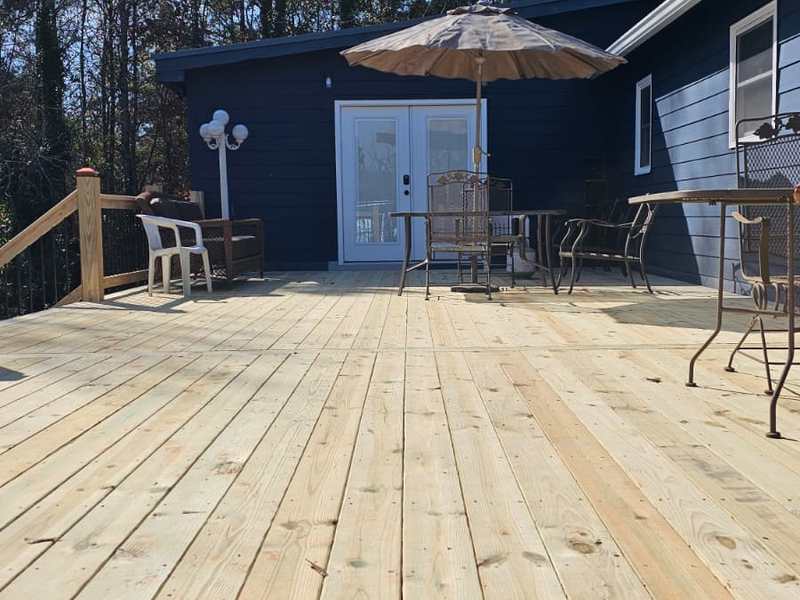
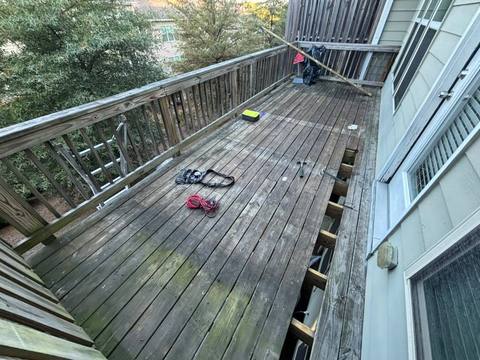
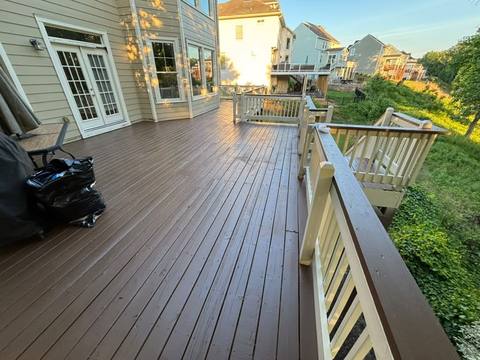
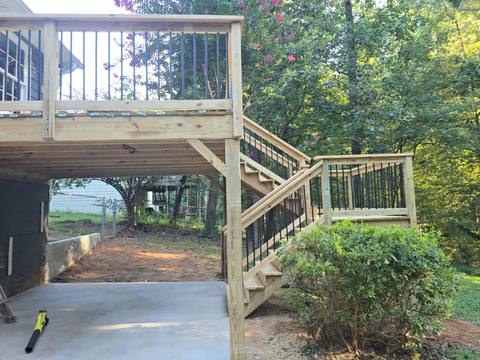
- Before-and-after photos from our own completed jobs
Guide
Why Do Boards Cup and Check Each Year?
Milton summers bring steady humidity that pushes moisture deep into deck boards, forcing fibers to expand across their width. When the air dries out in winter, the surface shrinks faster than the core, creating the cupped edges and surface checks you notice each spring. Larger decks common on acreage lots near Crabapple and along Hopewell Road have more surface area to move, so the effect is often more visible there than on smaller suburban platforms. Shade from mature trees can slow drying on one side of a deck while the sunny side cycles faster, making the movement uneven across the same structure.
The same pattern shows up from Birmingham to the Atlanta National area, where long runs of decking follow rolling terrain. Cupping that reverses with the season is typical, but boards that stay cupped after a full humidity cycle or checks that widen into splits often mean the wood has lost its ability to balance moisture. Fasteners that once held tight can loosen as the wood shrinks away, and the resulting gaps collect debris that holds water against the grain. A quick seasonal walk-through lets you spot the difference between normal breathing and damage that needs repair.
Guide
What Causes Nail and Screw Pops?
Fasteners pop when the wood around them swells and shrinks repeatedly, enlarging the hole until the shank no longer grips. In Milton, where decks often span long distances over sloped ground near Birmingham Highway, the daily expansion and contraction cycle works like a slow ratchet on every connection. Nails tend to back out first because they rely on friction alone, while screws hold longer but can still lose purchase if the pilot hole wears oval. You will often notice pops first on stair treads and rail caps where foot traffic adds leverage to the seasonal movement.
A few popped fasteners on an older deck are expected, especially after a wet summer followed by a hard freeze. When pops appear in clusters, or when the same fastener rises again after being driven back, the surrounding wood has likely lost holding power. Boards that move independently underfoot, creating a spongy feel, suggest the framing underneath is also cycling. Replacing popped nails with ring-shank or screw alternatives restores grip, but widespread loosening usually means the decking or joists need attention before the next humidity swing.
How it works
Five steps. No surprises.
Call, text, or send the form
Tell us what is going on: a new deck, a repair, or “not sure yet.” We reply the same day.
Free on-site visit
Breno looks at the deck or the yard himself, measures, and goes over your options with you.
Written estimate
Scope, materials and price come in writing, so you know the plan before anything starts.
Schedule and permits
We agree on a start date and confirm any city, county or HOA requirement for your address first.
Build and final walk-through
Breno is on the job, and we go over the finished work with you before we call it done.
Real B&T work
Photos from real jobs


Real photos from B&T projects in North Georgia.
Guide
Is Color Fade Just Cosmetic?
UV rays break down lignin, the natural glue that holds wood fibers together, turning rich tones gray long before the wood loses strength. On open decks around Deerfield and along Crabapple Road, direct sun accelerates the process, while shaded sections under tree canopy stay darker but stay damp longer. Stain or sealant slows the breakdown by blocking UV and shedding water, but even a well-applied coating wears thin on horizontal surfaces that catch the full sky. Fading alone does not mean the deck is failing, but it does mean the protective layer is gone.
When gray wood feels fuzzy or splinters under a shoe, the surface fibers have eroded past the point where a fresh coat will bond well. Water soaks in instead of beading, feeding the swell-shrink cycle that drives cupping and checking. A simple water drop test tells the story: if the drop soaks in within seconds, the wood is bare and hungry for protection. Restoring color at that stage requires cleaning, brightening and sometimes light sanding before a new penetrating finish can do its job.
Guide
When Should I Worry About Railings and Stairs?
Rail posts and stair stringers are the first parts to show seasonal stress because they connect the moving deck surface to the fixed ground or house. Posts that loosen at the base often have footings that shift in Milton's clay soil as it swells wet and cracks dry, a cycle amplified on the rolling lots common near Birmingham and along Hopewell Road. Stair stringers notched for treads create weak points where checks propagate fast once water penetrates the end grain. A wobble in the handrail or a tread that rocks is never normal, even if it seems minor in July.
Seasonal movement can also open gaps between the deck rim and the house ledger, especially on homes where the ledger was lagged into old framing without modern flashing. Water that enters there rots the band joist silently while the deck boards above look fine. If a rail post moves when you lean on it, or if a stair stringer shows a crack running across the grain, the structure is no longer sharing load as designed. Those are the moments to have a pro evaluate the connections before the next freeze-thaw cycle widens the damage.
Guide
How Do Local Conditions Shape the Timeline?
Milton's large-lot zoning means decks here are often bigger, higher and more complex than in neighboring cities such as Alpharetta, Roswell or Johns Creek. Multi-level layouts that step down a slope near Crabapple or Birmingham create more end-grain exposure, more fastener lines and more places for water to collect. The Tree Canopy Conservation Ordinance and stream buffers can limit where a deck footprint sits, sometimes forcing longer joist spans or cantilevers that flex more with each humidity swing. Those design choices, driven by the site, set the pace at which seasonal wear appears.
HOA architectural reviews and city permits add steps before any repair or replacement can start, so identifying issues early keeps your timeline intact. Breno visits each property in person to assess how the specific microclimate, sun angle, tree cover and drainage pattern interact with the existing structure. A free written estimate from B&T Properties outlines the scope, whether the work is a board replacement, a railing rebuild or a full deck replacement, and notes any permit or HOA items to confirm with the City of Milton Community Development Department or your association before scheduling.
Get a fast estimate
Local notes
Around Milton and Alpharetta and nearby
Milton. Milton has tree canopy and stream buffer rules that can affect a lot, so check with the City of Milton for your address. On a wooded Milton lot, those rules can shape the deck footprint. Communities in the area include Crabapple, Birmingham, Deerfield, Atlanta National.
Alpharetta. Many Alpharetta communities have HOAs with architectural review for outdoor structures. Tell us your neighborhood at the start and we will plan the approval timeline with you. Communities in the area include Windward, Broadlands, downtown Alpharetta.
Roswell. Roswell is wooded and rolling, with mature tree canopy and lot sizes that range from standard suburban parcels to larger estate-style lots. Shade and moisture are the two main things that age decks here. Communities in the area include Brookfield West, Willow Springs, Steeplechase, historic Roswell.
Straight answers
Common questions
Why do my deck boards feel spongy in July but firm in January?
Summer humidity swells the wood fibers, crushing the cell structure slightly and creating a softer feel underfoot. Winter drying stiffens the same boards as moisture leaves the cells.
Can I just screw down cupped boards to flatten them?
Forcing a cupped board flat with screws often splits the wood or pulls the fastener through as the board tries to return to its natural curve when humidity changes again.
What does a white, fuzzy surface on my railing mean?
That is usually surface mold feeding on pollen and dust, not wood rot. It cleans off with a mild detergent and a soft brush, but its presence shows the finish is no longer repelling water.
How do I know if a stair stringer crack is structural?
A crack that follows the grain is often a harmless check. A crack running across the grain, especially near a notch, cuts the load path and should be evaluated before heavy use.
Does a gray deck always need full sanding before restaining?
Not always. If water still beads on the gray surface, a cleaner and brightener may prep it enough. If water soaks instantly, the gray fibers must be removed for the new finish to penetrate.
Why do my rail posts loosen every spring?
Clay soil under the footings expands when wet and contracts when dry, rocking the post base. Proper footing depth and drainage reduce the movement, but some seasonal shift is common on sloped lots.
Can tree shade make one side of my deck rot faster?
Constant shade slows drying, keeping wood moisture high enough for decay fungi to stay active. The sunny side cycles wet and dry, which can actually slow rot if the wood dries fully between rains.
What should I photograph before calling a builder about seasonal damage?
Capture overall deck elevation, close-ups of cupping or checking patterns, any fastener pops, rail post bases at grade, and the ledger connection at the house if visible.
Verified Google reviews
What the neighbors are saying
These are verified Google reviews from B&T customers.
★★★★★
“Breno and his team exceeded our expectations. They were organized, efficient, and truly cared about delivering a high-quality result. We couldn't be happier.”
★★★★★
“Outstanding service! Breno is knowledgeable, honest, and takes pride in his work. It's hard to find a company this reliable these days.”
Who’s doing the work
About B&T Properties
You deal with the owner. Breno visits, quotes and oversees the work, and the crew brings more than ten years of deck experience between them. B&T carries General Liability insurance, and Milton is part of our regular service area.
Upgrades
Add-ons to consider
Ask about any of these when Breno comes out for your free estimate. They are easiest to price in when we plan the project, not after it is built.
Composite decking
Boards that resist rot and skip the yearly stain. Worth pricing in at the start.
Lighting
Soft LED lighting along the steps and rail, so the deck is usable after dark.
Railing styles
Railing is what you see first, so we go over the options before the estimate is final.
Cover or screens
Shade, rain cover or screens, planned in from the start.
Written warranty
1-year workmanship warranty
One year, in writing, on our labor from the completion date. If our own workmanship is why something fails, B&T Properties makes it right at no cost to you. Materials fall under the manufacturer’s warranty; wear, weather, misuse, neglect and third-party work are not covered. Request service in writing.
Free written estimate
Ask Breno about your deck — free and in writing.
No call center, no sales rep — the person who answers is the person who does the work.